Re-assessment of tourism demand & supply in Sri Lanka during the crisis

Tourism is a strategically significant sector in Sri Lanka and is the third-largest export earner for the country. Further, the sector has a multiplier effect on the overall economic development of the country due to the generation of employment opportunities, increase in national income, and improvement in the balance of payments. However, 2019 and 2020 have been landmark watersheds in the tourism history of the country, with the unfortunate Easter attacks taking place in April last year and the Covid pandemic forcing the island nation to go under lockdown in late March this year. As a result, significant aberrations have occurred in the tourism trends across the destinations in the island, which would have to be taken into consideration which assessing future demand and associated proposal. 

For the assignment, ‘Consultancy for Tourism Demand and Supply Assessment in Sri Lanka and for the Preparation of Detailed Investment Proposals for Targeted Destinations and Market Segments’ IPE Global assisted the Government of Sri Lanka in preparation of the Sustainable Tourism Development Project (STDP) by generating a baseline of demand and supply data that provides a rationale for targeted public and private investments that will support the sustainable growth of the tourism sector. But the impacts of Covid crisis led to the inculcation of some critical additions to the plan.

Revised Post COVID Projection

Growth projection exercise was carried out initially for a stable/base growth scenario (business as usual) and stimulated growth scenario. The two scenarios would dictate phasing and prioritisation of proposals and projects eventually. However, a third low growth scenario was added which was indicative of growth projections under a more conservative scenario, particularly under the effects of unforeseen events or crises, like the Easter attacks (2019) and the more recent post-COVID-19 health crisis. While the current report attempts to estimates the likely impact of COVID-19 on tourist projections in the country, the estimation of precise impact of the crisis on the world in general and tourism industry in particular is impossible to gauge due to the unprecedented nature of the event. 

Way forward in response to the COVID-19 crisis

As the world emerges from COVID-19, as it surely will, investors will be looking to the Sri Lankan Government for a clear commitment to tourism as a driver of sustainable and economic development and recovery, especially in those areas that inevitably will have been hit hardest by the current crisis, in terms of failed  businesses, lost employment and increased poverty.For Sri Lanka, it is a time to take immediate measures to revive its tourist infrastructure and be ready to position itself in the market when international travels commence in the near future. 

The next 2-3 years will not be “business as usual” and there would be merit in reviewing options again towards the end of 2020. It is likely that to some extent the current crisis will change market perspectives, but the need for “natural” tourism will not diminish and might even grow, whether it involves sailing or surfing on the sea, watching wildlife in its natural habitat or having a traditional massage in beautiful surroundings.

COVID-19

Our Teams Respond

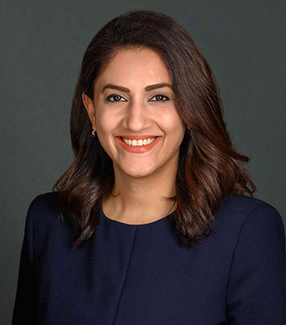
Anand Roop

Anandroop Bahadur

Group Head – Human Resources

Expertise

Human Resource Expertise, HR Strategy, Oragnisational Design, Talent & Leadership Development, Policy Governance

Anandroop Bahadur is a seasoned HR leader and strategic advisor with nearly two decades of experience across the development, consulting, and social impact ecosystem. She brings a strong blend of deep technical HR expertise, organizational design acumen, and a people-centric ethos to her work.

At IPE Global, Anandroop leads the Group Human Resources function across IPE Global and its associated entities, including Triple Line Consulting and IPE Africa. Her focus is on strengthening organizational foundations, enabling leadership effectiveness, and building scalable people systems aligned with the organisation’s global growth ambitions. Her remit spans HR strategy, organizational design, talent and leadership development, compensation and performance frameworks, policy governance, safeguarding, and culture integration across geographies.

Over the course of her career, Anandroop has held senior HR leadership and consulting roles with organisations such as Clinton Health Access Initiative (CHAI), Ford Foundation, NASSCOM Foundation, Central Square Foundation, Amity Education Group, and other international institutions. She has advised leadership teams and boards through periods of scale, transition, and transformation, and has led HR operations in high-growth, high-complexity environments.

She holds an Executive Degree in Human Resources from XLRI Jamshedpur and is a SHRM–SCP (Senior Certified Professional), reflecting her grounding in global HR standards and best practices. She has also completed advanced executive and leadership programmes, including training in coaching and organisational transformation, and is an ICF-trained executive coach, currently working towards her ACC credential.


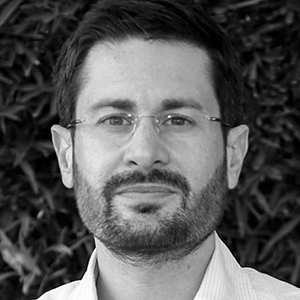
Nikos Papachristodoulou

Nikos Papachristodoulou

Director

Expertise

Urban, Infrastructure, Disaster and Climate Resilience, Inclusive Growth

Nikos has expertise in urban and regional economic development, infrastructure, disaster and climate resilience, and inclusive growth. He oversees and manages projects for Triple Line’s cities and infrastructure portfolio.

Nikos is an urban specialist, with principal areas of expertise in urban and regional economic development, infrastructure, disaster and climate resilience, and inclusive growth. Over the past 12 years he has worked for a range of clients including the World Bank, FCDO, EU, USAID, Cities Alliance, Global Green Growth Institute (GGGI), Norwegian Refugee Council (NRC), and local authorities.

Nikos’s work has incorporated the full spectrum of the project cycle, from analytics and programme scoping and design, through implementation, and evaluation and learning.

He has a high level of familiarity with HMG business cases and ODA eligibility criteria having led and supported the development of FCDO’s urbanisation strategy and options for future investments in Somalia’s cities, Prosperity Fund Global Future Cities Programme (GFCP) scoping in Nigeria, and the development of the business case for an urban resilience programme in Tanzania.

Nikos also brings excellent understanding of World Bank latest trends and procedures as a result of his involvement in a number of analytics and technical assistance projects, including on informal settlements upgrading in Mogadishu, climate change adaptation planning in Latin American and Caribbean cities, assessment of the climate resilience of Dar es Salaam’s transport infrastructure, spatial development in Nigeria, and preparation of a handbook on integrated urban flood risk management.

Nikos holds a BSc in Economics from the University of Piraeus and an MSc in Social Development Practice from the Development Planning Unit at University College London (UCL).


Ricardo Pinto

Ricardo Pinto

Associate Director

Expertise

Private Sector Development, Regulatory Reform, Regional and Local Economy

Ricardo has 35 years´ experience in private sector development, regulatory reform, regional and local economic development in the European Union, Western Balkans, Easter Partnership Countries, Middle East, Africa, etc. He is tasked with developing our strategic operations in continental Europe and Ukraine.

Ricardo is a seasoned international development professional with over 30 years of experience designing and delivering Private Sector Development and economic growth initiatives across more than 50 countries spanning Central, Eastern and Southeast Europe, the CIS, Africa, MEDA, and Asia. He holds both a bachelor’s degree and PhD from the London School of Economics and Political Science (LSE) and is a Certified Management Consultant (CMC).

Ricardo brings a unique combination of strategic insight and practical implementation expertise. He has led high-impact assignments for key development institutions, including the European Commission, OECD, GIZ, FCDO/DFID, UNDP, UNCTAD, EBRD, ILO, ADB, World Bank, USAID, and Danida.

With a deep and practical understanding of institutional architecture, policy environment, and post-conflict recovery dynamics, and a career spanning over 30 years across transition economies, Ricardo brings not only technical depth but also a trusted reputation among donors, policymakers and peers.He is leading Triple Line’s strategic expansion into continental Europe, including Ukraine, while strengthening our credibility across the broader region and beyond. Proven Expertise Across Our Core Pillars. Ricardo’s work focuses on the areas central to Triple Line’s evolving service offering: Governance & Institutional Reform: advising public institutions on regulatory impact, policy reform, and donor coordination, Private Sector Development: strategy development for SME ecosystems, innovation, and competitiveness, Infrastructure Enabling Conditions: support for investment climate improvement and regional/local economic development and Cross-cutting themes, including green transition, women’s economic empowerment, and inclusive growth

 
LIFE AT IPE

Learning &
Development (L&D)

We inspire people to be better.

Our intuitive and personalised programmes provide clear path for growth, leadership development, and help people sharpen their skills.

0 %
People trained in last 3 years
0 %
Participation in L&D Initiatives in 2025

Your journey starts from Day One….

Structured Onboarding

Helps align expectations and lays the foundation for your success

New Hire Training

Makes you familiar with the organisation; helps you settle down in a new work environment

Customized L&D Platform

Helps upskill at your own pace through continuous learning and training programmes

Linkage with
Performance Management

Aligns resources and training needs based on your skill set

Learning is not always a formal process. We also align our organisation values to a culture of learning