How India’s nutrition security can be improved

POSHAN (nutrition) has become the buzzword within the development community in the last couple of years. The launch of Prime Minister's...

Binu Anand, National Team Leader  — WeCan

POSHAN (nutrition) has become the buzzword within the development community in the last couple of years. The launch of Prime Minister’s Overarching Scheme for Nutrition (POSHAN) Abhiyaan has given nutrition the much-required focus. It has grabbed the attention of stakeholders across the spectrum including ministries, development partners and academia.

For a long time, alleviation of poverty and hunger remained the focal point of development partners and governments alike and understandably so. After all, WHO places 10 per cent of world’s population in the bracket that lives on less than $1.90 a day and food security is difficult to achieve amidst such rampant poverty.

However, nutrition is being recognised as a crucial aspect of the development landscape. This stems from the fact that undernutrition leads to intergenerational consequences for health and erodes socio-economic equity, adding to the burden of developing and underdeveloped countries A study conducted by Alderman (2010) highlights that “the economic returns to preventing malnutrition are on a par with those investments generally considered at the heart of economic development strategies.”

His views found support in several other studies. In retrospect, nutrition has not been a priority in the mainstream development discourse of India, despite being included in the Directive Principles which places onus on the state to improve the overall quality of nutrition among the citizens.

For the people

POSHAN Abhiyaan has changed it. It was engendered as a mission ‘for the people’, giving a call for a Jan Andolan (a movement by the people). The need of the hour today is to make it a people’s movement in letter and spirit, placing the beneficiaries at the heart of nutrition programmes and interventions as active participants. How can we do this?

First, there is a need to realise that food security does not equate to nutrition security. While food security lies at the fulcrum of most of our public welfare schemes and policies, nutrition security is often overlooked. And, second, the communities need to be brought into the fold of this concept of nutrition by focussing on decentralisation, awareness and accessibility.

Studies have posited the significance of emancipating and empowering communities for improvement of nutrition status. An assessment of selected food and nutrition programmes in Asia, Africa and Latin America conducted by Food and Agricultural Organization in 2003 showed positive linkages between capacity building of community and success of the programmes. If POSHAN is to succeed, an empowered community is going to be its backbone. Hence, the measures adopted to strengthen nutrition should focus on an inclusive approach, across the urban-rural and literacy fault-lines.

The existing systems in both urban and rural areas are strategically placed to decentralise the efforts under POSHAN and move towards last-mile convergence for better nutrition service delivery. PRIs, the elected bodies at grassroots, SHGs consisting of community members, youth groups and Integrated Child Development Services (ICDS), the world’s largest community development programme devoted to growth and development of children, and Anganwadi Centres, the epicentre of mother and child nutrition in villages, can be effectively leveraged for community mobilisation.

Better communication

The fundamental step towards generating demand for nutrition services and developing an understanding of nutrient-rich food is using a 360 degrees communication approach along with an enabling environment. Interventions that stress on Information, Education and Communication (ICE) and Social and Behaviour Change Communication (SBCC) can prove to be invaluable. They can aid in creating awareness among beneficiaries about various social safety net programmes including the supplementary feeding programme, Public Distribution Scheme (PDS) fortification, mid-day meal scheme (MDM), and provisions for tribal groups.

SBCC interventions can also be effectively used for targeted behaviour change in the community on nutrition-related practices. In some of the States, for instance, Rajasthan, the government has taken the lead in developing a State-specific SBCC strategy to support nutrition programmes and interventions. Hopefully, more States will follow suit.

Research by John Hopkins University and other prominent public health bodies have shown the significance of SBCC as an approach to strengthen interventions and improve demand and quality for services. However, IEC and SBCC have certain limitations as well. The beneficiaries often end up getting caught in the web of ‘information overload’. The varied messages on what to eat, which services to access and how to go about achieving better nutrition can get confusing. Moreover, at times messaging does not resonate with local realities.

Effective messaging is needed that are customised to requirements of communities and are simple to comprehend. They need to convey the idea of eating right based on locally available and accessible nutrient-rich food. The focus has to be on educating the community on food groups and simple ways of obtaining them. While global, national and locale-based data is available to enable this, the challenge for stakeholders is to translate it into effective messaging, true to local realities and finding simple solutions.

Gaining currency

Amidst the global crisis of Covid-19, nutrition has gained further currency. Fragile immune system, resulting from undernutrition are more prone to diseases. The pandemic, though in many ways unprecedented, will not be the last of its kind. We need to be more prepared than ever and work towards shaping communities and policies focussed on eating right.

Nutrition holds an immeasurable significance in our lives and cannot be left to chance. POSHAN and its efforts can be successful only if we can develop self-efficacy in individuals and make it more relatable for communities. There is a high probability that driving POSHAN Abhiyaan through Jan Andolan would bring a change at a cellular level, by placing the power in the hands of people.

Link to published article: https://www.thehindubusinessline.com/opinion/how-indias-nutrition-security-can-be-improved/article33011677.ece#

COVID-19

People Speak

Anand Roop

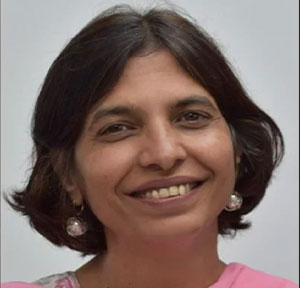
Anandroop Bahadur

Group Head – Human Resources

Expertise

Human Resource Expertise, HR Strategy, Oragnisational Design, Talent & Leadership Development, Policy Governance

Anandroop Bahadur is a seasoned HR leader and strategic advisor with nearly two decades of experience across the development, consulting, and social impact ecosystem. She brings a strong blend of deep technical HR expertise, organizational design acumen, and a people-centric ethos to her work.

At IPE Global, Anandroop leads the Group Human Resources function across IPE Global and its associated entities, including Triple Line Consulting and IPE Africa. Her focus is on strengthening organizational foundations, enabling leadership effectiveness, and building scalable people systems aligned with the organisation’s global growth ambitions. Her remit spans HR strategy, organizational design, talent and leadership development, compensation and performance frameworks, policy governance, safeguarding, and culture integration across geographies.

Over the course of her career, Anandroop has held senior HR leadership and consulting roles with organisations such as Clinton Health Access Initiative (CHAI), Ford Foundation, NASSCOM Foundation, Central Square Foundation, Amity Education Group, and other international institutions. She has advised leadership teams and boards through periods of scale, transition, and transformation, and has led HR operations in high-growth, high-complexity environments.

She holds an Executive Degree in Human Resources from XLRI Jamshedpur and is a SHRM–SCP (Senior Certified Professional), reflecting her grounding in global HR standards and best practices. She has also completed advanced executive and leadership programmes, including training in coaching and organisational transformation, and is an ICF-trained executive coach, currently working towards her ACC credential.


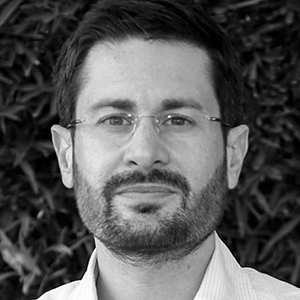
Nikos Papachristodoulou

Nikos Papachristodoulou

Director

Expertise

Urban, Infrastructure, Disaster and Climate Resilience, Inclusive Growth

Nikos has expertise in urban and regional economic development, infrastructure, disaster and climate resilience, and inclusive growth. He oversees and manages projects for Triple Line’s cities and infrastructure portfolio.

Nikos is an urban specialist, with principal areas of expertise in urban and regional economic development, infrastructure, disaster and climate resilience, and inclusive growth. Over the past 12 years he has worked for a range of clients including the World Bank, FCDO, EU, USAID, Cities Alliance, Global Green Growth Institute (GGGI), Norwegian Refugee Council (NRC), and local authorities.

Nikos’s work has incorporated the full spectrum of the project cycle, from analytics and programme scoping and design, through implementation, and evaluation and learning.

He has a high level of familiarity with HMG business cases and ODA eligibility criteria having led and supported the development of FCDO’s urbanisation strategy and options for future investments in Somalia’s cities, Prosperity Fund Global Future Cities Programme (GFCP) scoping in Nigeria, and the development of the business case for an urban resilience programme in Tanzania.

Nikos also brings excellent understanding of World Bank latest trends and procedures as a result of his involvement in a number of analytics and technical assistance projects, including on informal settlements upgrading in Mogadishu, climate change adaptation planning in Latin American and Caribbean cities, assessment of the climate resilience of Dar es Salaam’s transport infrastructure, spatial development in Nigeria, and preparation of a handbook on integrated urban flood risk management.

Nikos holds a BSc in Economics from the University of Piraeus and an MSc in Social Development Practice from the Development Planning Unit at University College London (UCL).


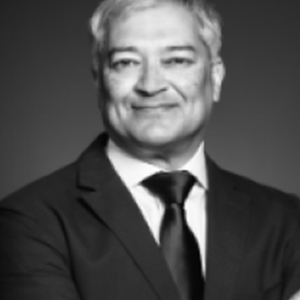
Ricardo Pinto

Ricardo Pinto

Associate Director

Expertise

Private Sector Development, Regulatory Reform, Regional and Local Economy

Ricardo has 35 years´ experience in private sector development, regulatory reform, regional and local economic development in the European Union, Western Balkans, Easter Partnership Countries, Middle East, Africa, etc. He is tasked with developing our strategic operations in continental Europe and Ukraine.

Ricardo is a seasoned international development professional with over 30 years of experience designing and delivering Private Sector Development and economic growth initiatives across more than 50 countries spanning Central, Eastern and Southeast Europe, the CIS, Africa, MEDA, and Asia. He holds both a bachelor’s degree and PhD from the London School of Economics and Political Science (LSE) and is a Certified Management Consultant (CMC).

Ricardo brings a unique combination of strategic insight and practical implementation expertise. He has led high-impact assignments for key development institutions, including the European Commission, OECD, GIZ, FCDO/DFID, UNDP, UNCTAD, EBRD, ILO, ADB, World Bank, USAID, and Danida.

With a deep and practical understanding of institutional architecture, policy environment, and post-conflict recovery dynamics, and a career spanning over 30 years across transition economies, Ricardo brings not only technical depth but also a trusted reputation among donors, policymakers and peers.He is leading Triple Line’s strategic expansion into continental Europe, including Ukraine, while strengthening our credibility across the broader region and beyond. Proven Expertise Across Our Core Pillars. Ricardo’s work focuses on the areas central to Triple Line’s evolving service offering: Governance & Institutional Reform: advising public institutions on regulatory impact, policy reform, and donor coordination, Private Sector Development: strategy development for SME ecosystems, innovation, and competitiveness, Infrastructure Enabling Conditions: support for investment climate improvement and regional/local economic development and Cross-cutting themes, including green transition, women’s economic empowerment, and inclusive growth

 
LIFE AT IPE

Learning &
Development (L&D)

We inspire people to be better.

Our intuitive and personalised programmes provide clear path for growth, leadership development, and help people sharpen their skills.

0 %
People trained in last 3 years
0 %
Participation in L&D Initiatives in 2025

Your journey starts from Day One….

Structured Onboarding

Helps align expectations and lays the foundation for your success

New Hire Training

Makes you familiar with the organisation; helps you settle down in a new work environment

Customized L&D Platform

Helps upskill at your own pace through continuous learning and training programmes

Linkage with
Performance Management

Aligns resources and training needs based on your skill set

Learning is not always a formal process. We also align our organisation values to a culture of learning