The Silver Lining Behind The COVID-19 Cloud

This pandemic has led to an intense nationwide focus on health and nutrition. We should not waste this opportunity...

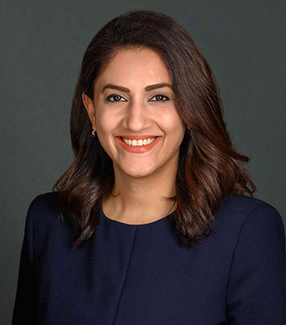
– Priyanka Bajaj: Nutrition Expert, WeCan

This pandemic has led to an intense nationwide focus on health and nutrition. We should not waste this opportunity.

The COVID 19 pandemic and the ensuing lockdown has brought a lot of serious problems for India. Disease, death, social unrest and economic collapse are not easy to deal with simultaneously,particularly for a country as large and populous as ours. But is that all that that this pandemic has brought?

The answer is a vehement no.

When was the last time citizens of India collectively deliberated about the health infrastructure of the country? When was the role of immunity in battling a disease pondered upon by the common man on such a massive scale? Did people across the country ever realise the importance of regularly washing hands with soap, the way they do now? When did mainstream media report on hunger, food insecurity, health, and nutrition on such a regular basis?

COVID 19 has definitely changed a lot in India. Health and nutrition have suddenly taken centre stage for almost every citizen. People are eager to learn how to deal with infections and improve their nutrition status, and understand the nuances of health infrastructure. Phrases like “Flattening the curve”, “breaking the chain’’, “immunity” and are longer esoteric scientific jargon, but a part of our common discourse.

Health and nutrition issues have always been affecting people, but COVID 19 has forced people to seek a deeper understanding about these subjects. Never have the front-line workers, the ANM, ASHA, and Aanganwadi Workers been recognized the way they have been now. Although this may not be the best time to assess the India’s response in combating COVID 19, it is very clear that we are heavily dependent on our front-line warriors to deal with the crisis.

While we may still have to wait for a vaccine or treatment for COVID 19, the numbers show that India with all its challenges has dramatically upscaled its capacities in health and nutrition infrastructure. The Ministry of Finance has announced its plans to hike the GDP spend on public health from the current 1.3 % to 2.5% by 2025. A little above Rs 4000 crore has been released by Ministry of Health and Family Welfare for COVID 19 activities, and Rs 4300 crore has been disbursed for the purchase of essential items and test kits. And a whopping Rs 15000 crore has been allocate for containment of COVID 19.

But while a lot has been done to prevent the infection from spreading and assist those who require food, health and other services, a lot more needs to be done. As India puts all its efforts to deal with the crisis and revive the economy, in order to strengthen the health and nutrition landscape it must focus on the 5D’s: Dialogue, Decentralize, Digitalize, Data and Diversification.

  • Dialogue is essential to empower the frontline workers to help them deal with the current crisis, and after that, to bring all stakeholders together to foster effective convergence and generate awareness among the community about their rights, entitlements and roles.
  • Decentralizing responsibility and accountability is a must to enable local governance to provide customized solutions in a timely fashion.
  • Digital outreach is extremely necessary to ensure the masses receive the correct messages, particularly in these times of multiple communication channels and fake news.
  • Data must be the basis for taking strategic decisions, and comprehensive data visualization tools should be used to scale up and optimise resource utilization.
  • Diversified approaches are needed to involve multiple sectors, and make health and nutrition a focus of the non-health sector too.

Moving forward, the key would be to set the basics right in the health system, but equally crucial will be to invest in food systems, social protection systems and WASH systems. India has a humongous task of making communities aware about health and nutrition practices, especially the vulnerable population like women and children.

The need of the hour is to invest in ensuring diversification of diets, optimum nutrition, and timely rolling out of cost effective, scalable, sustainable, gender sensitive and innovative
interventions. It’s time to leverage technology for agriculture, incentivising production of diverse foods and its storage, processing and preservation, food fortification in large scale programs and robust behaviour change interventions.

A crisis like COVID 19 is fortunately rare, but it has also brought immense opportunities, and what we make of them will define how our present will be judged by our future. As the Swiss doctor,psychiatrist, aviator and explorer Bertrand Piccard put it, “Pioneering spirit should continue, not to conquer the planet or space, but rather to improve the quality of life”.

Twitter: @ WeCan4Poshan
Facebook: Wecollaboratefornutrition
LinkedIn: WeCan4POSHAN
Website: www.wecollaborate4nutrition.org

COVID-19

People Speak

Anand Roop

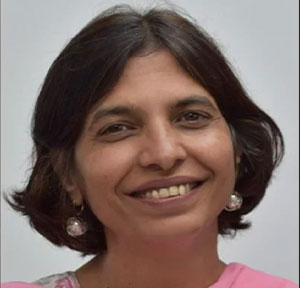
Anandroop Bahadur

Group Head – Human Resources

Expertise

Human Resource Expertise, HR Strategy, Oragnisational Design, Talent & Leadership Development, Policy Governance

Anandroop Bahadur is a seasoned HR leader and strategic advisor with nearly two decades of experience across the development, consulting, and social impact ecosystem. She brings a strong blend of deep technical HR expertise, organizational design acumen, and a people-centric ethos to her work.

At IPE Global, Anandroop leads the Group Human Resources function across IPE Global and its associated entities, including Triple Line Consulting and IPE Africa. Her focus is on strengthening organizational foundations, enabling leadership effectiveness, and building scalable people systems aligned with the organisation’s global growth ambitions. Her remit spans HR strategy, organizational design, talent and leadership development, compensation and performance frameworks, policy governance, safeguarding, and culture integration across geographies.

Over the course of her career, Anandroop has held senior HR leadership and consulting roles with organisations such as Clinton Health Access Initiative (CHAI), Ford Foundation, NASSCOM Foundation, Central Square Foundation, Amity Education Group, and other international institutions. She has advised leadership teams and boards through periods of scale, transition, and transformation, and has led HR operations in high-growth, high-complexity environments.

She holds an Executive Degree in Human Resources from XLRI Jamshedpur and is a SHRM–SCP (Senior Certified Professional), reflecting her grounding in global HR standards and best practices. She has also completed advanced executive and leadership programmes, including training in coaching and organisational transformation, and is an ICF-trained executive coach, currently working towards her ACC credential.


Nikos Papachristodoulou

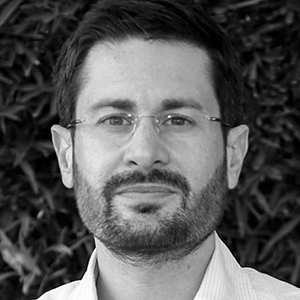
Nikos Papachristodoulou

Director

Expertise

Urban, Infrastructure, Disaster and Climate Resilience, Inclusive Growth

Nikos has expertise in urban and regional economic development, infrastructure, disaster and climate resilience, and inclusive growth. He oversees and manages projects for Triple Line’s cities and infrastructure portfolio.

Nikos is an urban specialist, with principal areas of expertise in urban and regional economic development, infrastructure, disaster and climate resilience, and inclusive growth. Over the past 12 years he has worked for a range of clients including the World Bank, FCDO, EU, USAID, Cities Alliance, Global Green Growth Institute (GGGI), Norwegian Refugee Council (NRC), and local authorities.

Nikos’s work has incorporated the full spectrum of the project cycle, from analytics and programme scoping and design, through implementation, and evaluation and learning.

He has a high level of familiarity with HMG business cases and ODA eligibility criteria having led and supported the development of FCDO’s urbanisation strategy and options for future investments in Somalia’s cities, Prosperity Fund Global Future Cities Programme (GFCP) scoping in Nigeria, and the development of the business case for an urban resilience programme in Tanzania.

Nikos also brings excellent understanding of World Bank latest trends and procedures as a result of his involvement in a number of analytics and technical assistance projects, including on informal settlements upgrading in Mogadishu, climate change adaptation planning in Latin American and Caribbean cities, assessment of the climate resilience of Dar es Salaam’s transport infrastructure, spatial development in Nigeria, and preparation of a handbook on integrated urban flood risk management.

Nikos holds a BSc in Economics from the University of Piraeus and an MSc in Social Development Practice from the Development Planning Unit at University College London (UCL).


Ricardo Pinto

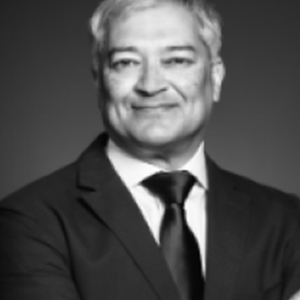
Ricardo Pinto

Associate Director

Expertise

Private Sector Development, Regulatory Reform, Regional and Local Economy

Ricardo has 35 years´ experience in private sector development, regulatory reform, regional and local economic development in the European Union, Western Balkans, Easter Partnership Countries, Middle East, Africa, etc. He is tasked with developing our strategic operations in continental Europe and Ukraine.

Ricardo is a seasoned international development professional with over 30 years of experience designing and delivering Private Sector Development and economic growth initiatives across more than 50 countries spanning Central, Eastern and Southeast Europe, the CIS, Africa, MEDA, and Asia. He holds both a bachelor’s degree and PhD from the London School of Economics and Political Science (LSE) and is a Certified Management Consultant (CMC).

Ricardo brings a unique combination of strategic insight and practical implementation expertise. He has led high-impact assignments for key development institutions, including the European Commission, OECD, GIZ, FCDO/DFID, UNDP, UNCTAD, EBRD, ILO, ADB, World Bank, USAID, and Danida.

With a deep and practical understanding of institutional architecture, policy environment, and post-conflict recovery dynamics, and a career spanning over 30 years across transition economies, Ricardo brings not only technical depth but also a trusted reputation among donors, policymakers and peers.He is leading Triple Line’s strategic expansion into continental Europe, including Ukraine, while strengthening our credibility across the broader region and beyond. Proven Expertise Across Our Core Pillars. Ricardo’s work focuses on the areas central to Triple Line’s evolving service offering: Governance & Institutional Reform: advising public institutions on regulatory impact, policy reform, and donor coordination, Private Sector Development: strategy development for SME ecosystems, innovation, and competitiveness, Infrastructure Enabling Conditions: support for investment climate improvement and regional/local economic development and Cross-cutting themes, including green transition, women’s economic empowerment, and inclusive growth

 
LIFE AT IPE

Learning &
Development (L&D)

We inspire people to be better.

Our intuitive and personalised programmes provide clear path for growth, leadership development, and help people sharpen their skills.

0 %
People trained in last 3 years
0 %
Participation in L&D Initiatives in 2025

Your journey starts from Day One….

Structured Onboarding

Helps align expectations and lays the foundation for your success

New Hire Training

Makes you familiar with the organisation; helps you settle down in a new work environment

Customized L&D Platform

Helps upskill at your own pace through continuous learning and training programmes

Linkage with
Performance Management

Aligns resources and training needs based on your skill set

Learning is not always a formal process. We also align our organisation values to a culture of learning