Addressing Fertility and Poverty Through Evidence-Based Development

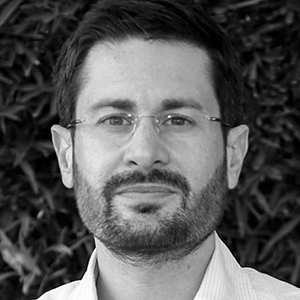
Dr Harish Kumar

Dr Harish Kumar

Dr. Harish, a Public Health Pediatrician with over 40 years of experience, has worked with the Government, UN, and development partners. He has served as an intensivist, contributed to 30+ national guidelines, authored 40+ scientific publications, and provided strategic guidance to key projects like USAID’s SAMVEG and Vriddhi, and Norway-supported NIPI. He brings deep expertise in Health Systems Strengthening, Government Partnerships, and innovation, playing a key role in initiatives like Newer Pneumonia Diagnostics, Family Participatory Care, and evidence-based health planning.

Every year, World Population Day offers us a moment to pause, reflect, and act on critical issues related to population dynamics. In a country as vast and diverse as India, this day is not only symbolic—it is a call to realign our policies with the lived realities of over 1.4 billion people. With fertility rates stabilising in some regions, declining in others, and persistently high in a few more, and poverty entrenched in specific geographies, the call for an evidence-based, geographically targeted implementation strategy is the need of the hour.

Hence, this year, we propose a shift from generic, one-size-fits-all population strategies to a geography-sensitive, evidence-based implementation and planning approach. This helps deep-dive into India’s demographic transitions, socio-economic and health inequities and zoom in on populations that require immediate attention and targeted interventions. 

India is not one demographic story but many.

The UN Population Fund’s (UNFPA) 2025 State of the World Population report states that the Total Fertility Rate (TFR) for India has dropped below the replacement level to 2.0, indicating that, on average, Indian women are having fewer than two children. The report, “Real Fertility Crisis,” argues that women continue to face significant barriers to making free and informed decisions about their reproductive lives, and considerable disparities persist across regions and states.

States like Bihar (2.98), Uttar Pradesh (2.35), and Meghalaya (2.91) still report high fertility rates. In contrast, states such as Kerala (1.8), Tamil Nadu (1.7), and West Bengal (1.6) have long crossed into low fertility regimes.

Similarly, poverty levels, measured through Multidimensional Poverty Indices (MPI), also vary sharply. High MPI districts include many in Bihar, Jharkhand, Uttar Pradesh, Chhattisgarh, and Madhya Pradesh. Relatively lower poverty is found in southern and western India, with stronger economic indicators and access to services.

This uneven demographic and development landscape demands a new policy and program implementation model that uses geography as an organising principle for planning.

Why does evidence-based planning matter?

Current national and state-level programs often deploy uniform interventions in maternal health, assuming similar needs across districts. This approach usually risks under-serving high-burden districts, where young populations, unmet need for family planning, and socio-economic deprivation converge, and two, wasting resources in low-fertility districts, where other needs like geriatric care or chronic disease management may be more pressing.

An evidence-based geographical approach using spatial data, health indicators, and poverty maps can best identify clusters requiring tailored interventions, such as demographics with high fertility, early marriage, adolescent pregnancy, and poverty.

Demographic-specific evidence-based planning

In high-fertility, high-poverty districts like Bihar, Uttar Pradesh, and Jharkhand, the focus should be shifted to accelerating family planning awareness and access, delaying the age of marriage and childbirth, and improving adolescent reproductive health. Here, we propose interventions such as deploying mobile family planning clinics and youth counsellors in underserved blocks, integrating sexual and reproductive health (SRH) modules into campaigns, and training ASHAs and Auxilliary Nurse Midwives (ANMs) in culturally sensitive counselling. Besides, let us reiterate how investments in girls’ education and nutrition and linking health services with education and skill-building are also critical.

Coming to the second division, moderate-fertility, moderate-poverty districts such as Madhya Pradesh, Rajasthan, and Assam, must shift their focus to addressing the unmet need for modern contraceptives, ensuring quality antenatal and postnatal care, and preventing adolescent girls from dropping out of school. Key actions must include scaling up postpartum family planning in hospitals, streamlining contraceptive supply logistics, and digitally tracking pregnancies through tools like the ANMOL app.

Last, in low-fertility, low-poverty districts like Kerala, Tamil Nadu, and Maharashtra, the focus must turn towards managing an ageing population, avoiding over-medicalisation in reproductive health, and promoting male participation in family planning. This involves expanding geriatric care at the Primary Health Care (PHC) level, enhancing quality of reproductive health services, conducting behaviour change campaigns targeting men, and gradually reallocating resources to address Non-communicable Diseases (NCDs) alongside reproductive health efforts.

Building an Inclusive Evidence Base: Data and Equity

India’s robust data ecosystem can be a big support in building equitable health and development tools. National Family Health Survey (NFHS) offers detailed insights on fertility, family planning, and maternal-child health, while the Health Management Information System (HMIS) provides real-time public health service data. At the same time, the MPI identifies deprived areas, and the Aspirational Districts Dashboard tracks key performance indicators across sectors.

However, to truly ensure equitable progress, it is critical to apply an equity lens that identifies and prioritises the needs of the most marginalised within each geography. This includes scheduled castes and tribes, urban slum dwellers, migrants, women with disabilities, and adolescents who are outside a formal system, often facing intersecting barriers to access and opportunities.

By integrating data with participatory planning at the block and village levels, India can move closer to the Sustainable Development Goal commitment of “leaving no one behind.” This approach not only sharpens policy targeting but ensures that the most vulnerable population is visible, heard, and served.

A Call to Action
As we mark World Population Day 2025, India stands at a demographic crossroads—some states will age rapidly in the next decade, while others still face a youth bulge. Our policies must be evidence-based, data-driven, and inclusive to serve every reality. This World Population Day, let us pledge to invest in data, dialogue, and decentralised planning—because every district matters, every woman matters, and every life counts.

FROM THE DESK

Latest Blogs

Anand Roop

Anandroop Bahadur

Group Head – Human Resources

Expertise

Human Resource Expertise, HR Strategy, Oragnisational Design, Talent & Leadership Development, Policy Governance

Anandroop Bahadur is a seasoned HR leader and strategic advisor with nearly two decades of experience across the development, consulting, and social impact ecosystem. She brings a strong blend of deep technical HR expertise, organizational design acumen, and a people-centric ethos to her work.

At IPE Global, Anandroop leads the Group Human Resources function across IPE Global and its associated entities, including Triple Line Consulting and IPE Africa. Her focus is on strengthening organizational foundations, enabling leadership effectiveness, and building scalable people systems aligned with the organisation’s global growth ambitions. Her remit spans HR strategy, organizational design, talent and leadership development, compensation and performance frameworks, policy governance, safeguarding, and culture integration across geographies.

Over the course of her career, Anandroop has held senior HR leadership and consulting roles with organisations such as Clinton Health Access Initiative (CHAI), Ford Foundation, NASSCOM Foundation, Central Square Foundation, Amity Education Group, and other international institutions. She has advised leadership teams and boards through periods of scale, transition, and transformation, and has led HR operations in high-growth, high-complexity environments.

She holds an Executive Degree in Human Resources from XLRI Jamshedpur and is a SHRM–SCP (Senior Certified Professional), reflecting her grounding in global HR standards and best practices. She has also completed advanced executive and leadership programmes, including training in coaching and organisational transformation, and is an ICF-trained executive coach, currently working towards her ACC credential.


Nikos Papachristodoulou

Nikos Papachristodoulou

Director

Expertise

Urban, Infrastructure, Disaster and Climate Resilience, Inclusive Growth

Nikos has expertise in urban and regional economic development, infrastructure, disaster and climate resilience, and inclusive growth. He oversees and manages projects for Triple Line’s cities and infrastructure portfolio.

Nikos is an urban specialist, with principal areas of expertise in urban and regional economic development, infrastructure, disaster and climate resilience, and inclusive growth. Over the past 12 years he has worked for a range of clients including the World Bank, FCDO, EU, USAID, Cities Alliance, Global Green Growth Institute (GGGI), Norwegian Refugee Council (NRC), and local authorities.

Nikos’s work has incorporated the full spectrum of the project cycle, from analytics and programme scoping and design, through implementation, and evaluation and learning.

He has a high level of familiarity with HMG business cases and ODA eligibility criteria having led and supported the development of FCDO’s urbanisation strategy and options for future investments in Somalia’s cities, Prosperity Fund Global Future Cities Programme (GFCP) scoping in Nigeria, and the development of the business case for an urban resilience programme in Tanzania.

Nikos also brings excellent understanding of World Bank latest trends and procedures as a result of his involvement in a number of analytics and technical assistance projects, including on informal settlements upgrading in Mogadishu, climate change adaptation planning in Latin American and Caribbean cities, assessment of the climate resilience of Dar es Salaam’s transport infrastructure, spatial development in Nigeria, and preparation of a handbook on integrated urban flood risk management.

Nikos holds a BSc in Economics from the University of Piraeus and an MSc in Social Development Practice from the Development Planning Unit at University College London (UCL).


Ricardo Pinto

Ricardo Pinto

Associate Director

Expertise

Private Sector Development, Regulatory Reform, Regional and Local Economy

Ricardo has 35 years´ experience in private sector development, regulatory reform, regional and local economic development in the European Union, Western Balkans, Easter Partnership Countries, Middle East, Africa, etc. He is tasked with developing our strategic operations in continental Europe and Ukraine.

Ricardo is a seasoned international development professional with over 30 years of experience designing and delivering Private Sector Development and economic growth initiatives across more than 50 countries spanning Central, Eastern and Southeast Europe, the CIS, Africa, MEDA, and Asia. He holds both a bachelor’s degree and PhD from the London School of Economics and Political Science (LSE) and is a Certified Management Consultant (CMC).

Ricardo brings a unique combination of strategic insight and practical implementation expertise. He has led high-impact assignments for key development institutions, including the European Commission, OECD, GIZ, FCDO/DFID, UNDP, UNCTAD, EBRD, ILO, ADB, World Bank, USAID, and Danida.

With a deep and practical understanding of institutional architecture, policy environment, and post-conflict recovery dynamics, and a career spanning over 30 years across transition economies, Ricardo brings not only technical depth but also a trusted reputation among donors, policymakers and peers.He is leading Triple Line’s strategic expansion into continental Europe, including Ukraine, while strengthening our credibility across the broader region and beyond. Proven Expertise Across Our Core Pillars. Ricardo’s work focuses on the areas central to Triple Line’s evolving service offering: Governance & Institutional Reform: advising public institutions on regulatory impact, policy reform, and donor coordination, Private Sector Development: strategy development for SME ecosystems, innovation, and competitiveness, Infrastructure Enabling Conditions: support for investment climate improvement and regional/local economic development and Cross-cutting themes, including green transition, women’s economic empowerment, and inclusive growth

 
LIFE AT IPE

Learning &
Development (L&D)

We inspire people to be better.

Our intuitive and personalised programmes provide clear path for growth, leadership development, and help people sharpen their skills.

0 %
People trained in last 3 years
0 %
Participation in L&D Initiatives in 2025

Your journey starts from Day One….

Structured Onboarding

Helps align expectations and lays the foundation for your success

New Hire Training

Makes you familiar with the organisation; helps you settle down in a new work environment

Customized L&D Platform

Helps upskill at your own pace through continuous learning and training programmes

Linkage with
Performance Management

Aligns resources and training needs based on your skill set

Learning is not always a formal process. We also align our organisation values to a culture of learning