Swachhta hi Seva: Redefining India’s Cleanliness Culture

Shaurya Garg

Shaurya Garg

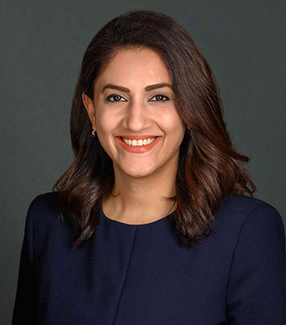
Shaurya Garg is a Senior Analyst with the Social and Economic Empowerment team at IPE Global. A Gold Medalist in Social Work from Amity University, Noida, and a law graduate in Energy Laws from UPES, Dehradun, she is an avid writer, passionate about driving change and uplifting marginalised communities.

India’s cities generate 62 million tons of waste yearly, much of it unmanaged. You might wonder how one nation tackles this. ‘Swachhata Hi Seva,’ launched in 2017, plays a big part in this fight. This campaign, part of the larger Swachh Bharat effort, calls for everyone to join in cleaning up. It is conducted for two weeks each year. Through it, India aims toward a waste-free future, linking daily choices to national goals.  
During the Swachh Bharat Diwas 2024, Prime Minister Narendra Modi emphasised the importance of adapting waste management strategies to rapid urbanisation. He stressed that “True change happens when every citizen embraces cleanliness as their duty and responsibility.. cleanliness should be an instinct of every individual and it should be done everyday”. His commitment to the Mission is further underscored by his appreciation of grassroots initiatives, such as the “Green Rolling” initiative in Arunachal Pradesh and city-wide segregation efforts in Panaji.

Is this something that cannot be done? No, India has seen examples with its own states like Indore, which has been named the cleanest city in the country for the 8th time this year in the Swachh Survekshan survey. This shows that it is more of a behavioural challenge than a systemic one. It is true that policies and infrastructure are only as effective as the people who implement them. There are various initiatives taken by the Government, the private sector, think tanks, civil society organisations, and startups in this area. From developing roads out of waste, converting municipal solid waste into energy, mandating manufacturers to collect back electronic waste for recycling, promoting smart bins, to GIS-based waste collection mapping, organisations have been stepping up to the challenge.

CSR organisations are also playing a crucial role in this sector. Startups and established companies are collaborating with municipalities on piloting projects for waste collection and recycling. They are offering unique solutions to the waste segregation problem:

  • Comprehensive services for bulk waste generators like corporates and tech parks
  • Recycling and upcycling waste into artistic and functional products like office accessories, games, home décor, etc.
  • On-demand scrap collection through mobile applications
  • Developing smart waste compactor bins

Architects and urban waste management firms are also important here, designing waste-sensitive urban spaces and planning efficient waste collection systems. Recently, waste management at the pilgrimage sites of Kedarnath and Badrinath came under scrutiny before the National Green Tribunal. The surge of tourists during the yatra season created vast amounts of solid waste. This issue worsened due to the heavy reliance on horses to transport pilgrims and supplies. With unclear municipal boundaries and fragmented governance among local authorities, temple committees, and state agencies, accountability became problematic. Such jurisdictional ambiguities and a lack of integrated planning often hinder the
implementation of effective waste management strategies, particularly in regions with high ecological sensitivity and transient populations.

Addressing these gaps requires not only better planning and coordination but also recognition of the people who drive waste recovery on the ground. India’s overflowing landfills, polluted rivers, and unmanaged plastic waste often grab international attention, overshadowing the progress we have made and affecting our global image. More than government or private sector actions, this calls for a behaviour-driven change. A convenience-based attitude has been our way of life for a long time; however, what we require today is an attitude of empathy, realising that maintaining cleanliness in our environment saves time and energy for others. One good measure is to include cleanliness in the school curriculum and instil these values in classrooms at a young age. Establishing a culture of cleanliness in India will require long-term commitment, joint efforts, and a change in fundamental social attitudes, but it is a path worth embarking upon.

This shift in mindset and practice is not only crucial for local communities but also aligns directly with the global Sustainable Development Goals (SDGs), specifically, SDG 11 (Sustainable Cities and Communities) and SDG 12 (Responsible Consumption and Production). These SDGs focus on prudent utilisation of resources, minimising pollution, and developing cleaner, healthier cities. Through the integration of behaviour-driven initiatives with technology-driven and socially conscious waste management systems, India can make significant contributions toward both its national development goals and international sustainability targets.

Reference: https://www.pib.gov.in/PressReleseDetailm.aspx?PRID=1667099#:~:text=With%20an%20ever%20increasing%20population,of%20’Wealth%20from%20Waste

FROM THE DESK

Latest Blogs

Anand Roop

Anandroop Bahadur

Group Head – Human Resources

Expertise

Human Resource Expertise, HR Strategy, Oragnisational Design, Talent & Leadership Development, Policy Governance

Anandroop Bahadur is a seasoned HR leader and strategic advisor with nearly two decades of experience across the development, consulting, and social impact ecosystem. She brings a strong blend of deep technical HR expertise, organizational design acumen, and a people-centric ethos to her work.

At IPE Global, Anandroop leads the Group Human Resources function across IPE Global and its associated entities, including Triple Line Consulting and IPE Africa. Her focus is on strengthening organizational foundations, enabling leadership effectiveness, and building scalable people systems aligned with the organisation’s global growth ambitions. Her remit spans HR strategy, organizational design, talent and leadership development, compensation and performance frameworks, policy governance, safeguarding, and culture integration across geographies.

Over the course of her career, Anandroop has held senior HR leadership and consulting roles with organisations such as Clinton Health Access Initiative (CHAI), Ford Foundation, NASSCOM Foundation, Central Square Foundation, Amity Education Group, and other international institutions. She has advised leadership teams and boards through periods of scale, transition, and transformation, and has led HR operations in high-growth, high-complexity environments.

She holds an Executive Degree in Human Resources from XLRI Jamshedpur and is a SHRM–SCP (Senior Certified Professional), reflecting her grounding in global HR standards and best practices. She has also completed advanced executive and leadership programmes, including training in coaching and organisational transformation, and is an ICF-trained executive coach, currently working towards her ACC credential.


Nikos Papachristodoulou

Nikos Papachristodoulou

Director

Expertise

Urban, Infrastructure, Disaster and Climate Resilience, Inclusive Growth

Nikos has expertise in urban and regional economic development, infrastructure, disaster and climate resilience, and inclusive growth. He oversees and manages projects for Triple Line’s cities and infrastructure portfolio.

Nikos is an urban specialist, with principal areas of expertise in urban and regional economic development, infrastructure, disaster and climate resilience, and inclusive growth. Over the past 12 years he has worked for a range of clients including the World Bank, FCDO, EU, USAID, Cities Alliance, Global Green Growth Institute (GGGI), Norwegian Refugee Council (NRC), and local authorities.

Nikos’s work has incorporated the full spectrum of the project cycle, from analytics and programme scoping and design, through implementation, and evaluation and learning.

He has a high level of familiarity with HMG business cases and ODA eligibility criteria having led and supported the development of FCDO’s urbanisation strategy and options for future investments in Somalia’s cities, Prosperity Fund Global Future Cities Programme (GFCP) scoping in Nigeria, and the development of the business case for an urban resilience programme in Tanzania.

Nikos also brings excellent understanding of World Bank latest trends and procedures as a result of his involvement in a number of analytics and technical assistance projects, including on informal settlements upgrading in Mogadishu, climate change adaptation planning in Latin American and Caribbean cities, assessment of the climate resilience of Dar es Salaam’s transport infrastructure, spatial development in Nigeria, and preparation of a handbook on integrated urban flood risk management.

Nikos holds a BSc in Economics from the University of Piraeus and an MSc in Social Development Practice from the Development Planning Unit at University College London (UCL).


Ricardo Pinto

Ricardo Pinto

Associate Director

Expertise

Private Sector Development, Regulatory Reform, Regional and Local Economy

Ricardo has 35 years´ experience in private sector development, regulatory reform, regional and local economic development in the European Union, Western Balkans, Easter Partnership Countries, Middle East, Africa, etc. He is tasked with developing our strategic operations in continental Europe and Ukraine.

Ricardo is a seasoned international development professional with over 30 years of experience designing and delivering Private Sector Development and economic growth initiatives across more than 50 countries spanning Central, Eastern and Southeast Europe, the CIS, Africa, MEDA, and Asia. He holds both a bachelor’s degree and PhD from the London School of Economics and Political Science (LSE) and is a Certified Management Consultant (CMC).

Ricardo brings a unique combination of strategic insight and practical implementation expertise. He has led high-impact assignments for key development institutions, including the European Commission, OECD, GIZ, FCDO/DFID, UNDP, UNCTAD, EBRD, ILO, ADB, World Bank, USAID, and Danida.

With a deep and practical understanding of institutional architecture, policy environment, and post-conflict recovery dynamics, and a career spanning over 30 years across transition economies, Ricardo brings not only technical depth but also a trusted reputation among donors, policymakers and peers.He is leading Triple Line’s strategic expansion into continental Europe, including Ukraine, while strengthening our credibility across the broader region and beyond. Proven Expertise Across Our Core Pillars. Ricardo’s work focuses on the areas central to Triple Line’s evolving service offering: Governance & Institutional Reform: advising public institutions on regulatory impact, policy reform, and donor coordination, Private Sector Development: strategy development for SME ecosystems, innovation, and competitiveness, Infrastructure Enabling Conditions: support for investment climate improvement and regional/local economic development and Cross-cutting themes, including green transition, women’s economic empowerment, and inclusive growth

 
LIFE AT IPE

Learning &
Development (L&D)

We inspire people to be better.

Our intuitive and personalised programmes provide clear path for growth, leadership development, and help people sharpen their skills.

0 %
People trained in last 3 years
0 %
Participation in L&D Initiatives in 2025

Your journey starts from Day One….

Structured Onboarding

Helps align expectations and lays the foundation for your success

New Hire Training

Makes you familiar with the organisation; helps you settle down in a new work environment

Customized L&D Platform

Helps upskill at your own pace through continuous learning and training programmes

Linkage with
Performance Management

Aligns resources and training needs based on your skill set

Learning is not always a formal process. We also align our organisation values to a culture of learning