Budget 2024: Seven Key Expectations From the School Education Sector

Shalender Sharma

India’s education sector has made pivotal strides over the past few years. The policy fabric is well laid out through the Right to Education Act 2009 and National Education Policy 2020.

The advent of the Samagra Shiksha (SS) programme has streamlined planning and implementation, merging isolated initiatives into a unified framework. This consolidation aims to enrich and enhance efficiency in the delivery of education from pre-primary through grade XII, encapsulating the entire school system. 

Despite the progressive shift towards an outcome-based approach and a substantial focus on foundational literacy and numeracy, there remains a discord between ambitious policy frameworks and the financial support required to actualise them.

Samagra Shiksha is a norm-driven programme that leaves limited space for innovation and experimentation. While the programme needs to provide more flexibility to states for designing customised interventions, a focused approach on certain specific streams would provide a much-needed push. 

Seven key focus areas as expectations from the 2024 Budget for the Education Sector are as follows:

Foundational Focus: Substantial investments in pre-primary and early primary education to solidify the base of the educational pyramid are needed. This calls for robust school readiness programs and level-based learning support to foster key physical and cognitive skills at an early age. A focus here should be on understanding the incremental learning objectives and continuously assessing students to ensure that the minimum learning levels are achieved before they proceed to an advanced stage. Alignment with NIPUN (National Initiative for Proficiency in Reading with Understanding and Numeracy) objectives will be crucial in strengthening the transition from pre-primary to primary and improving quality.

GLOCAL Development: Emphasis on ‘GLOCAL’ – global awareness and local action – in school development to foster environments that nurture holistic learning. This would account for suitable contextualisation of global best practices and adapting to the changing requirements through conferences, virtual global connects, exposure visits, evidence-based planning, and informed decision-making to optimise local actions on the ground. This also promotes a culture of experience sharing and fostering innovative ideas and solutions aligned with global standards and delivered as per identified local needs.

Teacher Professional Development: Allocation for blended teacher professional development (TDP) programs combining online and face-to-face modalities, incentivising motivation and leadership. TPD interventions will need to have a dual focus for comprehensive professional development support. Firstly, on building competencies of teachers across different grades and subjects with defined roles, expectations and performance standards in alignment with updated learning trends and utilisation of educational technologies. Secondly, in providing mentorship support such that they are able to put forth their concerns to suitable professionals at any time instead of relying on periodic training programmes.

Thus, a shift from occasional training to continuous and holistic capacity building with handholding support is seen to be crucial.

Bridge social, gender, and inclusion gaps: The COVID-19 pandemic has posed unprecedented challenges to the education sector globally, and India is no exception. It has hit the most disadvantaged students the most and the gaps have increased. To address this, the preliminary focus should be on accurate identification and tracking of the disadvantaged children who have dropped out/never enrolled. Then, collaborative efforts involving the School Management Committees (SMCs), Community, and school leadership. Additionally, local initiatives need to be taken to tackle the issue.

Institutional Reinforcement: DIETs (District Institute of Educational Training) and SCERTs (Social Communication, Emotional Regulation, and Transactional Support) serve as crucial pillars in the Indian education system, acting as key entities responsible for shaping educational policies, conducting research, and providing training to educators. Strengthening the capacities of these institutions is paramount for the holistic development of the Indian education system. Both institutions play an instrumental role in providing pre-service and in-service teachers’ training and conducting research to identify and address challenges faced by the schools. Strengthened capacities of DIETs and SCERTs enable effective teacher training, improving pedagogical practices and aligning educators with contemporary teaching methodologies.

Holistic Development: Integration of life skills through activities, promotion of entrepreneurial innovative mindsets, and sports for educational development as part of the larger curriculum and practice would be imperative in preparing students for the future. A holistic curriculum is imperative for achieving holistic development, where these aspects are seamlessly integrated into the standard academic pursuits to alleviate the pressure on both the educators and the students. 

Assessment reforms: Central and State Governments are focusing on assessing the students through the standardised National and State Achievement Surveys from time to time. A child-centric focus on achieving the Learning Objectives (LOs) is being monitored and tracked. If continued effectively, these efforts are bound to give good results, albeit not overnight – it takes time. The focus on assessment reforms has outlined the need for it to be LO-centric, adaptive, reflective, and feedback-oriented. In order to ease the burden of teachers in creating assessments, technology may be leveraged to provide adaptive assessments with changing levels of difficulty and aid in the identification of learning hard spots. The aim would be to administer continuous assessments and sensitise stakeholders on the effective use of assessment data to inform pedagogy and teaching methods that cater to the learning levels of students. Additionally, the administration of authentic assessments and project-based learning through real-world case studies and simulations will be highly crucial.  

Lastly, the budgetary expectation for the year 2024 should not merely be an inflation adjustment but a clarion call for a significant uplift in funding. This increase must reflect a commitment to efficient fund utilisation, ensuring that every rupee is a step towards achieving the aspirational goals of the Indian educational landscape

FROM THE DESK

Latest Blogs

Anand Roop

Anandroop Bahadur

Group Head – Human Resources

Expertise

Human Resource Expertise, HR Strategy, Oragnisational Design, Talent & Leadership Development, Policy Governance

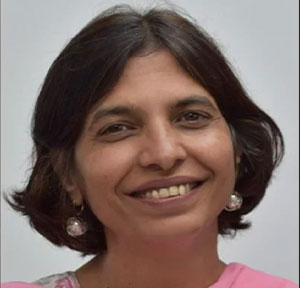
Anandroop Bahadur is a seasoned HR leader and strategic advisor with nearly two decades of experience across the development, consulting, and social impact ecosystem. She brings a strong blend of deep technical HR expertise, organizational design acumen, and a people-centric ethos to her work.

At IPE Global, Anandroop leads the Group Human Resources function across IPE Global and its associated entities, including Triple Line Consulting and IPE Africa. Her focus is on strengthening organizational foundations, enabling leadership effectiveness, and building scalable people systems aligned with the organisation’s global growth ambitions. Her remit spans HR strategy, organizational design, talent and leadership development, compensation and performance frameworks, policy governance, safeguarding, and culture integration across geographies.

Over the course of her career, Anandroop has held senior HR leadership and consulting roles with organisations such as Clinton Health Access Initiative (CHAI), Ford Foundation, NASSCOM Foundation, Central Square Foundation, Amity Education Group, and other international institutions. She has advised leadership teams and boards through periods of scale, transition, and transformation, and has led HR operations in high-growth, high-complexity environments.

She holds an Executive Degree in Human Resources from XLRI Jamshedpur and is a SHRM–SCP (Senior Certified Professional), reflecting her grounding in global HR standards and best practices. She has also completed advanced executive and leadership programmes, including training in coaching and organisational transformation, and is an ICF-trained executive coach, currently working towards her ACC credential.


Nikos Papachristodoulou

Nikos Papachristodoulou

Director

Expertise

Urban, Infrastructure, Disaster and Climate Resilience, Inclusive Growth

Nikos has expertise in urban and regional economic development, infrastructure, disaster and climate resilience, and inclusive growth. He oversees and manages projects for Triple Line’s cities and infrastructure portfolio.

Nikos is an urban specialist, with principal areas of expertise in urban and regional economic development, infrastructure, disaster and climate resilience, and inclusive growth. Over the past 12 years he has worked for a range of clients including the World Bank, FCDO, EU, USAID, Cities Alliance, Global Green Growth Institute (GGGI), Norwegian Refugee Council (NRC), and local authorities.

Nikos’s work has incorporated the full spectrum of the project cycle, from analytics and programme scoping and design, through implementation, and evaluation and learning.

He has a high level of familiarity with HMG business cases and ODA eligibility criteria having led and supported the development of FCDO’s urbanisation strategy and options for future investments in Somalia’s cities, Prosperity Fund Global Future Cities Programme (GFCP) scoping in Nigeria, and the development of the business case for an urban resilience programme in Tanzania.

Nikos also brings excellent understanding of World Bank latest trends and procedures as a result of his involvement in a number of analytics and technical assistance projects, including on informal settlements upgrading in Mogadishu, climate change adaptation planning in Latin American and Caribbean cities, assessment of the climate resilience of Dar es Salaam’s transport infrastructure, spatial development in Nigeria, and preparation of a handbook on integrated urban flood risk management.

Nikos holds a BSc in Economics from the University of Piraeus and an MSc in Social Development Practice from the Development Planning Unit at University College London (UCL).


Ricardo Pinto

Ricardo Pinto

Associate Director

Expertise

Private Sector Development, Regulatory Reform, Regional and Local Economy

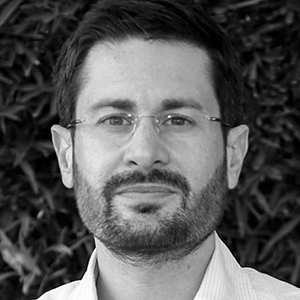
Ricardo has 35 years´ experience in private sector development, regulatory reform, regional and local economic development in the European Union, Western Balkans, Easter Partnership Countries, Middle East, Africa, etc. He is tasked with developing our strategic operations in continental Europe and Ukraine.

Ricardo is a seasoned international development professional with over 30 years of experience designing and delivering Private Sector Development and economic growth initiatives across more than 50 countries spanning Central, Eastern and Southeast Europe, the CIS, Africa, MEDA, and Asia. He holds both a bachelor’s degree and PhD from the London School of Economics and Political Science (LSE) and is a Certified Management Consultant (CMC).

Ricardo brings a unique combination of strategic insight and practical implementation expertise. He has led high-impact assignments for key development institutions, including the European Commission, OECD, GIZ, FCDO/DFID, UNDP, UNCTAD, EBRD, ILO, ADB, World Bank, USAID, and Danida.

With a deep and practical understanding of institutional architecture, policy environment, and post-conflict recovery dynamics, and a career spanning over 30 years across transition economies, Ricardo brings not only technical depth but also a trusted reputation among donors, policymakers and peers.He is leading Triple Line’s strategic expansion into continental Europe, including Ukraine, while strengthening our credibility across the broader region and beyond. Proven Expertise Across Our Core Pillars. Ricardo’s work focuses on the areas central to Triple Line’s evolving service offering: Governance & Institutional Reform: advising public institutions on regulatory impact, policy reform, and donor coordination, Private Sector Development: strategy development for SME ecosystems, innovation, and competitiveness, Infrastructure Enabling Conditions: support for investment climate improvement and regional/local economic development and Cross-cutting themes, including green transition, women’s economic empowerment, and inclusive growth

 
LIFE AT IPE

Learning &
Development (L&D)

We inspire people to be better.

Our intuitive and personalised programmes provide clear path for growth, leadership development, and help people sharpen their skills.

0 %
People trained in last 3 years
0 %
Participation in L&D Initiatives in 2025

Your journey starts from Day One….

Structured Onboarding

Helps align expectations and lays the foundation for your success

New Hire Training

Makes you familiar with the organisation; helps you settle down in a new work environment

Customized L&D Platform

Helps upskill at your own pace through continuous learning and training programmes

Linkage with
Performance Management

Aligns resources and training needs based on your skill set

Learning is not always a formal process. We also align our organisation values to a culture of learning