The Cost of Gentrification and Climate Change on Urban Poor

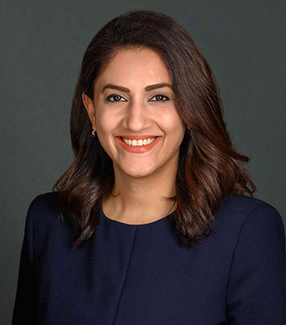
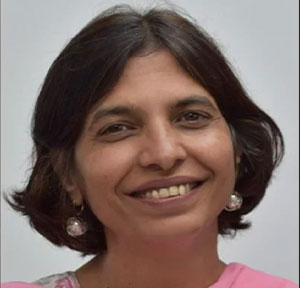
Swati Shikha

Swati Shikha

Swati Shikha is an independent journalist and development consultant. She has been in the development sector for over 8 years and facilitated by the National Commission for Women chairperson in 2019. Swati has been advocating for and working along the lines of gender, disability, health, environment and justice.

It was the first week of February. I was on my field trip with Swarnalata Devi from SEWA-Bharat, part of her team training the women from Ranchi’s Hamu Road shanties on digital and financial literacy. Quite often, when discussing financial literacy with women from rural-urban households, health would be an unavoidable component. Something similar happened this time too, when the training session diversed into the talks of health troubles and expenses, and one of the women would suddenly say – “Beemeri ka mausam aa raha hai. Pehle itna nehi hota tha (The seasons of diseases are fast approaching. It was not so much like this earlier).”

In developing countries like India, and especially in states like Jharkhand, the health of the people has become sensitive to shifts in weather patterns and other aspects of climate change, owing to high population, rapid industrialization, large scale large-scale to urban migration resulting in unplanned urbanization, depletion of forest cover, high energy consumption, variation in food security, unclean air, vector-borne diseases, lack of sewage and waste management, and thereafter, lack of access to health care. 

While Jharkhand is where I would like to begin, the perils of climate change stemming from rapid and unplanned urbanization and, subsequently, gentrification have made summers one-long nightmare for the urban poor across India. Despite much recorded and published evidence of global warming and climate change disproportionately affecting the “marginalized,” policies and civic patterns do not show significant changes in their sustainable development practice. While several developmental projects continue to grow and expand, the rampant cutting of forests and turning rural areas into wastelands have shown alarming consequences on the health of women, children, and poor and rural communities countrywide.

While it is generally accepted that urbanization has been instrumental in bringing about greater economic prosperity to nations, it also has major negative fallouts, including the rise of a class of human health issues. The urban population is a heterogeneous group where the poor, women, Adivasis, children, and elderly are at greater risk of facing inequity in accessing healthcare services which can jeopardize the efforts to attain universal health coverage. According to the UN’s prognosis, India will more than double its urban population from 367 million in 2010 to 915 million in 2050 –  making it an area of mega-urbanization. In this context, India’s urban population faces a rapid transformation of health determinants – deteriorating environmental conditions, continuing social fragmentation, and overburdened urban infrastructure – to name just a few.

At almost every corner of a state, debris, dust, and noise from demolition and construction sites meet homelessness as pollution levels rise alarmingly. The cost of gentrification is much greater than what meets the eye. When these construction and demolition activities continue for a prolonged period and at a higher magnitude, different nuisances may have a synergistic or cumulative impact, further triggering climate change and pollution. 

Gentrification creates an influx of the upper-middle and wealthy class of people, who begin investing in new businesses and land, renovating, rebuilding homes, and buying properties in low-income areas, therefore causing an increase in property values. This further pushes low-income residents into ghettos and risky living conditions. Rapid gentrification without sustainable and inclusive urban planning causes neighborhoods to undergo constant reconstruction in a way of maintaining systematic oppression as certain sections of the population risk loss of homes, livelihoods, and culture,  as well as health-related hazards.

The past several years have marked a fast-paced gentrification nationwide and worldwide. Limited but available evidence from qualitative and quantitative studies reveals that the health of some social groups may benefit from gentrification. In contrast, it would worsen the health and living conditions of others due to climatic conditions. Despite the large-scale socioeconomic and demographic changes, little to no research has examined the association of gentrification with air quality in depth. A recent Henry Ford Health and Michigan State University study found that gentrification leads to worsened air quality. “We initially thought air quality would be better in gentrified areas because economic conditions are better,” says one of the researchers and a thoracic surgeon at Henry Ford Health, adding. “But air quality actually worsened in newly gentrified areas. It makes sense: with gentrification comes increased construction and traffic, which leads to more exhaust and air pollution. If gentrification is accompanied by increased parks and green spaces, air quality will eventually improve.”

In my home state, Jharkhand, rising GHG and wastewater emissions from rapid urbanization have severely impacted water quality, air quality, and monsoon patterns, inevitably threatening food security, sustainability, and the mental and physical health of the local population. Small towns like Kanke have undergone gentrification, with new malls, gyms, and high rises cropping up in broad daylight without much planning, resulting in rising temperatures, long summers, heat waves, and increased smog levels. A recent study found that aerosol pollution from thermal plants is expected to rise by five percent in the state next year, becoming a host of health-related issues for people. 

Despite having one of the highest forest covers in the country, Jharkhand is India’s eighth most polluted state, with a concentration of delicate particulate matter (PM2.5), at 61.6 micrograms per cubic meter, according to the 2022 Air Quality Life Index (AQLI) annual report.

While the pace and scale of urban development continue as part of the UN SDGs, we mustn’t forget that health is an asset and cornerstone of sustainable urban development. Therefore, goals, targets, and indicators must be framed to handle the extremely complex issues pertaining to health effectively. Action from various players at numerous levels and governance networks is necessary for the overall achievement of healthy lives.

FROM THE DESK

Latest Blogs

Anand Roop

Anandroop Bahadur

Group Head – Human Resources

Expertise

Human Resource Expertise, HR Strategy, Oragnisational Design, Talent & Leadership Development, Policy Governance

Anandroop Bahadur is a seasoned HR leader and strategic advisor with nearly two decades of experience across the development, consulting, and social impact ecosystem. She brings a strong blend of deep technical HR expertise, organizational design acumen, and a people-centric ethos to her work.

At IPE Global, Anandroop leads the Group Human Resources function across IPE Global and its associated entities, including Triple Line Consulting and IPE Africa. Her focus is on strengthening organizational foundations, enabling leadership effectiveness, and building scalable people systems aligned with the organisation’s global growth ambitions. Her remit spans HR strategy, organizational design, talent and leadership development, compensation and performance frameworks, policy governance, safeguarding, and culture integration across geographies.

Over the course of her career, Anandroop has held senior HR leadership and consulting roles with organisations such as Clinton Health Access Initiative (CHAI), Ford Foundation, NASSCOM Foundation, Central Square Foundation, Amity Education Group, and other international institutions. She has advised leadership teams and boards through periods of scale, transition, and transformation, and has led HR operations in high-growth, high-complexity environments.

She holds an Executive Degree in Human Resources from XLRI Jamshedpur and is a SHRM–SCP (Senior Certified Professional), reflecting her grounding in global HR standards and best practices. She has also completed advanced executive and leadership programmes, including training in coaching and organisational transformation, and is an ICF-trained executive coach, currently working towards her ACC credential.


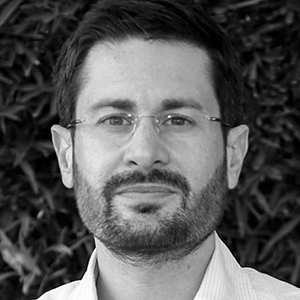
Nikos Papachristodoulou

Nikos Papachristodoulou

Director

Expertise

Urban, Infrastructure, Disaster and Climate Resilience, Inclusive Growth

Nikos has expertise in urban and regional economic development, infrastructure, disaster and climate resilience, and inclusive growth. He oversees and manages projects for Triple Line’s cities and infrastructure portfolio.

Nikos is an urban specialist, with principal areas of expertise in urban and regional economic development, infrastructure, disaster and climate resilience, and inclusive growth. Over the past 12 years he has worked for a range of clients including the World Bank, FCDO, EU, USAID, Cities Alliance, Global Green Growth Institute (GGGI), Norwegian Refugee Council (NRC), and local authorities.

Nikos’s work has incorporated the full spectrum of the project cycle, from analytics and programme scoping and design, through implementation, and evaluation and learning.

He has a high level of familiarity with HMG business cases and ODA eligibility criteria having led and supported the development of FCDO’s urbanisation strategy and options for future investments in Somalia’s cities, Prosperity Fund Global Future Cities Programme (GFCP) scoping in Nigeria, and the development of the business case for an urban resilience programme in Tanzania.

Nikos also brings excellent understanding of World Bank latest trends and procedures as a result of his involvement in a number of analytics and technical assistance projects, including on informal settlements upgrading in Mogadishu, climate change adaptation planning in Latin American and Caribbean cities, assessment of the climate resilience of Dar es Salaam’s transport infrastructure, spatial development in Nigeria, and preparation of a handbook on integrated urban flood risk management.

Nikos holds a BSc in Economics from the University of Piraeus and an MSc in Social Development Practice from the Development Planning Unit at University College London (UCL).


Ricardo Pinto

Ricardo Pinto

Associate Director

Expertise

Private Sector Development, Regulatory Reform, Regional and Local Economy

Ricardo has 35 years´ experience in private sector development, regulatory reform, regional and local economic development in the European Union, Western Balkans, Easter Partnership Countries, Middle East, Africa, etc. He is tasked with developing our strategic operations in continental Europe and Ukraine.

Ricardo is a seasoned international development professional with over 30 years of experience designing and delivering Private Sector Development and economic growth initiatives across more than 50 countries spanning Central, Eastern and Southeast Europe, the CIS, Africa, MEDA, and Asia. He holds both a bachelor’s degree and PhD from the London School of Economics and Political Science (LSE) and is a Certified Management Consultant (CMC).

Ricardo brings a unique combination of strategic insight and practical implementation expertise. He has led high-impact assignments for key development institutions, including the European Commission, OECD, GIZ, FCDO/DFID, UNDP, UNCTAD, EBRD, ILO, ADB, World Bank, USAID, and Danida.

With a deep and practical understanding of institutional architecture, policy environment, and post-conflict recovery dynamics, and a career spanning over 30 years across transition economies, Ricardo brings not only technical depth but also a trusted reputation among donors, policymakers and peers.He is leading Triple Line’s strategic expansion into continental Europe, including Ukraine, while strengthening our credibility across the broader region and beyond. Proven Expertise Across Our Core Pillars. Ricardo’s work focuses on the areas central to Triple Line’s evolving service offering: Governance & Institutional Reform: advising public institutions on regulatory impact, policy reform, and donor coordination, Private Sector Development: strategy development for SME ecosystems, innovation, and competitiveness, Infrastructure Enabling Conditions: support for investment climate improvement and regional/local economic development and Cross-cutting themes, including green transition, women’s economic empowerment, and inclusive growth

 
LIFE AT IPE

Learning &
Development (L&D)

We inspire people to be better.

Our intuitive and personalised programmes provide clear path for growth, leadership development, and help people sharpen their skills.

0 %
People trained in last 3 years
0 %
Participation in L&D Initiatives in 2025

Your journey starts from Day One….

Structured Onboarding

Helps align expectations and lays the foundation for your success

New Hire Training

Makes you familiar with the organisation; helps you settle down in a new work environment

Customized L&D Platform

Helps upskill at your own pace through continuous learning and training programmes

Linkage with
Performance Management

Aligns resources and training needs based on your skill set

Learning is not always a formal process. We also align our organisation values to a culture of learning