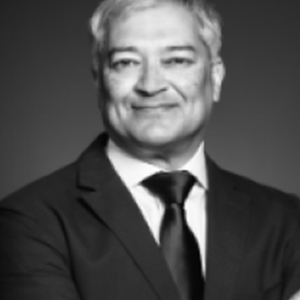
Anil Bansal
Chief-of-Party, inREPLACE & Senior Director,
IPE Global
(The views expressed in this article are solely those of the author and do not reflect the views of the organization or program)
Plastic waste management is a globally identified challenge which is increasingly taking centre stage in our efforts for climate action. Globally, over 400 million tonnes of plastic is generated every year; plastic is now in the air we breathe, what we eat, the water and soil. To understand the quantum of plastic waste, one million plastic bottles are purchased every minute, while up to five trillion plastic bags are used worldwide every year. In total, half of all plastic produced is designed for single-use. Plastics are now contributing to the most pressing concerns of the climate – loss of biodiversity, pollution, and climate change. Plastic on account of its versatility, affordability, and durability has infiltrated every aspect of our lives. Understanding this dependence and knowing that continuing with current plastic production practices is no longer compatible with curbing long-term global temperature increases, , it is essential to prioritize efforts to reduce plastic usage and explore methods to extend the life-cycle of existing plastics. In India, the challenge is particularly acute, with the country generating an estimated 9.46 million tonnes of plastic waste annually, the problem and the need for a resolution is undeniable. India, presently identifies that waste management, which has a considerable component of plastic waste, is critical to the journey of sustainable development. Moreover, plastic waste management in India represents an opportunity to tackle its waste management challenges, while holding the potential to drive economic growth and enhance livelihoods particularly through Extended Producer Responsibility (EPR).
Recently, the G20 2023, under India’s leadership, marked a significant milestone in the global effort to promote sustainable waste management and circularity. India took a proactive stance, highlighting the urgent need to address the escalating challenges posed by waste generation and the environmental repercussions of inadequate waste disposal. The focus was on adopting a comprehensive strategy encompassing waste reduction, heightened recycling and reusability, and the advancement of circular economy principles. Global initiatives in advancing sustainable development, such as COP 28, drive global action and accelerate discourse on waste management bringing together nations and people across countries and industries to discuss and advance global climate action. Similarly, the ongoing INC-4 session, based on the revised draft text of the international legally binding instrument on plastic pollution, including in the marine environment (UNEP/PP/INC.4/3), is focussed on streamlining and standardizing plastic waste management and providing pertinent insights and recommendations on Extended Producer Responsibility (EPR) and Waste Management among others aspects of the plastics value chain.
These forums reinforce the need for collaborative efforts to address identified challenges. It is crucial to delve into the discussions around EPR and waste management particularly as in UNEP PP INC-4 revised draft instrument for better waste management and improved plastics circularity.
The INC-4 session is especially significant as it addresses and standardises the categorisation and management of problematic and avoidable plastic products, including short-lived and single-use plastic products, intentionally added microplastics, micro- and nano plastics. We have been presented with a challenge, and while plastic waste management can pave the way for sustained use of polymers without having adverse environmental impacts, plastic reduction, reuse, and recycling is our only chance at safeguarding the climate against the neglect of decades. From the 1950’s plastic generation has been on an incline, and by the 2000’s we generated more plastic in a decade than we had in over 40 years (UNEP). Post the 2020 Covid-19 pandemic, this dependence on plastic has just further increased. Plastic waste management alone cannot neutralize decades of unchecked plastic production and use. There is a need to reduce dependency on plastic at an individualistic level. Any and every strategy of plastic reduction and waste management tracks back to the generator and their tendencies, which is also why developmental initiatives around plastic waste management are heavily reliant on Social and Behaviour Change Communication (SBC). There is a globally identified need to revaluate our approach and find alternatives that can if not invalidate the ill effects of plastic use till date, at least set the foundation for more conscious efforts in plastic reduction.
Extended Producer Responsibility (EPR), and its way forward for India:
Illustrating plastic waste management strategies tracing back to the generator, the Extended Producer Responsibility (EPR), a critical component of modern waste management strategies, is making significant strides. The existing draft instrument mentions establishing EPR systems as a core obligation, a reference to modalities for national EPR systems on a sectoral basis, its essential features and considerations for a just transition during implementation.
Considering that within the Indian context there is no percolation of efforts from the national level to the state and Urban Local Bodies (ULBs) (as the nodal agency for MSW), especially the inclusion of the real collectors, the informal sector, and the need for adequate and sustained scaling, certain aspects need to be thought through for a sound EPR system for the country. To begin with, a clear definition of EPR, which would mandate companies who introduce certain products/packaging into a country’s market to be wholly responsible and also provide funding for after-use processing and collection. Further, a set of well-defined minimum requirements in sector-specific EPR regulations, starting with packaging, for the national level. Guidelines, toolboxes, recourses and assessments to avail necessary resources for EPR capacitation. Identifying priority product categories and a sound review process becomes particularly important in the context of India, wherein the objective is to take the benefits implicit in the system beyond the ‘big players’ in recycling. While the onus of EPR lies predominantly with larger companies, MNCs and manufacturing oriented processes, the ULB is the key stakeholder for municipal solid waste, and the informal sector largely sustains collection and segregation services. While companies invest generously in innovation and technology to optimise production, there is relatively less funds allocated to the after-use collection, handling, and so on. EPR in this context will have to trickle down to the basal levels to have tangible impacts across the waste value chain.
Waste Management and the Informal Sector:
Closely linked with Extended Producer Responsibility (EPR), is waste management, and India has made considerable strides in the same. The INC-4 draft instrument enables further improvements and scaling for the Indian waste sector. The proposed common framework for setting national targets and standards for collection, sorting, reuse, and recycling of plastic waste. This is further substantiated by minimum requirements for waste management facilities to minimize emissions. It is a step towards standardizing and streamlining existing efforts and underpinning it within a larger national framework. Additionally, the draft emphasizes the need to protect the livelihoods and rights of waste pickers and workers in informal waste and cooperative settings, linking them with the provisions to ensure a just transition. For India, wherein 1-2% of the entire nation’s population is engaged in informal waste handling, this proposition positions a considerable majority of the waste value chain to benefit from, and sustain livelihoods through waste handling. It can potentially bridge the gap that the country has strived to overcome, in terms of integration and representation for the informal sector working in waste.
Suggestions from the INC-4 draft support mechanisms for implementing effective municipal waste management systems tailored to local conditions. It also proposes a review process allowing the governing body of the treaty to amend, update, and expand the waste management annex.
INC-4’s focus on EPR and waste management is crucial for addressing plastic pollution, as a whole and its granularities at the national, regional, and ULB levels. There is a need to identify and utilize the role of the Municipalities in EPR implementation. Finances and funding mechanisms need to be identified/mobilized for innovations for plastic alternatives and better recycling. Plastic waste management cannot solely be the solution for addressing the billions of tonnes of plastic that we ourselves have produced and used, reduction in plastic consumption is the need of the hour. Reducing plastic production and consumption, will actively reduce the waste generated. However just improved plastic waste management while not reducing the production and use may not have as much of an impact. Therefore, both of these aspects go hand-in-hand, working in synergy to address our plastic challenge.
Initiatives such as the USAID supported inREPLACE program implemented by IPE Global led consortium, are working towards understanding the specific problems of the sector, opportunities to improve existing systems, improve SWM and advance a plastics circular economy, setting an example for others to follow.
The inREPLACE program brings together experts, beneficiaries, technologies, and the insights that develop strategies to reduce plastic, reinforce 3R’s, improve recyclability through improved market linkages and circularity, and work on ground to implement changes that advance a sustainable and resilient future.