Ashwajit Singh stated that One of the key challenges faced by the migrant workers in the cities at the beginning of the lockdowns was the lack of food security and a lack of access to foodgrains.
Under the program, people are now allowed to take their quota of foodgrains from a “fair-price shop” anywhere in India by giving their ration card number and providing biometric authentication. Until now Indians could only receive the rations in their hometowns, which could discourage some from moving away in search of work.
The coronavirus outbreak is accelerating a push to digitize India’s food-rationing system, allowing citizens to receive entitlements anywhere in the country — boosting labor mobility and the country’s economic recovery.
The “One Nation One Ration Card” system will include about 800 million people under the world’s biggest food-security program. Prime Minister Narendra Modi’s administration is betting that nationwide portability of rations can help bring migrants back to cities after the world’s largest lockdown — imposed in March with just a few hours’ notice — left […]
India, which is at the third spot after the US (4,238,500) and Brazil (2,419,091) in covid-19 cases, has been seeing a sharp upward trend of the disease in its cumulative cases average. This is despite India being far behind in testing than these countries. The country saw a record 50,000 infections in the past one […]
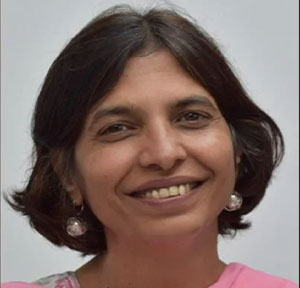
Ms Arti Ahuja

Arti Ahuja

Director

Retired from the Indian Administrative Services, Ms Ahuja has over 34 years of experience in administration, policy formulation, project management, and leadership across the public sector. Her expertise spans health systems, nutrition, women’s workforce participation, vulnerable populations, petrochemicals, and social sector programs. She has held several senior positions in the Government of India, including Secretary, Ministry of Labour and Employment, where she led reforms to strengthen worker welfare and represented India at the G20 Employment Working Group; Secretary, Ministry of Chemicals and Petrochemicals, where she initiated the Production Linked Incentive (PLI) scheme; and Secretary, Women & Child Development, where she directed large-scale nutrition and empowerment initiatives, strengthening the Integrated Child Development Services (ICDS). As Secretary of Health, Government of India she played a pivotal role in India’s COVID-19 response, launched the National Digital Health Mission, and advanced national programs on TB and AIDS control. She continues to advise on gender, climate change, and nutrition, contributes to national and international publications, and teaches public policy and nutrition at leading academic institutions. She holds a Master’s degree in Public Health from the Harvard School of Public Health; Master’s in Public Policy from Princeton University; Master’s in Economics (Gold Medallist) from Panjab University, and is a Bachelor of Law from the University of Delhi.

LIFE AT IPE

Learning &
Development (L&D)

We inspire people to be better.

Our intuitive and personalised programmes provide clear path for growth, leadership development, and help people sharpen their skills.

0 %
People trained in last 3 years
0 %
Participation in L&D Initiatives in 2025

Your journey starts from Day One….

Structured Onboarding

Helps align expectations and lays the foundation for your success

New Hire Training

Makes you familiar with the organisation; helps you settle down in a new work environment

Customized L&D Platform

Helps upskill at your own pace through continuous learning and training programmes

Linkage with
Performance Management

Aligns resources and training needs based on your skill set

Learning is not always a formal process. We also align our organisation values to a culture of learning