Rebuilding the Indian street economy: Why it is important to help covid-hit street vendors

The festive season in India is once again, inching nearer, posing as an opportunity for the country to hope for an economic revival. With the COVID-19 caseload across states and regions on a sharp decline and record vaccination numbers reposing faith in state capacity, the markets are expected to flourish with consumers again and bring new hope for economic glory. It is then that we must turn to over 40 crore of India’s informal workers facing economic peril post-pandemic. Of these, over 1.5 crore are unprotected makeshift workers of the street – from street hawkers, vendors and servicemen – including a substantial number of women and children ravaged by the pandemic-induced restrictions on their lives and livelihoods. We must contemplate if solutions for their re-integration in the fast-paced urbanising India shall emerge from the mercy of the state, or whether they shall come from innovation and adaptation, formalising the industry from within. 

The post-pandemic plight of street vendors has pushed state governments to introduce stimulus packages, often relief in the form of credit loans. However, there remains a need to rope in direct transfer schemes to ensure that the vendor is equipped with an incentive to return to the urban economy, restarting and rebuilding from scratch.

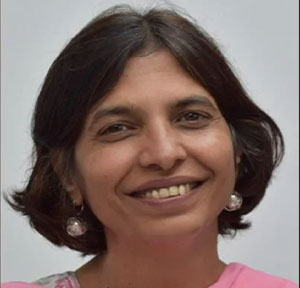
Ms Arti Ahuja

Arti Ahuja

Director

Retired from the Indian Administrative Services, Ms Ahuja has over 34 years of experience in administration, policy formulation, project management, and leadership across the public sector. Her expertise spans health systems, nutrition, women’s workforce participation, vulnerable populations, petrochemicals, and social sector programs. She has held several senior positions in the Government of India, including Secretary, Ministry of Labour and Employment, where she led reforms to strengthen worker welfare and represented India at the G20 Employment Working Group; Secretary, Ministry of Chemicals and Petrochemicals, where she initiated the Production Linked Incentive (PLI) scheme; and Secretary, Women & Child Development, where she directed large-scale nutrition and empowerment initiatives, strengthening the Integrated Child Development Services (ICDS). As Secretary of Health, Government of India she played a pivotal role in India’s COVID-19 response, launched the National Digital Health Mission, and advanced national programs on TB and AIDS control. She continues to advise on gender, climate change, and nutrition, contributes to national and international publications, and teaches public policy and nutrition at leading academic institutions. She holds a Master’s degree in Public Health from the Harvard School of Public Health; Master’s in Public Policy from Princeton University; Master’s in Economics (Gold Medallist) from Panjab University, and is a Bachelor of Law from the University of Delhi.

LIFE AT IPE

Learning &
Development (L&D)

We inspire people to be better.

Our intuitive and personalised programmes provide clear path for growth, leadership development, and help people sharpen their skills.

0 %
People trained in last 3 years
0 %
Participation in L&D Initiatives in 2025

Your journey starts from Day One….

Structured Onboarding

Helps align expectations and lays the foundation for your success

New Hire Training

Makes you familiar with the organisation; helps you settle down in a new work environment

Customized L&D Platform

Helps upskill at your own pace through continuous learning and training programmes

Linkage with
Performance Management

Aligns resources and training needs based on your skill set

Learning is not always a formal process. We also align our organisation values to a culture of learning