First Post features article titled ‘India’s healthcare spend remains dismal; why budget should focus on better utilisation of resources’ authored by Ashwajit SIngh, MD- IPE Global

India has come a long way with key indicators like Maternal Mortality Rate (MMR), Infant Mortality Rate (IMR), child malnutrition etc. showing marked improvement from the past decade. A series of recent initiatives, with the aim of improving public health care system have been undertaken recently. The Swachh Bharat Abhiyan, National Health Mission (NHM), increased immunisation initiatives like Mission Indradhanush, launch of free antenatal care on fixed days of the month, tobacco control and dengue prevention programmes are some of the initiatives which are aimed at overhauling India’s medical care system.

World Bank estimates the Indian government’s spending on healthcare at Rs 37,061.55 crores which is 30 percent as compared to China, where the government spending is 56 percent of the total health expenditure. The Out of Pocket Expenses (OPE) in India on healthcare by its citizens is amongst the highest in the world. Emphasising the need of better healthcare financing, the High-Level Expert Group (HLEG) report on Universal Health Care in India recommended increasing public expenditures on health from 1.2 percent of GDP to at least 2.5 percent by the end of the 12th plan, and to at least 3 percent of GDP by 2022.

Stepping up investment in public healthcare is pivotal to sustaining India’s economic growth. A recent study says “Global Health Care spending will increase by an average of 4.3 percent during 2015-2019, more slowly than it did before 2009 recession due to the pressure to reduce costs, yet increase efficiency.” It emphasises the need to decrease costs by sector stakeholders and stresses the need to shift from traditional Fee for Service (FFS) based payment model to Value Based Care (VBC) models. WHO also stresses on a need-based assessment of population and its linkage with Health Care Service providers, while envisaging development of domestic financing institutes by international development partners, so that fund management is not fragmented and avoiding duplication.

Experts have reiterated the need for increase in healthcare fund allocation and WHO in its seminal article on health financing for universal coverage has clearly stated that “while the scarcity of funds for health is a constraint everywhere, all countries can do more with existing resources,” thus opening a Pandora’s box where some might favour increased budgetary allocation while another school of thought stressing on the need of better utilisation.

Worldwide, countries seem to be working on better utilisation of health resources rather than more fund allocation. For instance, in USA, use of evidence based medicine is one of the hallmarks in deciding the budgetary allocation. Recently, Centre for Disease Control (CDC) Atlanta reported that approximately half of all antibiotic prescriptions are either unnecessary or used inappropriately. This stresses the need for judicious use of antibiotics to reduce the burden on drug purchase while easing the stress on the researchers working on new molecules. Around 10-15 percent of investigations in UK health care systems and 30-40 percent investigations in US health care system provided little to no benefit resulting in improper utilisation of resources.

In India, substantial part of the funds allocated to states under the National Rural Health Mission (NRHM) are either not drawn by the states or are not efficiently used leading to high OPE being incurred on the common man. This needs to be rectified as well. China has achieved over 95 percent public medical insurance. In India, the National Health Assurance Mission (NHAM) with the aim of health insurance cover for everyone is yet to be effectively rolled out.

A Public Administration study has found that the key to better utilisation lies in improving efficiency of resources, simultaneously developing health care services of an assured clinical quality that can be achieved by:

a) Developing an efficient health budget with appropriate utilisation management
b) Improving resource allocation through cost effectiveness
c) Flexibility in health care financing and fund allocation, avoiding “one size fits all” policy
d) Establishing full proof financial monitoring and audit mechanism
e) Capacity building and training to staff along with better HR management
f) Wider spread of health insurance products

The development of a cost effective, pro-poor, sustainable healthcare budget that minimises the out-of-pocket expenditures is a challenging task. It would be interesting to see the government present a healthcare budget with stress on better utilisation of resources rather than more allocation.

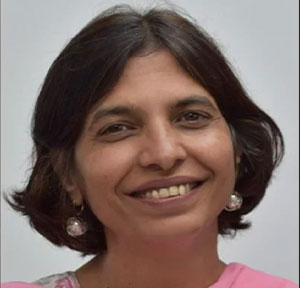
Anand Roop

Anandroop Bahadur

Group Head – Human Resources

Expertise

Human Resource Expertise, HR Strategy, Oragnisational Design, Talent & Leadership Development, Policy Governance

Anandroop Bahadur is a seasoned HR leader and strategic advisor with nearly two decades of experience across the development, consulting, and social impact ecosystem. She brings a strong blend of deep technical HR expertise, organizational design acumen, and a people-centric ethos to her work.

At IPE Global, Anandroop leads the Group Human Resources function across IPE Global and its associated entities, including Triple Line Consulting and IPE Africa. Her focus is on strengthening organizational foundations, enabling leadership effectiveness, and building scalable people systems aligned with the organisation’s global growth ambitions. Her remit spans HR strategy, organizational design, talent and leadership development, compensation and performance frameworks, policy governance, safeguarding, and culture integration across geographies.

Over the course of her career, Anandroop has held senior HR leadership and consulting roles with organisations such as Clinton Health Access Initiative (CHAI), Ford Foundation, NASSCOM Foundation, Central Square Foundation, Amity Education Group, and other international institutions. She has advised leadership teams and boards through periods of scale, transition, and transformation, and has led HR operations in high-growth, high-complexity environments.

She holds an Executive Degree in Human Resources from XLRI Jamshedpur and is a SHRM–SCP (Senior Certified Professional), reflecting her grounding in global HR standards and best practices. She has also completed advanced executive and leadership programmes, including training in coaching and organisational transformation, and is an ICF-trained executive coach, currently working towards her ACC credential.


Nikos Papachristodoulou

Nikos Papachristodoulou

Director

Expertise

Urban, Infrastructure, Disaster and Climate Resilience, Inclusive Growth

Nikos has expertise in urban and regional economic development, infrastructure, disaster and climate resilience, and inclusive growth. He oversees and manages projects for Triple Line’s cities and infrastructure portfolio.

Nikos is an urban specialist, with principal areas of expertise in urban and regional economic development, infrastructure, disaster and climate resilience, and inclusive growth. Over the past 12 years he has worked for a range of clients including the World Bank, FCDO, EU, USAID, Cities Alliance, Global Green Growth Institute (GGGI), Norwegian Refugee Council (NRC), and local authorities.

Nikos’s work has incorporated the full spectrum of the project cycle, from analytics and programme scoping and design, through implementation, and evaluation and learning.

He has a high level of familiarity with HMG business cases and ODA eligibility criteria having led and supported the development of FCDO’s urbanisation strategy and options for future investments in Somalia’s cities, Prosperity Fund Global Future Cities Programme (GFCP) scoping in Nigeria, and the development of the business case for an urban resilience programme in Tanzania.

Nikos also brings excellent understanding of World Bank latest trends and procedures as a result of his involvement in a number of analytics and technical assistance projects, including on informal settlements upgrading in Mogadishu, climate change adaptation planning in Latin American and Caribbean cities, assessment of the climate resilience of Dar es Salaam’s transport infrastructure, spatial development in Nigeria, and preparation of a handbook on integrated urban flood risk management.

Nikos holds a BSc in Economics from the University of Piraeus and an MSc in Social Development Practice from the Development Planning Unit at University College London (UCL).


Ricardo Pinto

Ricardo Pinto

Associate Director

Expertise

Private Sector Development, Regulatory Reform, Regional and Local Economy

Ricardo has 35 years´ experience in private sector development, regulatory reform, regional and local economic development in the European Union, Western Balkans, Easter Partnership Countries, Middle East, Africa, etc. He is tasked with developing our strategic operations in continental Europe and Ukraine.

Ricardo is a seasoned international development professional with over 30 years of experience designing and delivering Private Sector Development and economic growth initiatives across more than 50 countries spanning Central, Eastern and Southeast Europe, the CIS, Africa, MEDA, and Asia. He holds both a bachelor’s degree and PhD from the London School of Economics and Political Science (LSE) and is a Certified Management Consultant (CMC).

Ricardo brings a unique combination of strategic insight and practical implementation expertise. He has led high-impact assignments for key development institutions, including the European Commission, OECD, GIZ, FCDO/DFID, UNDP, UNCTAD, EBRD, ILO, ADB, World Bank, USAID, and Danida.

With a deep and practical understanding of institutional architecture, policy environment, and post-conflict recovery dynamics, and a career spanning over 30 years across transition economies, Ricardo brings not only technical depth but also a trusted reputation among donors, policymakers and peers.He is leading Triple Line’s strategic expansion into continental Europe, including Ukraine, while strengthening our credibility across the broader region and beyond. Proven Expertise Across Our Core Pillars. Ricardo’s work focuses on the areas central to Triple Line’s evolving service offering: Governance & Institutional Reform: advising public institutions on regulatory impact, policy reform, and donor coordination, Private Sector Development: strategy development for SME ecosystems, innovation, and competitiveness, Infrastructure Enabling Conditions: support for investment climate improvement and regional/local economic development and Cross-cutting themes, including green transition, women’s economic empowerment, and inclusive growth

 
LIFE AT IPE

Learning &
Development (L&D)

We inspire people to be better.

Our intuitive and personalised programmes provide clear path for growth, leadership development, and help people sharpen their skills.

0 %
People trained in last 3 years
0 %
Participation in L&D Initiatives in 2025

Your journey starts from Day One….

Structured Onboarding

Helps align expectations and lays the foundation for your success

New Hire Training

Makes you familiar with the organisation; helps you settle down in a new work environment

Customized L&D Platform

Helps upskill at your own pace through continuous learning and training programmes

Linkage with
Performance Management

Aligns resources and training needs based on your skill set

Learning is not always a formal process. We also align our organisation values to a culture of learning