Water-sharing across Indian states is emerging as a key area of discussion – but beneath the politics of sharing rivers lies a larger challenge: h𝗼𝘄 𝗱𝗼 𝘄𝗲 𝗺𝗮𝗻𝗮𝗴𝗲 𝘄𝗮𝘁𝗲𝗿 𝗶𝗻 𝗮 𝗰𝗹𝗶𝗺𝗮𝘁𝗲 𝘁𝗵𝗮𝘁 𝗶𝘀 𝗶𝗻𝗰𝗿𝗲𝗮𝘀𝗶𝗻𝗴𝗹𝘆 𝗱𝗶𝗳𝗳𝗶𝗰𝘂𝗹𝘁 𝘁𝗼 𝗽𝗿𝗲𝗱𝗶𝗰𝘁?
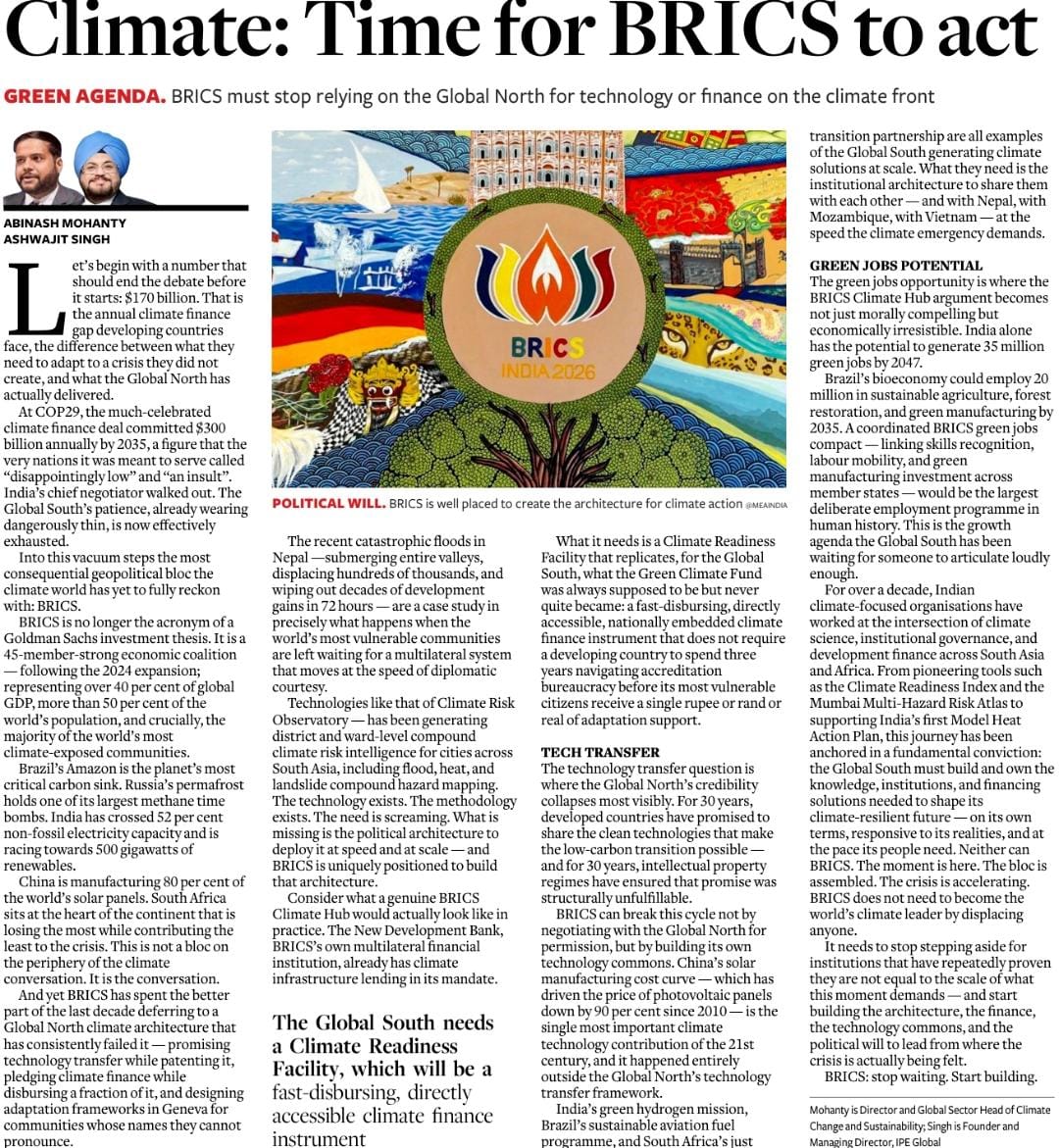
As the Cauvery, Krishna, Mahanadi, and Ravi-Beas disputes return to the spotlight, the lived reality for farmers is becoming harder to ignore. In a recent conversation with Hemant Kumar Rout and Shine Jacob of 𝗕𝘂𝘀𝗶𝗻𝗲𝘀𝘀 𝗦𝘁𝗮𝗻𝗱𝗮𝗿𝗱, 𝗔𝗯𝗶𝗻𝗮𝘀𝗵 𝗠𝗼𝗵𝗮𝗻𝘁𝘆, 𝗚𝗹𝗼𝗯𝗮𝗹 𝗦𝗲𝗰𝘁𝗼𝗿 𝗛𝗲𝗮𝗱 – 𝗖𝗹𝗶𝗺𝗮𝘁𝗲 𝗖𝗵𝗮𝗻𝗴𝗲 & 𝗦𝘂𝘀𝘁𝗮𝗶𝗻𝗮𝗯𝗶𝗹𝗶𝘁𝘆, draws on evidence from IPE Global’s 𝗖𝗹𝗶𝗺𝗮𝘁𝗲 𝗥𝗶𝘀𝗸 𝗢𝗯𝘀𝗲𝗿𝘃𝗮𝘁𝗼𝗿𝘆, 𝗖𝗹𝗶𝗺𝗮𝘁𝗲 𝗩𝘂𝗹𝗻𝗲𝗿𝗮𝗯𝗶𝗹𝗶𝘁𝘆 𝗺𝗮𝗽𝗽𝗶𝗻𝗴 𝗮𝗻𝗱 𝗵𝘆𝗱𝗿𝗼𝗹𝗼𝗴𝗶𝗰𝗮𝗹 𝗿𝗲𝘀𝗲𝗮𝗿𝗰𝗵 to underline the scale of the challenge.
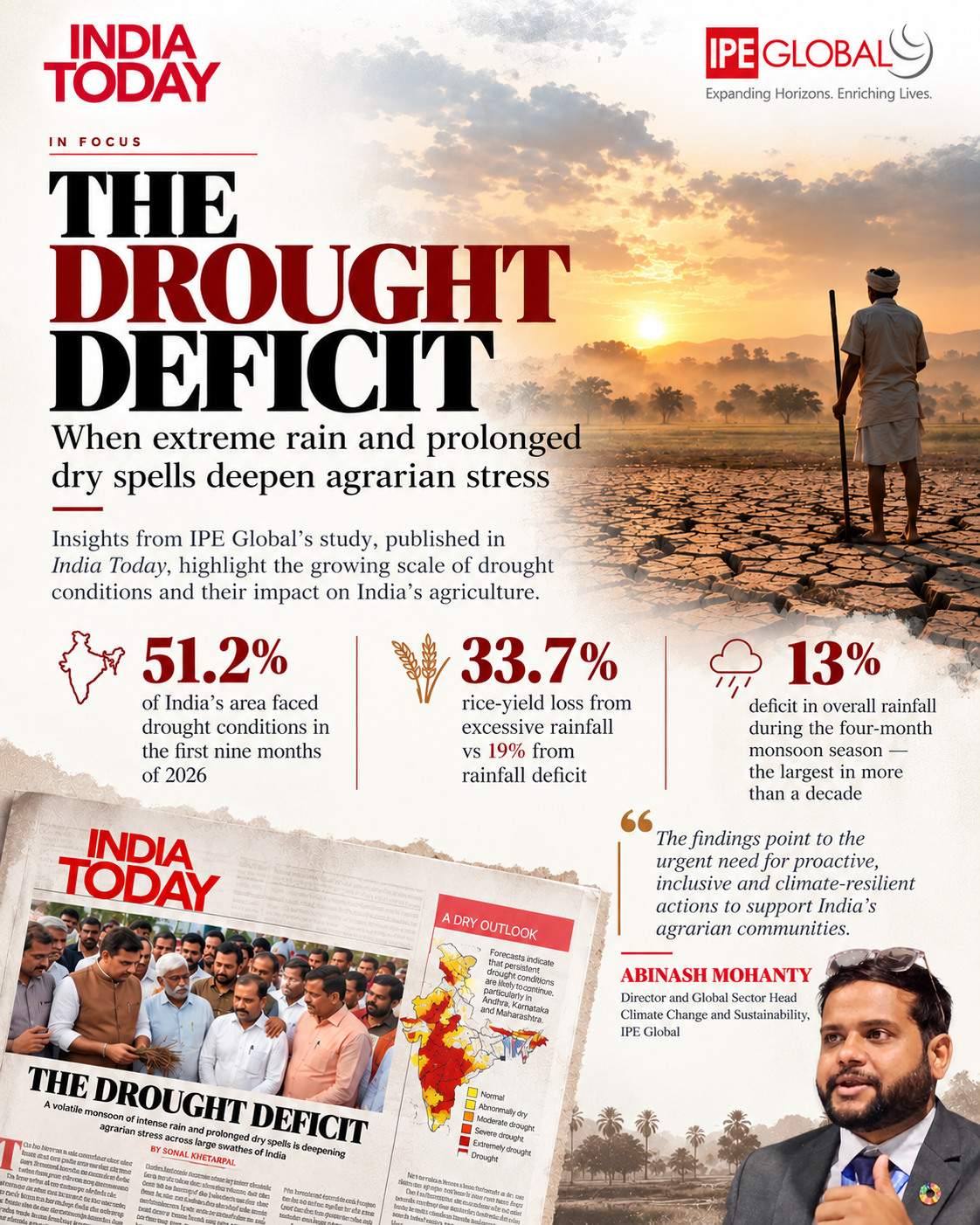
As he puts it, “𝗧𝗵𝗲 𝗳𝗮𝗿𝗺𝗲𝗿 𝗶𝘀 𝘁𝗵𝗲 𝗳𝗶𝗿𝘀𝘁 𝘁𝗼 𝗮𝗯𝘀𝗼𝗿𝗯 𝘁𝗵𝗲 𝘀𝗵𝗼𝗰𝗸, 𝗮𝗻𝗱 𝘁𝗵𝗲 𝗹𝗮𝘀𝘁 𝘁𝗼 𝗿𝗲𝗰𝗲𝗶𝘃𝗲 𝗰𝗼𝗺𝗽𝗲𝗻𝘀𝗮𝘁𝗶𝗼𝗻.” Our analysis shows that 𝗰𝗼𝗺𝗽𝗼𝘂𝗻𝗱 𝗵𝗲𝗮𝘁-𝗱𝗿𝗼𝘂𝗴𝗵𝘁 𝗲𝘃𝗲𝗻𝘁𝘀 𝗵𝗮𝘃𝗲 𝗶𝗻𝗰𝗿𝗲𝗮𝘀𝗲𝗱 𝟭𝟵-𝗳𝗼𝗹𝗱 𝗼𝘃𝗲𝗿 𝘁𝗵𝗲 𝗹𝗮𝘀𝘁 𝗱𝗲𝗰𝗮𝗱𝗲, while El Niño can suppress monsoon rainfall by 𝟭𝟬-𝟮𝟬% across key peninsular and central Indian catchments. In El Niño years, river flows could fall by 𝟮𝟱-𝟰𝟬%, cascading into delayed sowing, groundwater stress, and agricultural losses.
Abinash further underscores that this is where evidence needs to translate into policy. 𝗖𝗹𝗶𝗺𝗮𝘁𝗲-𝗶𝗻𝗳𝗼𝗿𝗺𝗲𝗱 𝘄𝗮𝘁𝗲𝗿 𝗮𝗹𝗹𝗼𝗰𝗮𝘁𝗶𝗼𝗻, 𝗯𝗮𝘀𝗶𝗻-𝗹𝗲𝘃𝗲𝗹 𝗵𝘆𝗱𝗿𝗼𝗹𝗼𝗴𝗶𝗰𝗮𝗹 𝗳𝗼𝗿𝗲𝗰𝗮𝘀𝘁𝗶𝗻𝗴, 𝘀𝘁𝗿𝗼𝗻𝗴𝗲𝗿 𝗴𝗿𝗼𝘂𝗻𝗱𝘄𝗮𝘁𝗲𝗿 𝗴𝗼𝘃𝗲𝗿𝗻𝗮𝗻𝗰𝗲, 𝗮𝗻𝗱 𝗺𝗼𝗿𝗲 𝗲𝗳𝗳𝗶𝗰𝗶𝗲𝗻𝘁 𝗶𝗿𝗿𝗶𝗴𝗮𝘁𝗶𝗼𝗻 can help shift India from reactive water management to anticipatory planning.
The question, therefore, is no longer simply who gets how much water. It is whether our water governance systems are equipped for the climate realities that are already reshaping India’s rivers, farms, livelihoods, and economies.