Anil Kumar Bansal features in Millennium Post on Kerala Floods

More than half-drowned and trapped in his waterlogged house, a middle-aged man in a light-green shirt donning rounded spectacles stood submerged, recording his desperate pleas on his mobile camera. Name still unknown, this man from Kerala was trapped in the recent floods, begging for help. Among many other gory reminders of Kerala’s devastation, this video too became instantly viral. The deluge in Kerala has, yet again, raised a most unavoidable question: are natural calamities entirely natural or are they partially man-made?

In the last two weeks, nearly 483 people have died, hundreds of people are still missing and close to 11 lakh people have been displaced and are living in camps set up by the government. Flood and rainfall pattern In the last few years, scientists have observed that the pattern of rainfall has drastically changed. While some parts of a state received 50 per cent excess rainfall, the other parts suffered from drought. This unpredictability has caused many scientists to ponder over the causes of floods.
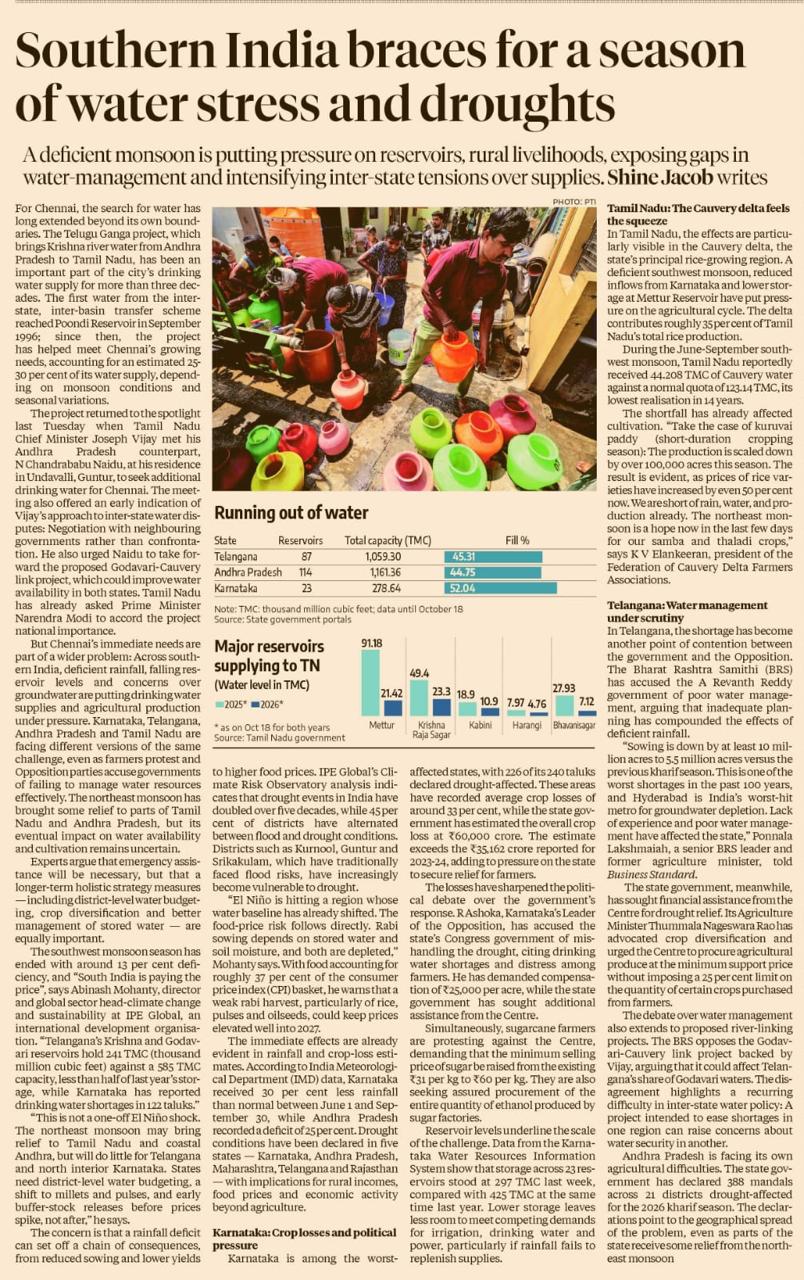
Ms Arti Ahuja

Arti Ahuja

Director

Retired from the Indian Administrative Services, Ms Ahuja has over 34 years of experience in administration, policy formulation, project management, and leadership across the public sector. Her expertise spans health systems, nutrition, women’s workforce participation, vulnerable populations, petrochemicals, and social sector programs. She has held several senior positions in the Government of India, including Secretary, Ministry of Labour and Employment, where she led reforms to strengthen worker welfare and represented India at the G20 Employment Working Group; Secretary, Ministry of Chemicals and Petrochemicals, where she initiated the Production Linked Incentive (PLI) scheme; and Secretary, Women & Child Development, where she directed large-scale nutrition and empowerment initiatives, strengthening the Integrated Child Development Services (ICDS). As Secretary of Health, Government of India she played a pivotal role in India’s COVID-19 response, launched the National Digital Health Mission, and advanced national programs on TB and AIDS control. She continues to advise on gender, climate change, and nutrition, contributes to national and international publications, and teaches public policy and nutrition at leading academic institutions. She holds a Master’s degree in Public Health from the Harvard School of Public Health; Master’s in Public Policy from Princeton University; Master’s in Economics (Gold Medallist) from Panjab University, and is a Bachelor of Law from the University of Delhi.

LIFE AT IPE

Learning &
Development (L&D)

We inspire people to be better.

Our intuitive and personalised programmes provide clear path for growth, leadership development, and help people sharpen their skills.

0 %
People trained in last 3 years
0 %
Participation in L&D Initiatives in 2025

Your journey starts from Day One….

Structured Onboarding

Helps align expectations and lays the foundation for your success

New Hire Training

Makes you familiar with the organisation; helps you settle down in a new work environment

Customized L&D Platform

Helps upskill at your own pace through continuous learning and training programmes

Linkage with
Performance Management

Aligns resources and training needs based on your skill set

Learning is not always a formal process. We also align our organisation values to a culture of learning