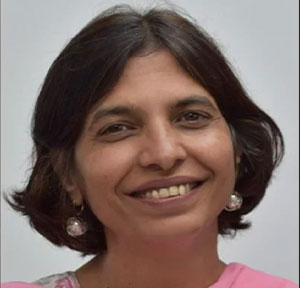
An article authored by Senior research associate, KPP published in Eldis Development Reporter

Sushant Anand from IPE Global looks back at COP 21 and its implications or India.

Over the past month we have witnessed a plethora of concurrent discussions pertaining to the most pressing climate change issues across the world on account of the 21st edition Conference of the Parties (COP 21). The event had representation from all nations along with the international think tanks and other stakeholder organisations.

The discussions entailed exhaustive negotiations to articulate the onus and responsibilities of the various participating nations to counter the adverse effects concomitant to the rising global temperatures. World leaders from US, Russia and China further enunciated the gravity of the prevailing climate change adversities, making it serious business for everyone. 

SIGNING UP TO A GLOBAL DEAL


Through a series of negotiations amongst nations, reconciling and justifying their contribution to carbon emissions, collective will had prevailed. The concerns regarding intergenerational equity in resources and depleting conditions, weighed out the current drive for economic development. The intensity of deliberations culminated with a consensus filled with exhilaration and excitement. 


For the first time ever, a deal related to climate change had united all of the world’s nations in a single agreement to cut down greenhouse gas emissions. The key elements of the deal included:
 

  • to keep global temperatures “well below” 2.0C (3.6F) above pre-industrial times and “endeavour to limit” them even more, to 1.5C
  • to limit the GHG emissions by human activity to a level it could be absorbed by nature (vegetation, soil and water bodies)
  • to review contribution of each country to limit their respective emissions every 5 years and subsequently scale up the challenge
  • to engage rich countries to support the poor nations adapt well to climate change by mainstreaming renewable energy in their respective energy portfolios (USD 100 Bn a year as climate finance by 2020, with a commitment to further finance in the future).


The deliberations were mainly centred on the rise in global temperaturesjudged to be approaching 2 degrees Celsius above pre-industrial times due to incessant human activity over the past couple of centuries. The agreement has been posed as a blessing for most low-lying vulnerable island nations and the least developed countries that lacked the wherewithal to fight the effects of climate change. Timely implementation and action is expected to bring about the desired ecological balance imperative for sustained habitation on this planet. 


The climate agreement further recognizes the effect on lesser developed countries with graver development challenges by “Emphasizing the intrinsic relationship that climate change actions, responses and impacts have with equitable access to sustainable development and eradication of poverty”.
 

WILL THIS DEAL WORK FOR INDIA?


But in context of how well this complex deal works for India, one needs to first understand the Indian scenario with respect to climate change. India would need to conform its strategy towards climate change abatement aligned to the agreement; it would do so only after a progressive review of goals and monitoring frameworks along with unpacking the ‘Common but differentiated responsibilities’ phrase to consider national circumstances. While National circumstances may have multiple connotations at different times of stress in the form of economic conditions, technology development, capacity building etc, there will have to be constant negotiations with such considerations and the climate change agenda. Much depends on how the development trajectory of our nation is driven in consonance with resource utility.


India is therefore in a tricky space where it needs to discover the sweet-spot between development and welfare of almost 1.4 billion people while holding up emissions (cooking fuel, electricity, industrial power use etc.) needed for the survival of its growing population. As international agreements drive domestic actions, the influence of the Paris conference may trigger voluntary deliberations for efficient energy systems with the backdrop of climate finance or aid which may ease the stress on economies struggling with other immediate development expenditures. This may only be possible by national pledges for participation to ensure a widespread positive change that promises a greener globe tomorrow. International pledges should be a function of national introspection by reconciliation of local issues which may or may not fit into the bill, enveloping the ‘promise to comply’.


While the deal preserves space for India to respond to immediate energy needs, only with a caveat that we may have to justify our strategies towards energy security in the future, subject to international scrutiny. Energy security is no more a national business due to global implications and creates immense scope for Indian contribution owing to an intermediate stature in terms of international politics, economic spine, technological and resource potential and human resource capacities. The 21st Conference of the Parties, is by all means a ‘Deal’ when we account in all major influencing variables.

Anand Roop

Anandroop Bahadur

Group Head – Human Resources

Expertise

Human Resource Expertise, HR Strategy, Oragnisational Design, Talent & Leadership Development, Policy Governance

Anandroop Bahadur is a seasoned HR leader and strategic advisor with nearly two decades of experience across the development, consulting, and social impact ecosystem. She brings a strong blend of deep technical HR expertise, organizational design acumen, and a people-centric ethos to her work.

At IPE Global, Anandroop leads the Group Human Resources function across IPE Global and its associated entities, including Triple Line Consulting and IPE Africa. Her focus is on strengthening organizational foundations, enabling leadership effectiveness, and building scalable people systems aligned with the organisation’s global growth ambitions. Her remit spans HR strategy, organizational design, talent and leadership development, compensation and performance frameworks, policy governance, safeguarding, and culture integration across geographies.

Over the course of her career, Anandroop has held senior HR leadership and consulting roles with organisations such as Clinton Health Access Initiative (CHAI), Ford Foundation, NASSCOM Foundation, Central Square Foundation, Amity Education Group, and other international institutions. She has advised leadership teams and boards through periods of scale, transition, and transformation, and has led HR operations in high-growth, high-complexity environments.

She holds an Executive Degree in Human Resources from XLRI Jamshedpur and is a SHRM–SCP (Senior Certified Professional), reflecting her grounding in global HR standards and best practices. She has also completed advanced executive and leadership programmes, including training in coaching and organisational transformation, and is an ICF-trained executive coach, currently working towards her ACC credential.


Nikos Papachristodoulou

Nikos Papachristodoulou

Director

Expertise

Urban, Infrastructure, Disaster and Climate Resilience, Inclusive Growth

Nikos has expertise in urban and regional economic development, infrastructure, disaster and climate resilience, and inclusive growth. He oversees and manages projects for Triple Line’s cities and infrastructure portfolio.

Nikos is an urban specialist, with principal areas of expertise in urban and regional economic development, infrastructure, disaster and climate resilience, and inclusive growth. Over the past 12 years he has worked for a range of clients including the World Bank, FCDO, EU, USAID, Cities Alliance, Global Green Growth Institute (GGGI), Norwegian Refugee Council (NRC), and local authorities.

Nikos’s work has incorporated the full spectrum of the project cycle, from analytics and programme scoping and design, through implementation, and evaluation and learning.

He has a high level of familiarity with HMG business cases and ODA eligibility criteria having led and supported the development of FCDO’s urbanisation strategy and options for future investments in Somalia’s cities, Prosperity Fund Global Future Cities Programme (GFCP) scoping in Nigeria, and the development of the business case for an urban resilience programme in Tanzania.

Nikos also brings excellent understanding of World Bank latest trends and procedures as a result of his involvement in a number of analytics and technical assistance projects, including on informal settlements upgrading in Mogadishu, climate change adaptation planning in Latin American and Caribbean cities, assessment of the climate resilience of Dar es Salaam’s transport infrastructure, spatial development in Nigeria, and preparation of a handbook on integrated urban flood risk management.

Nikos holds a BSc in Economics from the University of Piraeus and an MSc in Social Development Practice from the Development Planning Unit at University College London (UCL).


Ricardo Pinto

Ricardo Pinto

Associate Director

Expertise

Private Sector Development, Regulatory Reform, Regional and Local Economy

Ricardo has 35 years´ experience in private sector development, regulatory reform, regional and local economic development in the European Union, Western Balkans, Easter Partnership Countries, Middle East, Africa, etc. He is tasked with developing our strategic operations in continental Europe and Ukraine.

Ricardo is a seasoned international development professional with over 30 years of experience designing and delivering Private Sector Development and economic growth initiatives across more than 50 countries spanning Central, Eastern and Southeast Europe, the CIS, Africa, MEDA, and Asia. He holds both a bachelor’s degree and PhD from the London School of Economics and Political Science (LSE) and is a Certified Management Consultant (CMC).

Ricardo brings a unique combination of strategic insight and practical implementation expertise. He has led high-impact assignments for key development institutions, including the European Commission, OECD, GIZ, FCDO/DFID, UNDP, UNCTAD, EBRD, ILO, ADB, World Bank, USAID, and Danida.

With a deep and practical understanding of institutional architecture, policy environment, and post-conflict recovery dynamics, and a career spanning over 30 years across transition economies, Ricardo brings not only technical depth but also a trusted reputation among donors, policymakers and peers.He is leading Triple Line’s strategic expansion into continental Europe, including Ukraine, while strengthening our credibility across the broader region and beyond. Proven Expertise Across Our Core Pillars. Ricardo’s work focuses on the areas central to Triple Line’s evolving service offering: Governance & Institutional Reform: advising public institutions on regulatory impact, policy reform, and donor coordination, Private Sector Development: strategy development for SME ecosystems, innovation, and competitiveness, Infrastructure Enabling Conditions: support for investment climate improvement and regional/local economic development and Cross-cutting themes, including green transition, women’s economic empowerment, and inclusive growth

 
LIFE AT IPE

Learning &
Development (L&D)

We inspire people to be better.

Our intuitive and personalised programmes provide clear path for growth, leadership development, and help people sharpen their skills.

0 %
People trained in last 3 years
0 %
Participation in L&D Initiatives in 2025

Your journey starts from Day One….

Structured Onboarding

Helps align expectations and lays the foundation for your success

New Hire Training

Makes you familiar with the organisation; helps you settle down in a new work environment

Customized L&D Platform

Helps upskill at your own pace through continuous learning and training programmes

Linkage with
Performance Management

Aligns resources and training needs based on your skill set

Learning is not always a formal process. We also align our organisation values to a culture of learning