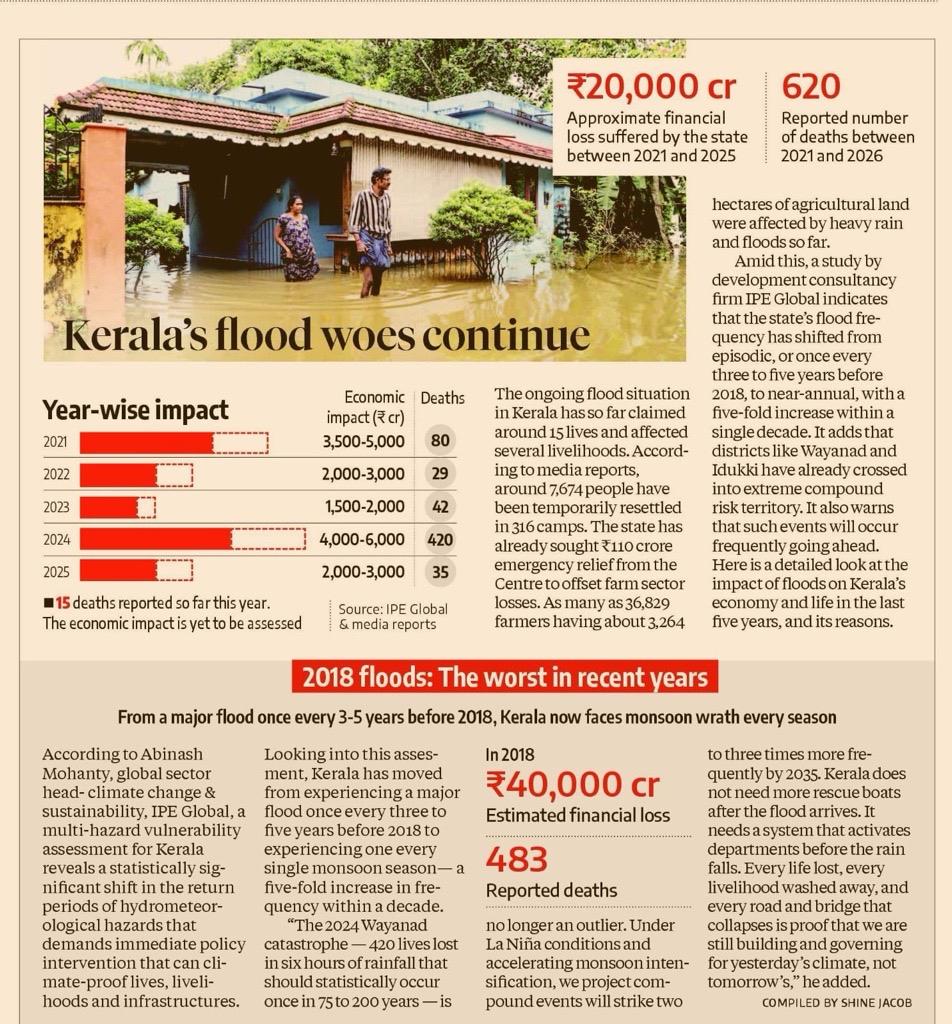
Kerala’s floods are no longer episodic events; they are becoming a near-annual reality, signaling a fundamental shift in the state’s climate risk landscape. A recent assessment by 𝗜𝗣𝗘 𝗚𝗹𝗼𝗯𝗮𝗹 finds that Kerala has moved from experiencing a major flood once every 𝘁𝗵𝗿𝗲𝗲 𝘁𝗼 𝗳𝗶𝘃𝗲 𝘆𝗲𝗮𝗿𝘀 𝗯𝗲𝗳𝗼𝗿𝗲 𝟮𝟬𝟭𝟴 to facing one almost every monsoon season: 𝗮 𝗳𝗶𝘃𝗲-𝗳𝗼𝗹𝗱 𝗶𝗻𝗰𝗿𝗲𝗮𝘀𝗲 𝗶𝗻 𝗳𝗿𝗲𝗾𝘂𝗲𝗻𝗰𝘆 𝘄𝗶𝘁𝗵𝗶𝗻 𝗮 𝗱𝗲𝗰𝗮𝗱𝗲.
In a recent conversation with 𝗦𝗵𝗶𝗻𝗲 𝗝𝗮𝗰𝗼𝗯 of Bu𝘀𝗶𝗻𝗲𝘀𝘀 𝗦𝘁𝗮𝗻𝗱𝗮𝗿𝗱, 𝗔𝗯𝗶𝗻𝗮𝘀𝗵 𝗠𝗼𝗵𝗮𝗻𝘁𝘆, 𝗚𝗹𝗼𝗯𝗮𝗹 𝗦𝗲𝗰𝘁𝗼𝗿 𝗛𝗲𝗮𝗱 – 𝗖𝗹𝗶𝗺𝗮𝘁𝗲 𝗖𝗵𝗮𝗻𝗴𝗲 & 𝗦𝘂𝘀𝘁𝗮𝗶𝗻𝗮𝗯𝗶𝗹𝗶𝘁𝘆, highlights what this changing risk landscape means for how we plan and govern.
𝗔𝘀 𝗔𝗯𝗶𝗻𝗮𝘀𝗵 𝗽𝘂𝘁𝘀 𝗶𝘁: “𝘒𝘦𝘳𝘢𝘭𝘢 𝘥𝘰𝘦𝘴 𝘯𝘰𝘵 𝘯𝘦𝘦𝘥 𝘮𝘰𝘳𝘦 𝘳𝘦𝘴𝘤𝘶𝘦 𝘣𝘰𝘢𝘵𝘴 𝘢𝘧𝘵𝘦𝘳 𝘵𝘩𝘦 𝘧𝘭𝘰𝘰𝘥 𝘢𝘳𝘳𝘪𝘷𝘦𝘴. 𝘐𝘵 𝘯𝘦𝘦𝘥𝘴 𝘢 𝘴𝘺𝘴𝘵𝘦𝘮 𝘵𝘩𝘢𝘵 𝘢𝘤𝘵𝘪𝘷𝘢𝘵𝘦𝘴 𝘥𝘦𝘱𝘢𝘳𝘵𝘮𝘦𝘯𝘵𝘴 𝘣𝘦𝘧𝘰𝘳𝘦 𝘵𝘩𝘦 𝘳𝘢𝘪𝘯 𝘧𝘢𝘭𝘭𝘴.”
He further added that the 𝟮𝟬𝟮𝟰 𝗪𝗮𝘆𝗮𝗻𝗮𝗱 𝗰𝗮𝘁𝗮𝘀𝘁𝗿𝗼𝗽𝗵𝗲, where 420 lives were lost during rainfall statistically expected only once in 75-200 years, is a stark reminder that what were once considered exceptional events are becoming increasingly consequential. 𝗜𝗣𝗘 𝗚𝗹𝗼𝗯𝗮𝗹’𝘀 𝗮𝘀𝘀𝗲𝘀𝘀𝗺𝗲𝗻𝘁 𝗽𝗿𝗼𝗷𝗲𝗰𝘁𝘀 𝘁𝗵𝗮𝘁, under accelerating monsoon intensification and La Niña conditions, 𝗰𝗼𝗺𝗽𝗼𝘂𝗻𝗱 𝗲𝘃𝗲𝗻𝘁𝘀 𝗰𝗼𝘂𝗹𝗱 𝗼𝗰𝗰𝘂𝗿 𝘁𝘄𝗼 𝘁𝗼 𝘁𝗵𝗿𝗲𝗲 𝘁𝗶𝗺𝗲𝘀 𝗺𝗼𝗿𝗲 𝗳𝗿𝗲𝗾𝘂𝗲𝗻𝘁𝗹𝘆 𝗯𝘆 𝟮𝟬𝟯𝟱. The imperative is therefore to move from reactive 𝗱𝗶𝘀𝗮𝘀𝘁𝗲𝗿 𝗿𝗲𝘀𝗽𝗼𝗻𝘀𝗲 𝘁𝗼 𝗮𝗻𝘁𝗶𝗰𝗶𝗽𝗮𝘁𝗼𝗿𝘆 𝗰𝗹𝗶𝗺𝗮𝘁𝗲 𝗿𝗲𝗮𝗱𝗶𝗻𝗲𝘀𝘀, strengthening risk-informed planning, early warning systems, resilient infrastructure, and institutional preparedness before hazards translate into loss and disruption.
The question is no longer whether Kerala can respond when the next flood arrives. It is whether our systems are prepared 𝗯𝗲𝗳𝗼𝗿𝗲 𝗶𝘁 𝗱𝗼𝗲𝘀.