In a residential society in Noida’s Sector 21, you’d find at least four to five water containers placed near every gate, and they are free to use for all. Vikram, a security guard in his 30s, has placed a chair next to them. It’s easier to access the water that way, rather than getting up every few minutes to quench his thirst in the sweltering heat. The spot is also shadier, compared to others, because of the presence of trees all around. People keep stopping by to refill their water bottles every now and then.
Water is crucial for anybody, anywhere and on any given day. Thanks to the heat wave we are witnessing (and have been living through every summer for the past few years), shade has become a necessity too. The extreme temperatures leave you no other surviving option.
In March this year, right when summer was around the corner, the India Meteorological Department (IMD) had warned the country’s northwestern regions that a harsh few months were in store for them. While these regions usually experience five to six heat wave days each season, this time the IMD forecast anywhere between 10 and 12. Earlier this month too, the IMD forecast ‘above normal’ temperatures with two to seven additional heat wave days for many parts of Rajasthan, Haryana, Punjab, Uttar Pradesh, Madhya Pradesh, Bihar, Jharkhand and Maharashtra, among others.
While a lot of us are learning to adapt to these extreme temperatures, the heat does take a toll on our body. Dr Vinay Kumar, assistant professor, anaesthesia and critical care, AIIMS Delhi, tells FE that he has been catering to an increased number of patients over the past few summer seasons. “Patients usually come in with heat cramps, heat exertion, or heat stroke. While the first two are manageable at home, heat stroke is a life-threatening emergency condition that requires immediate medical attention,” he adds.
Over the past few years, climate change-induced extreme temperatures have led to the loss of many lives. In December last year, Jitendra Singh, minister of state for science and technology and earth sciences, had told Rajya Sabha that India observed 554 heat wave days that year (calculated by adding up the number of heat wave days witnessed in each state). This was the highest in at least 14 years, up from the 230 heat wave days observed in 2023.
In 2024, the health ministry’s official data also stated that India recorded 41,789 suspected heat stroke cases and 143 heat-related deaths. This was countered by media reports, which put the number of deaths at least 209.
The numbers in other parts of the world are even more stark. According to a study published in Nature Medicine, the 2023 heat wave in Europe led to over 27,000 deaths. Even the United Nations’ World Health Organization (WHO) warned last year that “a staggering 1,75,000 people die from heat-related causes every year in Europe and that figure is set to soar in line with our steadily warming planet”.
In India, public health experts have time and time again claimed that heat-related deaths are undercounted as “20-30% of heat stroke cases usually end in deaths.” Even former WHO chief scientist and health ministry advisor Soumya Swaminathan stated in a media interview a few weeks ago, “We do not really have a good record of every death in the country. So we have to make some estimations. We have to do some sort of calculations or modelling based on what is happening.” She emphasised that we do not have a proper mechanism yet to categorise heat-related deaths which is why we need better tracking and policy intervention in this space.
Global warning
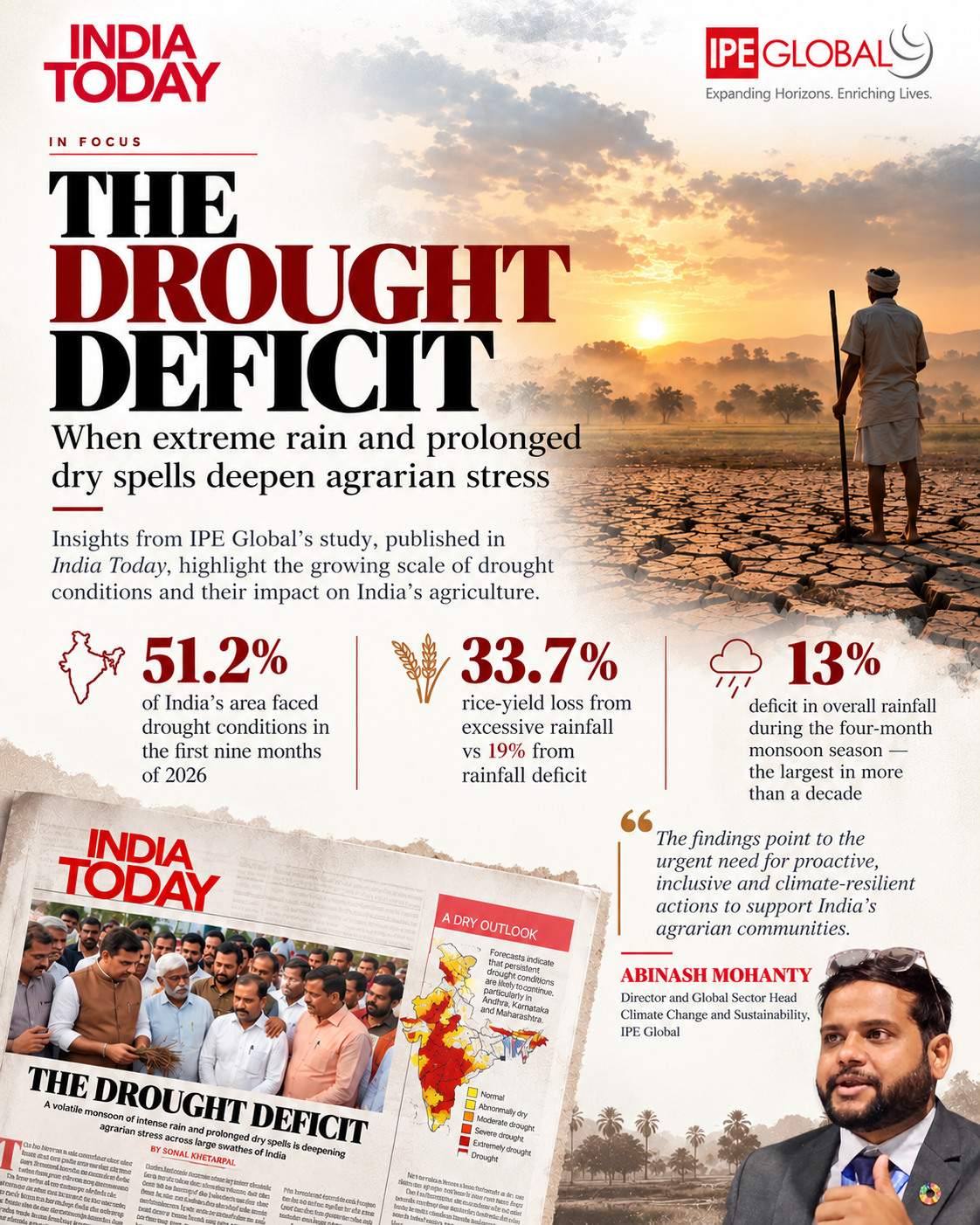
Abinash Mohanty, head of climate change and sustainability at IPE Global, and expert reviewer of IPCC-AR(6), underlines an important concern in this regard, “Up till now, heat has not been recognised as a disaster. A study we worked on a few months ago showed that 84% of Indian districts are extreme heat hotspots where seasonal disruptions are evident. It is the need of the hour to understand how these extreme temperatures will impact health, how it might impact family budgets, disrupt livelihood options, etc.”
Mohanty adds, “Some cities already have heat action plans but a lot of the disaster-management related plans we rely on do not take heat stress into consideration. These lapses need to be overcome so that citizens and communities are informed of the likelihood of impact they might be at the receiving end of.”
The heat action plans that Mohanty mentions are now in place in some cities. In March this year, the Maharashtra government in a pilot project announced the development of its first ‘Heat Resilience Framework’ for Mumbai, Thane, and Nagpur to be better prepared to respond during heat waves. A Brihanmumbai Municipal Corporation official had told The Indian Express, “Since temperatures in the city are on the rise, the idea of the pilot project was to study the three cities in-depth and accordingly, prepare a list of dos, don’ts as well as detailed plans to manage the heatwave events.’
Delhi, too, recently announced special measures to provide some relief amid rising temperatures. Inaugurating three cool roof pilot projects at Kashmere Gate, Anand Vihar, and the Delhi Secretariat, chief minister Rekha Gupta in April had said, “We will install 3,000 water coolers, and cooling shelters should be available on roads. Footpaths should have shades. Green roofs are also a great solution. We will issue heat alerts in collaboration with the weather department. Big hospitals will have heatwave wards with trained staff.”
Noida’s district magistrate Manish Kumar Verma, on the other hand, has directed the education department to revise school timings to protect children from extreme heat. In both Noida and Ghaziabad districts, ORS stocks have been increased, along with the reinforcement of cold rooms.
In Tamil Nadu too, health minister Ma Subramanian stated in March that the hospitals have stocked up on medicines, kept ambulances on standby, and allocated separate beds for heat-related illnesses. He added that drinking water and oral rehydration solutions have also been stocked in public spaces for people to avail.
It’s not just municipal corporations or government authorities, though. Greenpeace India, an environmental protection organisation, has also been setting up hydration stations across Delhi to provide some respite from the heat.
But respite, in a true sense, is far away for those actually working outdoors. Take, for instance, Sushil (name changed), who runs a food cart in Noida. Sushil has been able to find a spot below a tree where he regularly runs shop, but that doesn’t protect him from the hot winds blowing all around, or the fact that he still has to cook on a stove that radiates heat.
“It gets very difficult to work and focus,” he tells FE, with the heat often giving him a headache.
High and dry
On an individual level, Dr Anurag Aggarwal, consultant, internal medicine, Fortis Escorts Hospital, Faridabad, says that there should be more awareness about the risks and concerns associated with heat. He shares the symptoms of the most common heat-related ailments patients seek help for:
- Heat exhaustion: Symptoms such as heavy sweating, weakness, dizziness, headache, and nausea
- Heat stroke: Characterised by high body temperature, altered mental state, rapid breathing, and a racing pulse
- Dehydration: Usual signs include fatigue, dry mouth, and decreased urination
- Sunburn: Causes redness and blistering on the skin
- Heat cramps: Painful muscle cramps often occurring in the abdomen, arms, and legs
- Exacerbation of chronic conditions in immuno-compromised people due to heat stress.
Dr Kumar of AIIMS agrees with Dr Aggarwal. He says, “All these conditions are preventable and curable with timely intervention. However, children, aged folks, pregnant women, people with comorbidities, and people who work outside are most vulnerable to heat ailments. At our hospital, we’ve designated certain areas and beds to treat patients coming in with heat-related ailments because the condition now is that of a public health emergency.”
Dr Aggarwal advises that to protect oneself from extreme heat, people need to stay hydrated, wear appropriate clothing, use sunscreen, stay indoors if it’s feasible for them, avoid strenuous activities, and act on symptoms early.
While this is something individuals can do for themselves, Mohanty of IPE Global insists that when it comes to health, heat needs to be looked at from a socio-economic standpoint and addressed as a developmental issue. He explains, “Take, for instance, women working on agricultural lands in extreme heat who often avoid drinking water because they don’t have access to public washrooms. This impacts their physical, mental, cognitive health, and more. But it’s not directly a result of heat, even though that plays a big role in it.”
Cooling down
So, what is the way forward? LM Singh, managing director for India and global head of partnerships and innovative finance at Vital Strategies, a global public health organisation, tells FE, “With climate change intensifying the frequency and severity of heat waves, it is imperative that we enhance strategic coordination across sectors, data systems, and financing mechanisms. Key priorities include strengthening and integrating real-time temperature data from IMD with health surveillance to identify hotspots, standardising diagnostic criteria for heat strokes, mobilising frontline workers for early community-level detection, and adopting forensic protocols to accurately attribute heat-related deaths.”
“Innovative financing models like outcomes or results-based financing (OBF) can accelerate these efforts by linking funding to clearly defined, measurable outcomes such as reduced heat stroke-related hospital admissions, increased utilisation of public cooling centres, or improved provider training. By linking disbursements to specific outcomes, OBF can drive accountability, innovation and efficiency. Together, data-informed decision making, and performance-based financing can strengthen systems resilience and reduce the health burden of extreme heat,” adds Singh.
Mohanty agrees, as he also emphasises on the importance of closely looking at the policy framework. He sums up on what what needs to be done:
- Focus on impact-based heat stress forecasting
- Make heat action plans more dynamic
- Recognise extreme heat as a disaster
- Recognise how people will be differently impacted by heat stress at an individual and community level through attributional sciences mainstreaming.
Heat is on: The big numbers
- 143 suspected heat-related deaths recorded in India in 2024
- 41,789 suspected heat stroke cases recorded in India in 2024
- 554 heat wave days witnessed in India in 2024
- 230 heat wave days witnessed in India in 2023
- 1,75,000 people dying from heat-related causes every year in Europe, as per WHO
- 34 mn estimated number of jobs that will be lost due to rising temperatures in India by 2030
- 80 mm estimated no. of jobs that will be lost due to rising temperatures globally by 2030
- $2.4 trn cost to global economy annually due to heat-induced productivity losses by 2050