Education through incentives

A group of students, in Khordha district of Odisha, when asked what they wanted to be, had high aims in life. One wanted to be a doctor, another an astronaut. These dreams may have been crushed had they dropped out of school but now they can continue to dream and reach higher than they had ever hoped for, thanks to an initiative of the Department for International Development (DFID) and the Odisha government.

In Odisha, education has been free for all students in government or government-aided schools up to Class VIII under the Sarva Shiksha Abhiyan (SSA). However, there was no provision beyond this for students to study. This resulted in a large number of dropouts after Class VIII, mainly due to inability to pay school fee. To tackle this issue the state government implemented the centrally-sponsored Pre-Matric Scholarship Scheme for Scheduled Caste (SC) and Scheduled Tribe (ST) students studying in Classes IX and X with family earnings of less than Rs 2 lakh per annum.

The case with girls, specifically, was even worse. Their participation in education was less than that of boys and by a large margin. DFID and the Odisha government initiated a pilot project in Rayagada district to incentivise regular attendance and completion of secondary education by SC and ST girls. The apparent success of this initiative inspired the full-scale implementation of the programme throughout the state. DFID, therefore, modified its assistance to complement this new national scheme, under the name Odisha Girls Incentive Programme (OGIP).

Spreading awareness. While block coordinators gave publicity to this scholarship scheme through student and teacher orientation programmes at the school level, household counselling approach helped sensitise the parents. Village-level meetings, orientation meetings with self-help groups (SHGs), Panchayati Raj Institutions (PRIs) and youth groups were also conducted. The scheme details were printed in Class VII and VIII textbooks for easy reference for the students and teachers. Simultaneously, the technical assistance team, IPE Global, facilitated the opening of bank accounts and obtaining caste certificates. The aim was to touch as many households as possible and without any leakages in between.

All the students were provided with zero-balance accounts and the scholarships directly transferred to them by the state treasury portal. To be eligible, a student must have 70 per cent attendance. In order to efficiently manage the large volume of data, a web-based IT application was designed and put in place by the IPE Global group.

A grievance redressal system was also put in place to address any problems faced by the students in obtaining the scholarship. A toll-free helpline, Sampark, managed by the Department of School and Mass Education, was made available for the students and parents to report any issues or seek information about the programme.

Around 4.07 lakh students were covered during the year 2013-14 and a sum of around Rs.118 crore disbursed. In 2014-15, over 4.27 lakh students were registered and a sum of more than Rs 128 crore disbursed. To assess the overall impact on attendance, baseline and mid-line data was collected at the school level.

In a survey of about 10,700 students spread over 30 districts of Odisha, an overall change from 74 per cent to 80.1 per cent in attendance was observed at the end of first year. The change seen for girls (8.59 per cent) was marginally higher than that of boys (7.73 per cent).

Ground reality

Unlike several programmes, this one achieves more or less exactly what it was designed for. Any student failing to get the required attendance is personally counseled by the block coordinators. While people were reluctant at first, after the first year things got smoother. “Initially we were not sure if we would actually get anything but we did. Now even if the payment gets late, we pay from our pocket and use the amount paid by the government as savings,” said a parent.

Asked if there were any cases of misuse by the students, the headmaster of a school in Khordha district said, “There are always two sides to a coin but such cases are rare. Students using the money for other purposes are really genuine and they have later on paid their fee with their own money.” A girl said, “My grandfather was really ill. He needed immediate medical attention and we needed money. I used the money for his medical bills. But I did not fail to attend school and paid my fee.”

Puja Das, another student, recalled, “I was a certain dropout, but due to this scheme, my parents were able to send me to school. Now I am in college and I am supporting my younger brother through the same scheme.” A number of girls who had got married were persuaded to rejoin school. The in-laws were made to understand the importance of education and since it didn’t lighten their pockets, they generally agreed.
Anand Roop

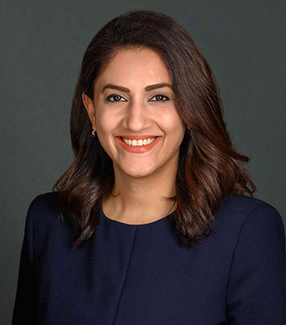
Anandroop Bahadur

Group Head – Human Resources

Expertise

Human Resource Expertise, HR Strategy, Oragnisational Design, Talent & Leadership Development, Policy Governance

Anandroop Bahadur is a seasoned HR leader and strategic advisor with nearly two decades of experience across the development, consulting, and social impact ecosystem. She brings a strong blend of deep technical HR expertise, organizational design acumen, and a people-centric ethos to her work.

At IPE Global, Anandroop leads the Group Human Resources function across IPE Global and its associated entities, including Triple Line Consulting and IPE Africa. Her focus is on strengthening organizational foundations, enabling leadership effectiveness, and building scalable people systems aligned with the organisation’s global growth ambitions. Her remit spans HR strategy, organizational design, talent and leadership development, compensation and performance frameworks, policy governance, safeguarding, and culture integration across geographies.

Over the course of her career, Anandroop has held senior HR leadership and consulting roles with organisations such as Clinton Health Access Initiative (CHAI), Ford Foundation, NASSCOM Foundation, Central Square Foundation, Amity Education Group, and other international institutions. She has advised leadership teams and boards through periods of scale, transition, and transformation, and has led HR operations in high-growth, high-complexity environments.

She holds an Executive Degree in Human Resources from XLRI Jamshedpur and is a SHRM–SCP (Senior Certified Professional), reflecting her grounding in global HR standards and best practices. She has also completed advanced executive and leadership programmes, including training in coaching and organisational transformation, and is an ICF-trained executive coach, currently working towards her ACC credential.


Nikos Papachristodoulou

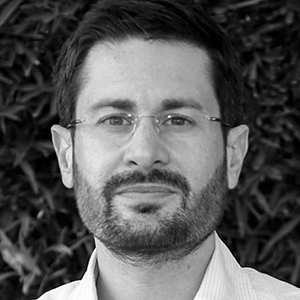
Nikos Papachristodoulou

Director

Expertise

Urban, Infrastructure, Disaster and Climate Resilience, Inclusive Growth

Nikos has expertise in urban and regional economic development, infrastructure, disaster and climate resilience, and inclusive growth. He oversees and manages projects for Triple Line’s cities and infrastructure portfolio.

Nikos is an urban specialist, with principal areas of expertise in urban and regional economic development, infrastructure, disaster and climate resilience, and inclusive growth. Over the past 12 years he has worked for a range of clients including the World Bank, FCDO, EU, USAID, Cities Alliance, Global Green Growth Institute (GGGI), Norwegian Refugee Council (NRC), and local authorities.

Nikos’s work has incorporated the full spectrum of the project cycle, from analytics and programme scoping and design, through implementation, and evaluation and learning.

He has a high level of familiarity with HMG business cases and ODA eligibility criteria having led and supported the development of FCDO’s urbanisation strategy and options for future investments in Somalia’s cities, Prosperity Fund Global Future Cities Programme (GFCP) scoping in Nigeria, and the development of the business case for an urban resilience programme in Tanzania.

Nikos also brings excellent understanding of World Bank latest trends and procedures as a result of his involvement in a number of analytics and technical assistance projects, including on informal settlements upgrading in Mogadishu, climate change adaptation planning in Latin American and Caribbean cities, assessment of the climate resilience of Dar es Salaam’s transport infrastructure, spatial development in Nigeria, and preparation of a handbook on integrated urban flood risk management.

Nikos holds a BSc in Economics from the University of Piraeus and an MSc in Social Development Practice from the Development Planning Unit at University College London (UCL).


Ricardo Pinto

Ricardo Pinto

Associate Director

Expertise

Private Sector Development, Regulatory Reform, Regional and Local Economy

Ricardo has 35 years´ experience in private sector development, regulatory reform, regional and local economic development in the European Union, Western Balkans, Easter Partnership Countries, Middle East, Africa, etc. He is tasked with developing our strategic operations in continental Europe and Ukraine.

Ricardo is a seasoned international development professional with over 30 years of experience designing and delivering Private Sector Development and economic growth initiatives across more than 50 countries spanning Central, Eastern and Southeast Europe, the CIS, Africa, MEDA, and Asia. He holds both a bachelor’s degree and PhD from the London School of Economics and Political Science (LSE) and is a Certified Management Consultant (CMC).

Ricardo brings a unique combination of strategic insight and practical implementation expertise. He has led high-impact assignments for key development institutions, including the European Commission, OECD, GIZ, FCDO/DFID, UNDP, UNCTAD, EBRD, ILO, ADB, World Bank, USAID, and Danida.

With a deep and practical understanding of institutional architecture, policy environment, and post-conflict recovery dynamics, and a career spanning over 30 years across transition economies, Ricardo brings not only technical depth but also a trusted reputation among donors, policymakers and peers.He is leading Triple Line’s strategic expansion into continental Europe, including Ukraine, while strengthening our credibility across the broader region and beyond. Proven Expertise Across Our Core Pillars. Ricardo’s work focuses on the areas central to Triple Line’s evolving service offering: Governance & Institutional Reform: advising public institutions on regulatory impact, policy reform, and donor coordination, Private Sector Development: strategy development for SME ecosystems, innovation, and competitiveness, Infrastructure Enabling Conditions: support for investment climate improvement and regional/local economic development and Cross-cutting themes, including green transition, women’s economic empowerment, and inclusive growth

 
LIFE AT IPE

Learning &
Development (L&D)

We inspire people to be better.

Our intuitive and personalised programmes provide clear path for growth, leadership development, and help people sharpen their skills.

0 %
People trained in last 3 years
0 %
Participation in L&D Initiatives in 2025

Your journey starts from Day One….

Structured Onboarding

Helps align expectations and lays the foundation for your success

New Hire Training

Makes you familiar with the organisation; helps you settle down in a new work environment

Customized L&D Platform

Helps upskill at your own pace through continuous learning and training programmes

Linkage with
Performance Management

Aligns resources and training needs based on your skill set

Learning is not always a formal process. We also align our organisation values to a culture of learning