Unless India conserves water, its food and energy security will be threatened in the near future

Unless India conserves water, its food and energy security will be threatened in the near future 

Even as we talk of ensuring food security, the competition for limited water and energy resources has become worse due to the unpredictable weather. For farmers in India, the shocks just don’t seem to end. Several States have faced two successive droughts while 13 districts of Bundelkhand have suffered three. The droughts were followed by unseasonal hailstorms and rainfall, which destroyed crops across the kharif and rabi seasons.

In the national capital, it has been an uncharacterically warm winter. Daytime temperatures have been the highest in 20 years. The story across several northern States is similar with warmer winters in Himachal Pradesh, Uttarakhand, Leh in Jammu & Kashmir, Rajasthan, Haryana and Punjab.

This pattern has consequences: Weather behaviour has implications for water resources, which in turn has implications for energy production and food security and the economy. This is why both the Reserve Bank of India and the village farmer waits with bated breath for monsoon predictions. Even in a scenario where the weather behaves as expected, India has to deal with a huge gap between demand and supply of water. One estimate indicates that by 2050 the demand-supply gap will touch 50 per cent. How will the thirst be quenched, food be produced and industries survive?

According to the UN, food output must grow by 60 per cent to feed a population of nine billion or more in 2050. Already around 800 million people go to bed hungry. This hunger is unacceptable and, worse still, avoidable. Yet, global hunger is only expected to get worse.

Water and energy are inter-dependent. Water is required for energy production and energy for extraction, collection, storage, treatment, purification, transportation and distribution of water. More than 70 per cent of industrial water-use in India is for energy generation.

Agriculture and food production require critical inputs of water and energy. Agriculture already accounts for around 70 per cent of global freshwater withdrawals; and irrigation requirements are expected to grow by another six per cent by 2050. But, by 2030, the world will have to confront a water supply shortage of 40 per cent.

Globally, the food sector accounts for around 30 per cent of the world’s total end-use energy consumption, more than 70 per cent of which is used beyond the farmgate. But more than 1.3 billion people (19 per cent of the global population) still lack access to electricity, and roughly 2.6 billion use solid fuels (mainly biomass) for cooking.

India currently feeds 1.2 billion people, (17 per cent of the worlds’ population), using less than three per cent of the world’s arable land and less than four per cent of the world’s freshwater. Around 80 per cent of water use is India is for food production, some 60 per cent of which is groundwater. About 19 per cent of the total electricity and 12 per cent of total diesel consumption is used for irrigation and post-harvesting processes.

India has vast amounts of water but it may soon become a water-stressed state. India continues to be the largest groundwater extractor in the world. Decades of neglect and misuse have squandered away this resource. A database of India’s water assets does not exist and estimates vary widely. In such uncertainty, how can one gauge the situation?

Biological, organic and inorganic pollutants contaminate almost 70 per cent of surface water resources and a growing percentage of groundwater reserves. As many as 19 States face groundwater contamination. Groundwater in over 200 districts is polluted. Only 21 per cent of the municipal sewage is treated. The remaining is disposed untreated into waterbodies, resulting in pollution of rivers. A business as usual approach towards this problem will only accelerate the pace at which we are hurtling towards a parched and poisoned future.

India first needs to acknowledge that there is a problem which needs to be addressed on priority. We need to build consensus on the utilisable water. While it is true that agriculture gets the largest share, conservation across all users is important. In fact, water needs to be conserved wherever possible. For example, diverting rain water from flooded fields and unexpected rains can help save crops.

At the farmer’s level, a significant amount of energy is used to pump and distribute water for irrigation. This energy footprint can be reduced by employing measures that conserve energy. In fact, a lot more needs to be done to scale up renewable energy use in the agricultural sector. 

Agriculture modelling and forecasting needs to improve, and shared with the cultivators. Modelling needs to factor in water and energy requirements. At the local level, villagers plan their sowing based on water budgeting. Such practises must spread.

Over the past few decades, agricultural innovation has taken a back seat. Agricultural institutes need to be revived. The much-talked about second green revolution needs to deliver. There are no fool proof measures to deal with the weather but these efforts can help alleviate the crises.

(The writer is Policy Lead: Food Security, Resource Scarcity and Climate Change with IPE Global)

Anand Roop

Anandroop Bahadur

Group Head – Human Resources

Expertise

Human Resource Expertise, HR Strategy, Oragnisational Design, Talent & Leadership Development, Policy Governance

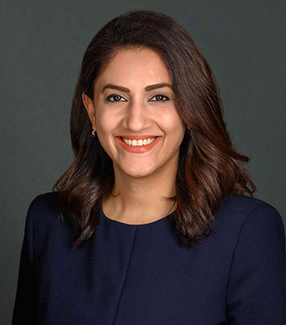
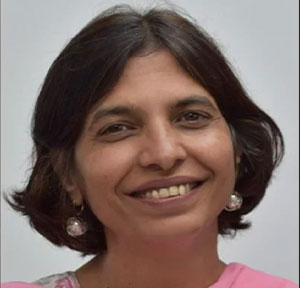
Anandroop Bahadur is a seasoned HR leader and strategic advisor with nearly two decades of experience across the development, consulting, and social impact ecosystem. She brings a strong blend of deep technical HR expertise, organizational design acumen, and a people-centric ethos to her work.

At IPE Global, Anandroop leads the Group Human Resources function across IPE Global and its associated entities, including Triple Line Consulting and IPE Africa. Her focus is on strengthening organizational foundations, enabling leadership effectiveness, and building scalable people systems aligned with the organisation’s global growth ambitions. Her remit spans HR strategy, organizational design, talent and leadership development, compensation and performance frameworks, policy governance, safeguarding, and culture integration across geographies.

Over the course of her career, Anandroop has held senior HR leadership and consulting roles with organisations such as Clinton Health Access Initiative (CHAI), Ford Foundation, NASSCOM Foundation, Central Square Foundation, Amity Education Group, and other international institutions. She has advised leadership teams and boards through periods of scale, transition, and transformation, and has led HR operations in high-growth, high-complexity environments.

She holds an Executive Degree in Human Resources from XLRI Jamshedpur and is a SHRM–SCP (Senior Certified Professional), reflecting her grounding in global HR standards and best practices. She has also completed advanced executive and leadership programmes, including training in coaching and organisational transformation, and is an ICF-trained executive coach, currently working towards her ACC credential.


Nikos Papachristodoulou

Nikos Papachristodoulou

Director

Expertise

Urban, Infrastructure, Disaster and Climate Resilience, Inclusive Growth

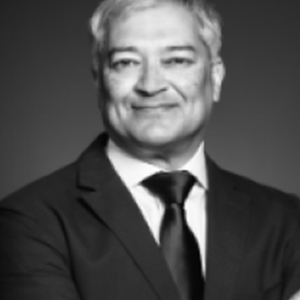
Nikos has expertise in urban and regional economic development, infrastructure, disaster and climate resilience, and inclusive growth. He oversees and manages projects for Triple Line’s cities and infrastructure portfolio.

Nikos is an urban specialist, with principal areas of expertise in urban and regional economic development, infrastructure, disaster and climate resilience, and inclusive growth. Over the past 12 years he has worked for a range of clients including the World Bank, FCDO, EU, USAID, Cities Alliance, Global Green Growth Institute (GGGI), Norwegian Refugee Council (NRC), and local authorities.

Nikos’s work has incorporated the full spectrum of the project cycle, from analytics and programme scoping and design, through implementation, and evaluation and learning.

He has a high level of familiarity with HMG business cases and ODA eligibility criteria having led and supported the development of FCDO’s urbanisation strategy and options for future investments in Somalia’s cities, Prosperity Fund Global Future Cities Programme (GFCP) scoping in Nigeria, and the development of the business case for an urban resilience programme in Tanzania.

Nikos also brings excellent understanding of World Bank latest trends and procedures as a result of his involvement in a number of analytics and technical assistance projects, including on informal settlements upgrading in Mogadishu, climate change adaptation planning in Latin American and Caribbean cities, assessment of the climate resilience of Dar es Salaam’s transport infrastructure, spatial development in Nigeria, and preparation of a handbook on integrated urban flood risk management.

Nikos holds a BSc in Economics from the University of Piraeus and an MSc in Social Development Practice from the Development Planning Unit at University College London (UCL).


Ricardo Pinto

Ricardo Pinto

Associate Director

Expertise

Private Sector Development, Regulatory Reform, Regional and Local Economy

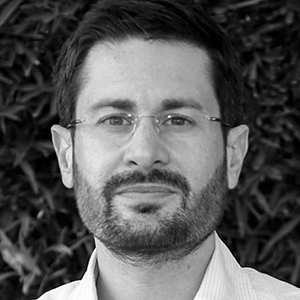
Ricardo has 35 years´ experience in private sector development, regulatory reform, regional and local economic development in the European Union, Western Balkans, Easter Partnership Countries, Middle East, Africa, etc. He is tasked with developing our strategic operations in continental Europe and Ukraine.

Ricardo is a seasoned international development professional with over 30 years of experience designing and delivering Private Sector Development and economic growth initiatives across more than 50 countries spanning Central, Eastern and Southeast Europe, the CIS, Africa, MEDA, and Asia. He holds both a bachelor’s degree and PhD from the London School of Economics and Political Science (LSE) and is a Certified Management Consultant (CMC).

Ricardo brings a unique combination of strategic insight and practical implementation expertise. He has led high-impact assignments for key development institutions, including the European Commission, OECD, GIZ, FCDO/DFID, UNDP, UNCTAD, EBRD, ILO, ADB, World Bank, USAID, and Danida.

With a deep and practical understanding of institutional architecture, policy environment, and post-conflict recovery dynamics, and a career spanning over 30 years across transition economies, Ricardo brings not only technical depth but also a trusted reputation among donors, policymakers and peers.He is leading Triple Line’s strategic expansion into continental Europe, including Ukraine, while strengthening our credibility across the broader region and beyond. Proven Expertise Across Our Core Pillars. Ricardo’s work focuses on the areas central to Triple Line’s evolving service offering: Governance & Institutional Reform: advising public institutions on regulatory impact, policy reform, and donor coordination, Private Sector Development: strategy development for SME ecosystems, innovation, and competitiveness, Infrastructure Enabling Conditions: support for investment climate improvement and regional/local economic development and Cross-cutting themes, including green transition, women’s economic empowerment, and inclusive growth

 
LIFE AT IPE

Learning &
Development (L&D)

We inspire people to be better.

Our intuitive and personalised programmes provide clear path for growth, leadership development, and help people sharpen their skills.

0 %
People trained in last 3 years
0 %
Participation in L&D Initiatives in 2025

Your journey starts from Day One….

Structured Onboarding

Helps align expectations and lays the foundation for your success

New Hire Training

Makes you familiar with the organisation; helps you settle down in a new work environment

Customized L&D Platform

Helps upskill at your own pace through continuous learning and training programmes

Linkage with
Performance Management

Aligns resources and training needs based on your skill set

Learning is not always a formal process. We also align our organisation values to a culture of learning