Unclean India: the bane of dry latrines’ published in Deccan Herald

Urban India faces challenges of inadequate access to sanitation infrastructure, safe disposal of faeces, faecal sludge and septage management. In addition, the illegal practice of manual scavenging continues to persist. More than one lakh families continue to be engaged in this ‘profession.’ Why? Because dry latrines continue to exist in spite of being illegal.

As on September 25, 36% of the urban toilet target proposed for 2017 was achieved. Some 141 cities were declared Open Defecation Free, against a target of 739 for 2016-17. The provision of physical structures is not the end, but only the first step. One of the biggest challenges will be to dispose of the human waste.

India’s towns and cities continue to contaminate their own water. A mere 30% of the 62,000 litres of sewage generated daily flows through treatment plants. The rest is randomly dumped in waterbodies and wells, polluting three-fourths of the country’s waterbodies.

The solution to this mammoth challenge lies in decentralised waste disposal and in the construction and use of septic tanks. More so in slum clusters and areas with high population density and inadequate faecal waste disposal systems.

Septic tanks are the first step for sewage conditioning in a subsurface disposal system. They collect and treat wastewater, separate sewage into three different zones: sludge, scum (floaters) and clear zone in the middle. It allows for anaerobic disintegration of organic matter, which reduces oxygen demand, total suspended solids, fats, oils and greases. The removal of disease causing microorganisms occurs in the subsequent steps when the supernatant is disposed in a drain field system. This supernatant can then be diverted to kitchen gardens or to municipal drains.

The sludge removed can be dispatched for composting with other appropriate waste material in a compost pit and used for agricultural purposes. In India, while BIS codes are framed for large septic tanks, there is a need to frame guidelines and bylaws for individual household septic tanks in urban and rural areas. This will be a major game changer in the way faecal matter can be disposed.

The provision of septic tank systems will enhance the growth rate of sewage treatment exponentially, and at minimum cost. This one-time investment will not go waste as these can be connected to the municipal sewage water collection system. The load on the latter will also be less and will require lower investment.
 

Manual scavenging

One of the main objectives of SBM is the eradication of manual scavenging. This year, Wilson Bezwada of the Safai Karamchari Andolan was awarded the Magsaysay in recognition of his efforts to eradicate the practice of manual scavenging. And yet, the practice continues, somewhat unabated. Census 2011 indicated that there are over 1.80 lakh manual scavenger households and several thousand dry latrines.

In July 2016, the National Commission for Scheduled Castes asked some embarrassing questions to top state-level bureaucrats. “Is it possible that all dry latrines have been cleaning themselves?”

The panel’s ire was based on reports that in Telangana there were 1.57 lakh dry latrines, but no manual scavengers. While Chhattisgarh had 4,391 dry latrines and only three manual scavengers. Madhya Pradesh was reported to have 39,362 dry latrines and 36 manual scavengers.

It is our collective responsibility to eliminate dry latrines and replace them with the conventional toilets. For the people who are liberated from this practice, there is an urgent need to find alternate livelihood opportunities.

Loans to start businesses can be availed of from the Self Employment Scheme for the Rehabilitation of Manual Scavengers, but in absence of skills and a caste-sensitive market, there is little demand for the products made by them. Awareness drives will help in this regard. After all, these people have been cleaning our waste even at the cost of their lives.

Let’s dignify sanitation work and commit to finding solutions so that our waste is not responsible for water contamination. We can no longer dump our waste with impunity and expect others to clean up our mess, literally with their bare hands.

Anand Roop

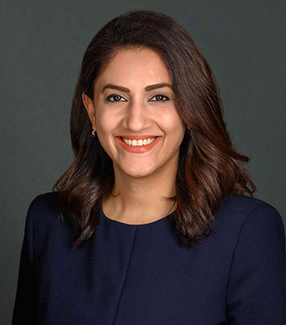
Anandroop Bahadur

Group Head – Human Resources

Expertise

Human Resource Expertise, HR Strategy, Oragnisational Design, Talent & Leadership Development, Policy Governance

Anandroop Bahadur is a seasoned HR leader and strategic advisor with nearly two decades of experience across the development, consulting, and social impact ecosystem. She brings a strong blend of deep technical HR expertise, organizational design acumen, and a people-centric ethos to her work.

At IPE Global, Anandroop leads the Group Human Resources function across IPE Global and its associated entities, including Triple Line Consulting and IPE Africa. Her focus is on strengthening organizational foundations, enabling leadership effectiveness, and building scalable people systems aligned with the organisation’s global growth ambitions. Her remit spans HR strategy, organizational design, talent and leadership development, compensation and performance frameworks, policy governance, safeguarding, and culture integration across geographies.

Over the course of her career, Anandroop has held senior HR leadership and consulting roles with organisations such as Clinton Health Access Initiative (CHAI), Ford Foundation, NASSCOM Foundation, Central Square Foundation, Amity Education Group, and other international institutions. She has advised leadership teams and boards through periods of scale, transition, and transformation, and has led HR operations in high-growth, high-complexity environments.

She holds an Executive Degree in Human Resources from XLRI Jamshedpur and is a SHRM–SCP (Senior Certified Professional), reflecting her grounding in global HR standards and best practices. She has also completed advanced executive and leadership programmes, including training in coaching and organisational transformation, and is an ICF-trained executive coach, currently working towards her ACC credential.


Nikos Papachristodoulou

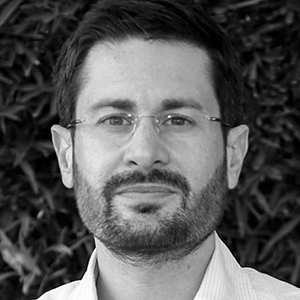
Nikos Papachristodoulou

Director

Expertise

Urban, Infrastructure, Disaster and Climate Resilience, Inclusive Growth

Nikos has expertise in urban and regional economic development, infrastructure, disaster and climate resilience, and inclusive growth. He oversees and manages projects for Triple Line’s cities and infrastructure portfolio.

Nikos is an urban specialist, with principal areas of expertise in urban and regional economic development, infrastructure, disaster and climate resilience, and inclusive growth. Over the past 12 years he has worked for a range of clients including the World Bank, FCDO, EU, USAID, Cities Alliance, Global Green Growth Institute (GGGI), Norwegian Refugee Council (NRC), and local authorities.

Nikos’s work has incorporated the full spectrum of the project cycle, from analytics and programme scoping and design, through implementation, and evaluation and learning.

He has a high level of familiarity with HMG business cases and ODA eligibility criteria having led and supported the development of FCDO’s urbanisation strategy and options for future investments in Somalia’s cities, Prosperity Fund Global Future Cities Programme (GFCP) scoping in Nigeria, and the development of the business case for an urban resilience programme in Tanzania.

Nikos also brings excellent understanding of World Bank latest trends and procedures as a result of his involvement in a number of analytics and technical assistance projects, including on informal settlements upgrading in Mogadishu, climate change adaptation planning in Latin American and Caribbean cities, assessment of the climate resilience of Dar es Salaam’s transport infrastructure, spatial development in Nigeria, and preparation of a handbook on integrated urban flood risk management.

Nikos holds a BSc in Economics from the University of Piraeus and an MSc in Social Development Practice from the Development Planning Unit at University College London (UCL).


Ricardo Pinto

Ricardo Pinto

Associate Director

Expertise

Private Sector Development, Regulatory Reform, Regional and Local Economy

Ricardo has 35 years´ experience in private sector development, regulatory reform, regional and local economic development in the European Union, Western Balkans, Easter Partnership Countries, Middle East, Africa, etc. He is tasked with developing our strategic operations in continental Europe and Ukraine.

Ricardo is a seasoned international development professional with over 30 years of experience designing and delivering Private Sector Development and economic growth initiatives across more than 50 countries spanning Central, Eastern and Southeast Europe, the CIS, Africa, MEDA, and Asia. He holds both a bachelor’s degree and PhD from the London School of Economics and Political Science (LSE) and is a Certified Management Consultant (CMC).

Ricardo brings a unique combination of strategic insight and practical implementation expertise. He has led high-impact assignments for key development institutions, including the European Commission, OECD, GIZ, FCDO/DFID, UNDP, UNCTAD, EBRD, ILO, ADB, World Bank, USAID, and Danida.

With a deep and practical understanding of institutional architecture, policy environment, and post-conflict recovery dynamics, and a career spanning over 30 years across transition economies, Ricardo brings not only technical depth but also a trusted reputation among donors, policymakers and peers.He is leading Triple Line’s strategic expansion into continental Europe, including Ukraine, while strengthening our credibility across the broader region and beyond. Proven Expertise Across Our Core Pillars. Ricardo’s work focuses on the areas central to Triple Line’s evolving service offering: Governance & Institutional Reform: advising public institutions on regulatory impact, policy reform, and donor coordination, Private Sector Development: strategy development for SME ecosystems, innovation, and competitiveness, Infrastructure Enabling Conditions: support for investment climate improvement and regional/local economic development and Cross-cutting themes, including green transition, women’s economic empowerment, and inclusive growth

 
LIFE AT IPE

Learning &
Development (L&D)

We inspire people to be better.

Our intuitive and personalised programmes provide clear path for growth, leadership development, and help people sharpen their skills.

0 %
People trained in last 3 years
0 %
Participation in L&D Initiatives in 2025

Your journey starts from Day One….

Structured Onboarding

Helps align expectations and lays the foundation for your success

New Hire Training

Makes you familiar with the organisation; helps you settle down in a new work environment

Customized L&D Platform

Helps upskill at your own pace through continuous learning and training programmes

Linkage with
Performance Management

Aligns resources and training needs based on your skill set

Learning is not always a formal process. We also align our organisation values to a culture of learning