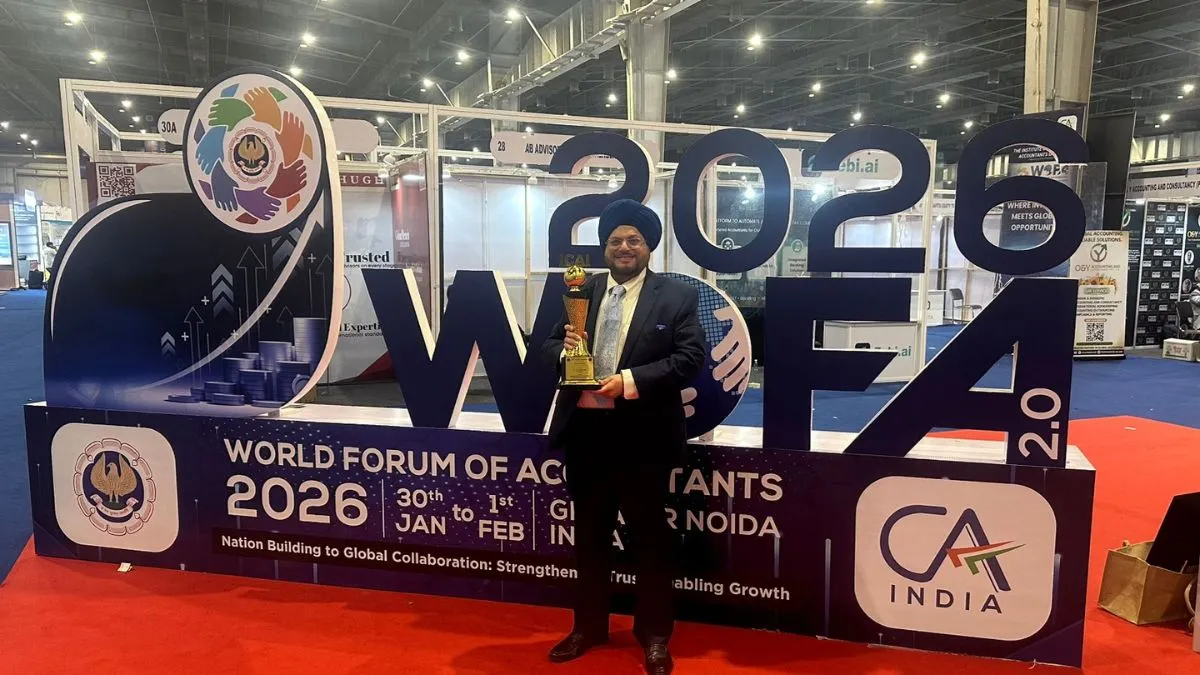
The Hindu article features Mr. Ashwajit Singh’s comments

While government spending on various welfare schemes continues to rise every year, over time, the gap between concept and reality has widened owing to shoddy implementation, corruption of the executing agencies, deficient institutional management, non-utilisation and diversion of funds.

Experts tirelessly reiterate that funds that are allocated in various programmes, if absorbed and effectively utilised can provide the much desired results. In fact, the relatively slow progress in many large scale projects like National Rural Health Mission (NRHM) and Jawaharlal Nehru National Urban Renewal Mission (JnNURM) are often attributed towards States facing challenges to absorb the funds. Moreover, reports indicate that while these programmes are well thought of and well structured, most States lack the capacity of proper planning and implementation.

In the case of NRHM and JnNURM, many of its appraisal reports often reveal that some States lack capacities for adequate utilisations of allocated funds. Additionally, most of these schemes allocate part of the overall funds for capacity building; many States are not able to draw on these funds as well due to lack of clarity on procurement of technical assistance. “The entire implementation mechanism, including roles and responsibilities, needs to be defined before these schemes are announced. JnNURM is a good scheme but do the States have the capacity to implement and monitor systems? The implementation machinery needs to be strengthened,” said Ashwajit Singh, chairman and managing director, IPE Global, a management consulting firm that focuses on the development sector.

Mr. Singh explains that actual assistance is required between Central and State governments. In fact, he adds that the State governments need ‘hand holding’.The NRHM is a rights-based and flagship programme, which was introduced from 2005 to 2012 in 18 States to improve the health delivery system in rural areas. The scheme has considerably helped in terms of improving service delivery and achieving stated outcomes. However, the overall situation remains grim in terms of utilisation of financial resources. Some key reasons for the limited progress on implementation of the NRHM project are weaknesses in planning. Also, the capacity of well trained staff at higher level is inadequate for appraising the plans submitted by the lower levels.

According to the Fifth Common Review Mission for NRHM (2011), the rate of expansion of financing did not keep pace with expectations. “The annual expenditure in 2010-11 was to reach Rs. 55,000 crore. The NRHM Framework for Implementation estimated an expenditure of Rs. 175,000 crore over seven years [2005-2012]. But in fact, we have reached only Rs. 50,000 crore or less than one thirds of this projected amount. Even including the 2011-12 expenditures we would achieve about Rs. 75,000 crore only,” Mr. Singh explained, adding: “If you look at money, most States have not been able to draw enough. The States have been left to fend for themselves with their own plans and proposals. Money has not been drawn because of the capacity at the State level has not been there.”

However, States like Odisha and Bihar have enjoyed significant improvement in the utilisation of funds where quality technical assistance has been provided. The NRHM projects implemented here indicates that for Bihar, the under spending of NRHM funds reduced significantly from 52 per cent of approved budget in 2008-09 to 15 per cent by the end of 2011-12.A similar trend was observed in Odisha with average under utilisation analysed to be less than 20 per cent between 2008-09 and 2011-12. This points towards an increase in the absorption capacity over the later part of four-year period.

In the case of JnNURM, a flagship programme of the Union Ministry of Urban Development envisaged for rejuvenating the urban space in the country, it was launched with Rs. 100,000 crore of investment over seven years with a committed Central share of Rs. 66,000 crore. Seven years of implementation has certainly elevated the importance of Indian cities in the national consciousness and provided impetus, if not consensus, on urban governance reform.

A high-powered expert committee (HPEC) report on Urban Infrastructure (2011) found “with total fund utilised by implementing agencies to the tune of approximately Rs. 30,000 crore for infrastructure creation like sewerage, roads, drainage, etc. during the last seven years, has brought out the challenges of strengthening structures and governance issues to encourage greater accountability and empowerment of the Urban Local Bodies in terms of mobilisation of resources, both technical and financial, and capacity to deliver civic services efficiently”.

States which are relatively advanced had taken reform initiatives ahead of others, had implemented urban development infrastructure projects with the support of multilateral and other foreign funding agencies which managed to provide them the vital technical assistance.Looking ahead, Mr. Singh reiterates the need for capacity building and the implementation cycle. “Decentralisation does not mean deregulation, especially when poor States are not able to implement,” he suggests.


Anand Roop

Anandroop Bahadur

Group Head – Human Resources

Expertise

Human Resource Expertise, HR Strategy, Oragnisational Design, Talent & Leadership Development, Policy Governance

Anandroop Bahadur is a seasoned HR leader and strategic advisor with nearly two decades of experience across the development, consulting, and social impact ecosystem. She brings a strong blend of deep technical HR expertise, organizational design acumen, and a people-centric ethos to her work.

At IPE Global, Anandroop leads the Group Human Resources function across IPE Global and its associated entities, including Triple Line Consulting and IPE Africa. Her focus is on strengthening organizational foundations, enabling leadership effectiveness, and building scalable people systems aligned with the organisation’s global growth ambitions. Her remit spans HR strategy, organizational design, talent and leadership development, compensation and performance frameworks, policy governance, safeguarding, and culture integration across geographies.

Over the course of her career, Anandroop has held senior HR leadership and consulting roles with organisations such as Clinton Health Access Initiative (CHAI), Ford Foundation, NASSCOM Foundation, Central Square Foundation, Amity Education Group, and other international institutions. She has advised leadership teams and boards through periods of scale, transition, and transformation, and has led HR operations in high-growth, high-complexity environments.

She holds an Executive Degree in Human Resources from XLRI Jamshedpur and is a SHRM–SCP (Senior Certified Professional), reflecting her grounding in global HR standards and best practices. She has also completed advanced executive and leadership programmes, including training in coaching and organisational transformation, and is an ICF-trained executive coach, currently working towards her ACC credential.


Nikos Papachristodoulou

Nikos Papachristodoulou

Director

Expertise

Urban, Infrastructure, Disaster and Climate Resilience, Inclusive Growth

Nikos has expertise in urban and regional economic development, infrastructure, disaster and climate resilience, and inclusive growth. He oversees and manages projects for Triple Line’s cities and infrastructure portfolio.

Nikos is an urban specialist, with principal areas of expertise in urban and regional economic development, infrastructure, disaster and climate resilience, and inclusive growth. Over the past 12 years he has worked for a range of clients including the World Bank, FCDO, EU, USAID, Cities Alliance, Global Green Growth Institute (GGGI), Norwegian Refugee Council (NRC), and local authorities.

Nikos’s work has incorporated the full spectrum of the project cycle, from analytics and programme scoping and design, through implementation, and evaluation and learning.

He has a high level of familiarity with HMG business cases and ODA eligibility criteria having led and supported the development of FCDO’s urbanisation strategy and options for future investments in Somalia’s cities, Prosperity Fund Global Future Cities Programme (GFCP) scoping in Nigeria, and the development of the business case for an urban resilience programme in Tanzania.

Nikos also brings excellent understanding of World Bank latest trends and procedures as a result of his involvement in a number of analytics and technical assistance projects, including on informal settlements upgrading in Mogadishu, climate change adaptation planning in Latin American and Caribbean cities, assessment of the climate resilience of Dar es Salaam’s transport infrastructure, spatial development in Nigeria, and preparation of a handbook on integrated urban flood risk management.

Nikos holds a BSc in Economics from the University of Piraeus and an MSc in Social Development Practice from the Development Planning Unit at University College London (UCL).


Ricardo Pinto

Ricardo Pinto

Associate Director

Expertise

Private Sector Development, Regulatory Reform, Regional and Local Economy

Ricardo has 35 years´ experience in private sector development, regulatory reform, regional and local economic development in the European Union, Western Balkans, Easter Partnership Countries, Middle East, Africa, etc. He is tasked with developing our strategic operations in continental Europe and Ukraine.

Ricardo is a seasoned international development professional with over 30 years of experience designing and delivering Private Sector Development and economic growth initiatives across more than 50 countries spanning Central, Eastern and Southeast Europe, the CIS, Africa, MEDA, and Asia. He holds both a bachelor’s degree and PhD from the London School of Economics and Political Science (LSE) and is a Certified Management Consultant (CMC).

Ricardo brings a unique combination of strategic insight and practical implementation expertise. He has led high-impact assignments for key development institutions, including the European Commission, OECD, GIZ, FCDO/DFID, UNDP, UNCTAD, EBRD, ILO, ADB, World Bank, USAID, and Danida.

With a deep and practical understanding of institutional architecture, policy environment, and post-conflict recovery dynamics, and a career spanning over 30 years across transition economies, Ricardo brings not only technical depth but also a trusted reputation among donors, policymakers and peers.He is leading Triple Line’s strategic expansion into continental Europe, including Ukraine, while strengthening our credibility across the broader region and beyond. Proven Expertise Across Our Core Pillars. Ricardo’s work focuses on the areas central to Triple Line’s evolving service offering: Governance & Institutional Reform: advising public institutions on regulatory impact, policy reform, and donor coordination, Private Sector Development: strategy development for SME ecosystems, innovation, and competitiveness, Infrastructure Enabling Conditions: support for investment climate improvement and regional/local economic development and Cross-cutting themes, including green transition, women’s economic empowerment, and inclusive growth

 
LIFE AT IPE

Learning &
Development (L&D)

We inspire people to be better.

Our intuitive and personalised programmes provide clear path for growth, leadership development, and help people sharpen their skills.

0 %
People trained in last 3 years
0 %
Participation in L&D Initiatives in 2025

Your journey starts from Day One….

Structured Onboarding

Helps align expectations and lays the foundation for your success

New Hire Training

Makes you familiar with the organisation; helps you settle down in a new work environment

Customized L&D Platform

Helps upskill at your own pace through continuous learning and training programmes

Linkage with
Performance Management

Aligns resources and training needs based on your skill set

Learning is not always a formal process. We also align our organisation values to a culture of learning