Rethink Retrofitting: Why policymakers must align projects with climate needs

As COP29 in Baku wraps up this week, it’s not just the planet that’s on the line, it’s also the bottom line. COP-style hectic negotiations are on to determine how much financial support tight-fisted wealthy nations will commit to developing countries for climate mitigation and adaptation.

From the beginning, the mood of the ‘finance COP’ in Azerbaijan has been far from optimistic. In the first week, Adaptation Fund head Mikko Ollikainen spoke about the ‘great paradox’ at the heart of the latest UNFCCC meet – the urgent calls of world leaders to safeguard vulnerable populations from worsening climate impacts, and the lack of funds to make that a reality.

The UN’s Adaptation Gap Report 2024: Come Hell and High Water, released on Nov 7, estimates that the adaptation finance gap stands between $187-359 bn a year. Much larger numbers are floating around in Baku. The report stresses another aspect: need to improve the design and modalities of adaptation projects to ensure that projects enhance resilience of vulnerable communities.

However, planning for adaptation to climate uncertainties is inherently uncertain, due to incomplete data, wrong projections, bad planning and corruption. This uncertainty can lead to failures, with some strategies even exacerbating vulnerabilities, a phenomenon known as ‘maladaptation’. IPCC’s 6th Assessment Report (AR6), released in 2022, pointed to growing evidence of maladaptation across various sectors and regions.

Farm trouble This may be surprising to many, but Shiv Nadar University agricultural economist Rajeswari S Raina argues that India’s irrigation-centric farming policies since the 1960s have undermined the resilience of traditional rain-fed agriculture that accounts for 60% of India’s arable land and supports over half its farmers. Rain-fed offers sustainable, adaptive solutions crucial for survival in a changing climate. However, government policies have often steered farmers towards water-intensive and chemically-dependent crops, weakening their ability to withstand dry spells and droughts.

This maladaptive approach has led to groundwater depletion, pollution and ecosystem degradation in rain-fed districts, which are home to 70% of India’s poorest communities. The resulting farmer distress and social conflicts over dwindling water resources only serve to increase vulnerabilities, rather than reduce them.

To address this, public investments should be redirected towards watershed development, soil moisture management and use of localised data to strengthen resilience. Measuring metrics, such as rainfall-use efficiency and yield per hectare per millimetre of rainfall could help decision-makers better assess adaptation success.

Urban maladies In Ho Chi Minh City, Vietnam, planners implemented extensive flood-mitigation infra based on the best available data and climate predictions. However, recent studies suggest that urbanisation and climate change have progressed faster than expected, surpassing the maximum thresholds considered during the project’s design. Ironically, the infra intended to protect against flooding may now lower resilience and increase vulnerability, illustrating the challenges of planning adaptation in the face of such uncertainties.

Review hard infra Concretisation of roads and embankments, along rivers like the Kosi (both lead to flooding) and coastal embankments, which disrupts natural water flow, is cost-intensive and locks areas into specific development pathways, can be disastrous. According to Abinash Mohanty, sector head for climate change and sustainability, IPE Global, these policies must be reviewed before further irreversible damage is done.

Identifying maladaptation, however, is a complex task. Success is often subjective, depending on when and how adaptation strategies are assessed. Gautam Menon of Ashoka University stresses that data is key. ‘India’s climate vulnerabilities are diverse, but not all of them are equally urgent. Unbiased assessments of risks are essential in developing targeted strategies,’ he says.

Despite the growing interest in maladaptation, knowledge remains limited. This could hamper developing nations’ ability to secure crucial funding, write E L F Schipper and Aditi Mukherji in their November 2024 paper published in Science, ‘Misguided Negative Adaptation Narratives Are Hurting the Poor’. They caution that the notion that ‘what cannot be measured cannot be funded’ should not be used as a reason to stall adaptation activities, leaving vulnerable communities exposed to the worst impacts of the climate crisis.

While the developing world is justified in demanding adequate adaptation funds and resisting attempts to weaponise maladaptation, it’s also incumbent upon policymakers to ensure that adaptation plans are designed as effectively as possible.

This involves harnessing data, setting clear guidelines for donors and implementing agencies, leveraging traditional and local knowledge, and focusing on the effectiveness of spending to ensure that investments deliver real, long-term benefits.

Policymakers must prioritise fresh thinking in adaptation and reduce the tendency to retrofit old projects with limited relevance to current climate realities. The adaptation agenda must translate into real, life-saving action.

Anand Roop

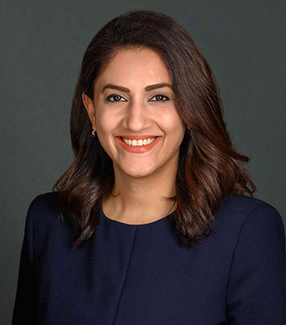
Anandroop Bahadur

Group Head – Human Resources

Expertise

Human Resource Expertise, HR Strategy, Oragnisational Design, Talent & Leadership Development, Policy Governance

Anandroop Bahadur is a seasoned HR leader and strategic advisor with nearly two decades of experience across the development, consulting, and social impact ecosystem. She brings a strong blend of deep technical HR expertise, organizational design acumen, and a people-centric ethos to her work.

At IPE Global, Anandroop leads the Group Human Resources function across IPE Global and its associated entities, including Triple Line Consulting and IPE Africa. Her focus is on strengthening organizational foundations, enabling leadership effectiveness, and building scalable people systems aligned with the organisation’s global growth ambitions. Her remit spans HR strategy, organizational design, talent and leadership development, compensation and performance frameworks, policy governance, safeguarding, and culture integration across geographies.

Over the course of her career, Anandroop has held senior HR leadership and consulting roles with organisations such as Clinton Health Access Initiative (CHAI), Ford Foundation, NASSCOM Foundation, Central Square Foundation, Amity Education Group, and other international institutions. She has advised leadership teams and boards through periods of scale, transition, and transformation, and has led HR operations in high-growth, high-complexity environments.

She holds an Executive Degree in Human Resources from XLRI Jamshedpur and is a SHRM–SCP (Senior Certified Professional), reflecting her grounding in global HR standards and best practices. She has also completed advanced executive and leadership programmes, including training in coaching and organisational transformation, and is an ICF-trained executive coach, currently working towards her ACC credential.


Nikos Papachristodoulou

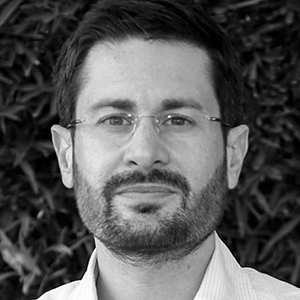
Nikos Papachristodoulou

Director

Expertise

Urban, Infrastructure, Disaster and Climate Resilience, Inclusive Growth

Nikos has expertise in urban and regional economic development, infrastructure, disaster and climate resilience, and inclusive growth. He oversees and manages projects for Triple Line’s cities and infrastructure portfolio.

Nikos is an urban specialist, with principal areas of expertise in urban and regional economic development, infrastructure, disaster and climate resilience, and inclusive growth. Over the past 12 years he has worked for a range of clients including the World Bank, FCDO, EU, USAID, Cities Alliance, Global Green Growth Institute (GGGI), Norwegian Refugee Council (NRC), and local authorities.

Nikos’s work has incorporated the full spectrum of the project cycle, from analytics and programme scoping and design, through implementation, and evaluation and learning.

He has a high level of familiarity with HMG business cases and ODA eligibility criteria having led and supported the development of FCDO’s urbanisation strategy and options for future investments in Somalia’s cities, Prosperity Fund Global Future Cities Programme (GFCP) scoping in Nigeria, and the development of the business case for an urban resilience programme in Tanzania.

Nikos also brings excellent understanding of World Bank latest trends and procedures as a result of his involvement in a number of analytics and technical assistance projects, including on informal settlements upgrading in Mogadishu, climate change adaptation planning in Latin American and Caribbean cities, assessment of the climate resilience of Dar es Salaam’s transport infrastructure, spatial development in Nigeria, and preparation of a handbook on integrated urban flood risk management.

Nikos holds a BSc in Economics from the University of Piraeus and an MSc in Social Development Practice from the Development Planning Unit at University College London (UCL).


Ricardo Pinto

Ricardo Pinto

Associate Director

Expertise

Private Sector Development, Regulatory Reform, Regional and Local Economy

Ricardo has 35 years´ experience in private sector development, regulatory reform, regional and local economic development in the European Union, Western Balkans, Easter Partnership Countries, Middle East, Africa, etc. He is tasked with developing our strategic operations in continental Europe and Ukraine.

Ricardo is a seasoned international development professional with over 30 years of experience designing and delivering Private Sector Development and economic growth initiatives across more than 50 countries spanning Central, Eastern and Southeast Europe, the CIS, Africa, MEDA, and Asia. He holds both a bachelor’s degree and PhD from the London School of Economics and Political Science (LSE) and is a Certified Management Consultant (CMC).

Ricardo brings a unique combination of strategic insight and practical implementation expertise. He has led high-impact assignments for key development institutions, including the European Commission, OECD, GIZ, FCDO/DFID, UNDP, UNCTAD, EBRD, ILO, ADB, World Bank, USAID, and Danida.

With a deep and practical understanding of institutional architecture, policy environment, and post-conflict recovery dynamics, and a career spanning over 30 years across transition economies, Ricardo brings not only technical depth but also a trusted reputation among donors, policymakers and peers.He is leading Triple Line’s strategic expansion into continental Europe, including Ukraine, while strengthening our credibility across the broader region and beyond. Proven Expertise Across Our Core Pillars. Ricardo’s work focuses on the areas central to Triple Line’s evolving service offering: Governance & Institutional Reform: advising public institutions on regulatory impact, policy reform, and donor coordination, Private Sector Development: strategy development for SME ecosystems, innovation, and competitiveness, Infrastructure Enabling Conditions: support for investment climate improvement and regional/local economic development and Cross-cutting themes, including green transition, women’s economic empowerment, and inclusive growth

 
LIFE AT IPE

Learning &
Development (L&D)

We inspire people to be better.

Our intuitive and personalised programmes provide clear path for growth, leadership development, and help people sharpen their skills.

0 %
People trained in last 3 years
0 %
Participation in L&D Initiatives in 2025

Your journey starts from Day One….

Structured Onboarding

Helps align expectations and lays the foundation for your success

New Hire Training

Makes you familiar with the organisation; helps you settle down in a new work environment

Customized L&D Platform

Helps upskill at your own pace through continuous learning and training programmes

Linkage with
Performance Management

Aligns resources and training needs based on your skill set

Learning is not always a formal process. We also align our organisation values to a culture of learning