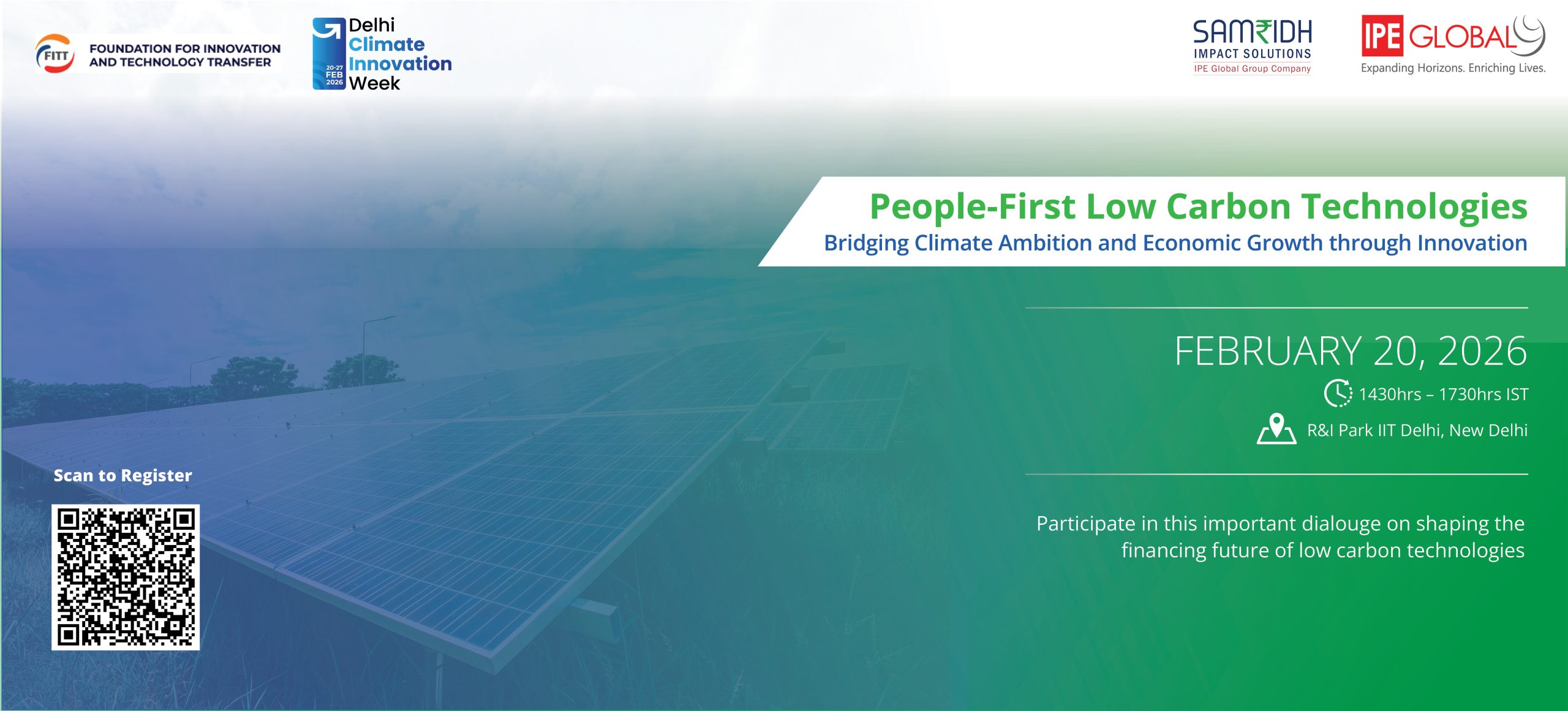
In the inaugural edition of Delhi Climate Innovation Week 2026, IPE Global and SAMRIDH Impact Solutions Pvt. Ltd. (SISPL) are proud to host a national dialogue titled “People-First Low Carbon Technologies: Bridging Climate Ambition and Economic Growth.” This session aligns with the People-Centric Climate Innovation and Just Transitions theme of Delhi Climate Innovation Week 2026, reflecting the growing recognition that climate solutions must deliver tangible social and economic benefits alongside emissions reduction. As India accelerates its climate ambition, the success of the low-carbon transition will depend not only on technological advancement but on how these technologies are designed, financed, and deployed to serve people, livelihoods, and communities.
Low-carbon technologies have become central to global efforts to align development with climate responsibility. They represent a systemic shift in how energy is produced, consumed, and managed, enabling economies to grow while reducing environmental impact. As climate risks intensify and regulatory, financial, and market pressures evolve, low-carbon solutions are no longer niche interventions. They are now core enablers of sustainable, resilient, and future-ready growth pathways. From a climate ambition perspective, low-carbon technologies are indispensable to achieving net-zero pathways and meeting global and national climate commitments. They directly contribute to reducing greenhouse gas emissions, lowering sectoral emissions intensity, and enabling a structured transition away from fossil fuels toward clean, energy-efficient, and sustainable alternatives. Technologies spanning renewable energy, energy efficiency, electric mobility, green hydrogen, sustainable cooling, and climate-smart industrial systems play a decisive role in decarbonising high-emitting sectors while strengthening long-term climate resilience. For India, the significance of low-carbon technologies extends well beyond emissions reduction. Their large-scale adoption has strategic economic implications, supporting the country’s aspiration of becoming a USD 5 trillion economy by strengthening domestic manufacturing, enhancing energy security, reducing import dependence, and unlocking new investment opportunities. However, achieving both climate and economic outcomes requires a deliberate shift towards people-first, low-carbon technologies. Affordability, accessibility, and contextual relevance must guide technology design and deployment, ensuring benefits accrue to workers, communities, consumers, and small enterprises.