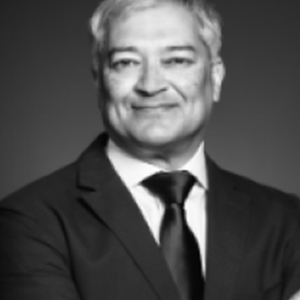
Mr. Ashwajit Singh, Chairman and Managing Director, interviewed by Forbes

Ashwajit Singh
Designation: Managing director of IPE Global 
Inflection Point: The stint at LSE where I received international exposure to other developed and 
developing economies combined with an era of financial and government reforms,  which included decentralisation, governance and social sector reforms in India in the 1990s
 

Fifteen years ago, I was sitting with some alumni of LSE (London School of Economics) and we were discussing areas that need expertise in the time to come. And one such area where we felt there was a huge gap in terms of governance and policy framework is the development sector.
 

There are many international consultants, like the McKinseys and Bains of the world, who work with the government at the top end to frame policies. At the other end of the spectrum are numerous NGOs which work at the grassroots level, but few of them have managerial expertise. As a result, there is often a total disconnect between policy and implementation. So we wanted to provide end-to-end expertise and consultancy: Right from formulating policies to actually handholding and implementing them. 


OPPORTUNITIES AND RISKS
With the 73rd and 74th Constitutional Amendments [enforced] in 1993, whereby the government decided to devolve powers down the line to state and local governments, there was a huge demand for such advisory services. We registered ourselves in December 1998 and in the first two or three years, we were just watching the space. Even the government took time to look at devolving and implementing Centrally Sponsored Schemes (CSS) in a proper manner.
 

We really got active around early 2000. We started out with just five people but as assignments came in, we started expanding; today we are 500-plus people, along with part-time consultants, working full time in 25 countries. The risk was that I was getting into an untested [and] untried area where not many focussed consultancy firms existed. Even those which were there were foreign consultants because we started at a time when foreign consultants were still considered better. 
 

But it is a very satisfying job. It is the easiest thing to criticise the government on policy and the lack of implementation, but very few people get a chance to get involved with the government and make things happen. And this satisfaction is the common factor driving the whole team.


EXECUTION WOES
Policies are by and large well thought of. Where we fail is in the implementation. I think rather than announcing new policies, one replacing the other, we should focus more on the implementation. 

A related point but equally important: In most cases there is no capacity [in terms of training given to officials who are in charge of implementation] to implement these policies. On one hand, you have a freeze on recruitments and [on the other] the existing lot is neither well-trained nor very motivated. So it is very difficult to get these people to implement policies. I think this needs serious consideration and thought.
 

Again, we do need to strengthen the institutions because often the success of policies is dependent on the political and bureaucratic will which varies. Within the same government you may have different bureaucrats—one very progressive and the other not too keen.
 

Another major shift I have seen in the last 15 years is from process-based to result-based policy work. Earlier the focus was more on how things should be done. Now because there is more accountability, especially [due to] the monitoring done by civil society or media, people focus more on impact and final results rather than the process.


FUNDS NOT UTILISED
We are seeing in the last few years that there is no shortage of funds in the government and [there are] enough donors. That is why we are no longer heavily dependent on international aid. But unfortunately the absorption capacity still remains a challenge. 
 

Look at some of our Central schemes such as the Jawaharlal Nehru National Urban Renewal Mission (JNNURM), the National Rural Health Mission (NRHM), and the Mahatma Gandhi National Rural Employment Guarantee Act (MGNREGA). In terms of intent, they are all good but in terms of utilisation of funds, they lag far behind. For a local government which used to have a capital of Rs 10-15 crore a year, budgets could go up by 20-25 times with some of these schemes. So, both capacity-building and continuous monitoring and evaluation are needed. This requires stability of tenure. 
 

When I go to a government office I look at the list of previous occupants. If an officer is there for only six or eight months, what can he possibly do? In some states like West Bengal, there is an average tenure of 4-5 years, but there are other states where transfers happen within months. Remember these occupants are not sector experts; they are generalists, and by the time they understand the problem, they are shunted out. 

Anand Roop

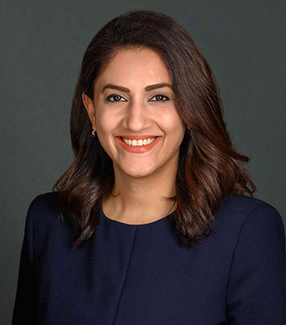
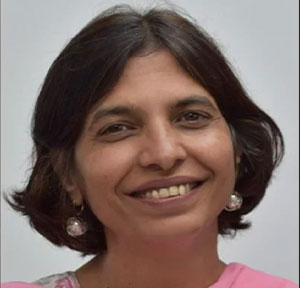
Anandroop Bahadur

Group Head – Human Resources

Expertise

Human Resource Expertise, HR Strategy, Oragnisational Design, Talent & Leadership Development, Policy Governance

Anandroop Bahadur is a seasoned HR leader and strategic advisor with nearly two decades of experience across the development, consulting, and social impact ecosystem. She brings a strong blend of deep technical HR expertise, organizational design acumen, and a people-centric ethos to her work.

At IPE Global, Anandroop leads the Group Human Resources function across IPE Global and its associated entities, including Triple Line Consulting and IPE Africa. Her focus is on strengthening organizational foundations, enabling leadership effectiveness, and building scalable people systems aligned with the organisation’s global growth ambitions. Her remit spans HR strategy, organizational design, talent and leadership development, compensation and performance frameworks, policy governance, safeguarding, and culture integration across geographies.

Over the course of her career, Anandroop has held senior HR leadership and consulting roles with organisations such as Clinton Health Access Initiative (CHAI), Ford Foundation, NASSCOM Foundation, Central Square Foundation, Amity Education Group, and other international institutions. She has advised leadership teams and boards through periods of scale, transition, and transformation, and has led HR operations in high-growth, high-complexity environments.

She holds an Executive Degree in Human Resources from XLRI Jamshedpur and is a SHRM–SCP (Senior Certified Professional), reflecting her grounding in global HR standards and best practices. She has also completed advanced executive and leadership programmes, including training in coaching and organisational transformation, and is an ICF-trained executive coach, currently working towards her ACC credential.


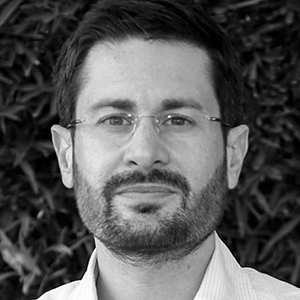
Nikos Papachristodoulou

Nikos Papachristodoulou

Director

Expertise

Urban, Infrastructure, Disaster and Climate Resilience, Inclusive Growth

Nikos has expertise in urban and regional economic development, infrastructure, disaster and climate resilience, and inclusive growth. He oversees and manages projects for Triple Line’s cities and infrastructure portfolio.

Nikos is an urban specialist, with principal areas of expertise in urban and regional economic development, infrastructure, disaster and climate resilience, and inclusive growth. Over the past 12 years he has worked for a range of clients including the World Bank, FCDO, EU, USAID, Cities Alliance, Global Green Growth Institute (GGGI), Norwegian Refugee Council (NRC), and local authorities.

Nikos’s work has incorporated the full spectrum of the project cycle, from analytics and programme scoping and design, through implementation, and evaluation and learning.

He has a high level of familiarity with HMG business cases and ODA eligibility criteria having led and supported the development of FCDO’s urbanisation strategy and options for future investments in Somalia’s cities, Prosperity Fund Global Future Cities Programme (GFCP) scoping in Nigeria, and the development of the business case for an urban resilience programme in Tanzania.

Nikos also brings excellent understanding of World Bank latest trends and procedures as a result of his involvement in a number of analytics and technical assistance projects, including on informal settlements upgrading in Mogadishu, climate change adaptation planning in Latin American and Caribbean cities, assessment of the climate resilience of Dar es Salaam’s transport infrastructure, spatial development in Nigeria, and preparation of a handbook on integrated urban flood risk management.

Nikos holds a BSc in Economics from the University of Piraeus and an MSc in Social Development Practice from the Development Planning Unit at University College London (UCL).


Ricardo Pinto

Ricardo Pinto

Associate Director

Expertise

Private Sector Development, Regulatory Reform, Regional and Local Economy

Ricardo has 35 years´ experience in private sector development, regulatory reform, regional and local economic development in the European Union, Western Balkans, Easter Partnership Countries, Middle East, Africa, etc. He is tasked with developing our strategic operations in continental Europe and Ukraine.

Ricardo is a seasoned international development professional with over 30 years of experience designing and delivering Private Sector Development and economic growth initiatives across more than 50 countries spanning Central, Eastern and Southeast Europe, the CIS, Africa, MEDA, and Asia. He holds both a bachelor’s degree and PhD from the London School of Economics and Political Science (LSE) and is a Certified Management Consultant (CMC).

Ricardo brings a unique combination of strategic insight and practical implementation expertise. He has led high-impact assignments for key development institutions, including the European Commission, OECD, GIZ, FCDO/DFID, UNDP, UNCTAD, EBRD, ILO, ADB, World Bank, USAID, and Danida.

With a deep and practical understanding of institutional architecture, policy environment, and post-conflict recovery dynamics, and a career spanning over 30 years across transition economies, Ricardo brings not only technical depth but also a trusted reputation among donors, policymakers and peers.He is leading Triple Line’s strategic expansion into continental Europe, including Ukraine, while strengthening our credibility across the broader region and beyond. Proven Expertise Across Our Core Pillars. Ricardo’s work focuses on the areas central to Triple Line’s evolving service offering: Governance & Institutional Reform: advising public institutions on regulatory impact, policy reform, and donor coordination, Private Sector Development: strategy development for SME ecosystems, innovation, and competitiveness, Infrastructure Enabling Conditions: support for investment climate improvement and regional/local economic development and Cross-cutting themes, including green transition, women’s economic empowerment, and inclusive growth

 
LIFE AT IPE

Learning &
Development (L&D)

We inspire people to be better.

Our intuitive and personalised programmes provide clear path for growth, leadership development, and help people sharpen their skills.

0 %
People trained in last 3 years
0 %
Participation in L&D Initiatives in 2025

Your journey starts from Day One….

Structured Onboarding

Helps align expectations and lays the foundation for your success

New Hire Training

Makes you familiar with the organisation; helps you settle down in a new work environment

Customized L&D Platform

Helps upskill at your own pace through continuous learning and training programmes

Linkage with
Performance Management

Aligns resources and training needs based on your skill set

Learning is not always a formal process. We also align our organisation values to a culture of learning