India opening up the door for investment

Narendra Modi has been on a charm offensive to win over foreign investors in the past few months. India’s prime minister has travelled to the US, Japan and Australia to promise to overhaul a notoriously difficult environment for overseas companies.

Foreign firms have shied away in the past, despite the growing economy, rich natural resources and increasing wealth of its more than 1.2 billion population, amid challenges including excessive and unpredictable bureaucracy and a lack of infrastructure.Steps in the right direction have been taken by the new government, after the Bharatiya Janata Party (BJP) came to power in May, and an increasing number of overseas companies are now looking again at India. But much more needs to be done before the subcontinent shakes off its image of having a difficult climate for foreign companies, analysts say.

“I think there are very positive signs, and I would say [Modi] has managed to create the necessary hype,” says Ashwajit Singh, the chairman and managing director of IPE Global, a development sector consultancy headquartered in New Delhi. “The interest of foreign investors to again start looking at India as a potential place to do business has definitely been aroused. I think the next step is to really be taken seriously in the sense that foreign investors really start actually planning to invest in India.“Capital markets are still the easier way to get investment but I think the one that is more challenging, and of course better for the economy in the long term, is foreign direct investment. I think that would take anything up to about 18 months for that confidence to really come in and before we see some really big ticket investment coming in.”

Foreign companies are waiting for the implementation of promised economic reforms, including changes to land acquisition regulation and the introduction of a uniform goods and service tax, he says.“Intention seems to be right,” says Mr Singh. “But implementation has frankly always been India’s biggest problem. We have over the last few years definitely developed a very bad image as far as foreign investors are concerned. I think the next 18 months are perhaps as important for India, if not more, than the 1991 reforms. Again, India is currently with its back towards the wall. But we have a prime minister who has the knack to market the economy in the right way.”

It is widely agreed that India needs to achieve economic growth levels of about 8 per cent to support and create enough jobs for its burgeoning population. This cannot be achieved through domestic income alone, and foreign capital is vital to propel the country’s economy to such heights. The latest economic growth data for India showed that a slowdown to 5.3 per cent for the quarter to the end of September.

“The environment has already started changing,” says Pranav Ansal, the vice chairman of Ansal Properties and Infrastructure. “Our prime minister, in the last six months has visited major countries, met every big leader of the world, and created such a good investment climate. I think from next year you’ll see a lot more foreign companies coming and setting up businesses and opening offices and investing more in India. That’s going to happen.”The recent news that India is unlikely to appeal against tax cases won by Vodafone and Royal Dutch Shell marks a major turning point in the country’s business environment, Mr Ansal believes.Confusing and sometimes unpredictable tax regulations in India have proved a major hindrance to foreign investment.

Anand Roop

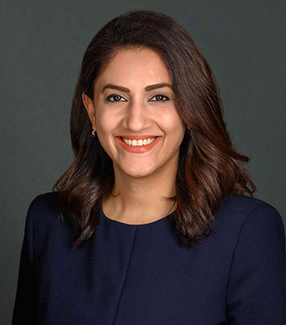
Anandroop Bahadur

Group Head – Human Resources

Expertise

Human Resource Expertise, HR Strategy, Oragnisational Design, Talent & Leadership Development, Policy Governance

Anandroop Bahadur is a seasoned HR leader and strategic advisor with nearly two decades of experience across the development, consulting, and social impact ecosystem. She brings a strong blend of deep technical HR expertise, organizational design acumen, and a people-centric ethos to her work.

At IPE Global, Anandroop leads the Group Human Resources function across IPE Global and its associated entities, including Triple Line Consulting and IPE Africa. Her focus is on strengthening organizational foundations, enabling leadership effectiveness, and building scalable people systems aligned with the organisation’s global growth ambitions. Her remit spans HR strategy, organizational design, talent and leadership development, compensation and performance frameworks, policy governance, safeguarding, and culture integration across geographies.

Over the course of her career, Anandroop has held senior HR leadership and consulting roles with organisations such as Clinton Health Access Initiative (CHAI), Ford Foundation, NASSCOM Foundation, Central Square Foundation, Amity Education Group, and other international institutions. She has advised leadership teams and boards through periods of scale, transition, and transformation, and has led HR operations in high-growth, high-complexity environments.

She holds an Executive Degree in Human Resources from XLRI Jamshedpur and is a SHRM–SCP (Senior Certified Professional), reflecting her grounding in global HR standards and best practices. She has also completed advanced executive and leadership programmes, including training in coaching and organisational transformation, and is an ICF-trained executive coach, currently working towards her ACC credential.


Nikos Papachristodoulou

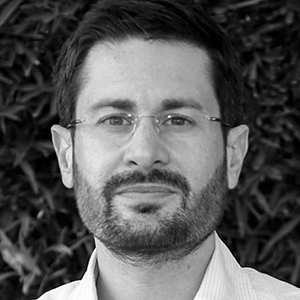
Nikos Papachristodoulou

Director

Expertise

Urban, Infrastructure, Disaster and Climate Resilience, Inclusive Growth

Nikos has expertise in urban and regional economic development, infrastructure, disaster and climate resilience, and inclusive growth. He oversees and manages projects for Triple Line’s cities and infrastructure portfolio.

Nikos is an urban specialist, with principal areas of expertise in urban and regional economic development, infrastructure, disaster and climate resilience, and inclusive growth. Over the past 12 years he has worked for a range of clients including the World Bank, FCDO, EU, USAID, Cities Alliance, Global Green Growth Institute (GGGI), Norwegian Refugee Council (NRC), and local authorities.

Nikos’s work has incorporated the full spectrum of the project cycle, from analytics and programme scoping and design, through implementation, and evaluation and learning.

He has a high level of familiarity with HMG business cases and ODA eligibility criteria having led and supported the development of FCDO’s urbanisation strategy and options for future investments in Somalia’s cities, Prosperity Fund Global Future Cities Programme (GFCP) scoping in Nigeria, and the development of the business case for an urban resilience programme in Tanzania.

Nikos also brings excellent understanding of World Bank latest trends and procedures as a result of his involvement in a number of analytics and technical assistance projects, including on informal settlements upgrading in Mogadishu, climate change adaptation planning in Latin American and Caribbean cities, assessment of the climate resilience of Dar es Salaam’s transport infrastructure, spatial development in Nigeria, and preparation of a handbook on integrated urban flood risk management.

Nikos holds a BSc in Economics from the University of Piraeus and an MSc in Social Development Practice from the Development Planning Unit at University College London (UCL).


Ricardo Pinto

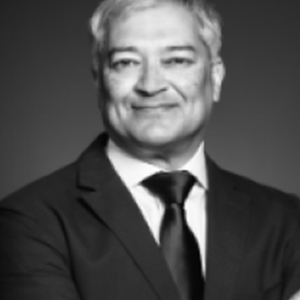
Ricardo Pinto

Associate Director

Expertise

Private Sector Development, Regulatory Reform, Regional and Local Economy

Ricardo has 35 years´ experience in private sector development, regulatory reform, regional and local economic development in the European Union, Western Balkans, Easter Partnership Countries, Middle East, Africa, etc. He is tasked with developing our strategic operations in continental Europe and Ukraine.

Ricardo is a seasoned international development professional with over 30 years of experience designing and delivering Private Sector Development and economic growth initiatives across more than 50 countries spanning Central, Eastern and Southeast Europe, the CIS, Africa, MEDA, and Asia. He holds both a bachelor’s degree and PhD from the London School of Economics and Political Science (LSE) and is a Certified Management Consultant (CMC).

Ricardo brings a unique combination of strategic insight and practical implementation expertise. He has led high-impact assignments for key development institutions, including the European Commission, OECD, GIZ, FCDO/DFID, UNDP, UNCTAD, EBRD, ILO, ADB, World Bank, USAID, and Danida.

With a deep and practical understanding of institutional architecture, policy environment, and post-conflict recovery dynamics, and a career spanning over 30 years across transition economies, Ricardo brings not only technical depth but also a trusted reputation among donors, policymakers and peers.He is leading Triple Line’s strategic expansion into continental Europe, including Ukraine, while strengthening our credibility across the broader region and beyond. Proven Expertise Across Our Core Pillars. Ricardo’s work focuses on the areas central to Triple Line’s evolving service offering: Governance & Institutional Reform: advising public institutions on regulatory impact, policy reform, and donor coordination, Private Sector Development: strategy development for SME ecosystems, innovation, and competitiveness, Infrastructure Enabling Conditions: support for investment climate improvement and regional/local economic development and Cross-cutting themes, including green transition, women’s economic empowerment, and inclusive growth

 
LIFE AT IPE

Learning &
Development (L&D)

We inspire people to be better.

Our intuitive and personalised programmes provide clear path for growth, leadership development, and help people sharpen their skills.

0 %
People trained in last 3 years
0 %
Participation in L&D Initiatives in 2025

Your journey starts from Day One….

Structured Onboarding

Helps align expectations and lays the foundation for your success

New Hire Training

Makes you familiar with the organisation; helps you settle down in a new work environment

Customized L&D Platform

Helps upskill at your own pace through continuous learning and training programmes

Linkage with
Performance Management

Aligns resources and training needs based on your skill set

Learning is not always a formal process. We also align our organisation values to a culture of learning