India-Africa knowledge, tech partnerships the way forward (Comment: Special to IANS)

Experiments on exchange of knowledge and technologies from India to Africa in the energy space offer a recipe for addressing development. Toward this, the Third India Africa Forum Summit (IAFS) in New Delhi during Oct 26-29 promises to be an event to remember. Knowledge exchange and transfer are going to be key for achieving the expectations. For this, partnerships within and between countries as mentioned in Goal 17 of the SDGs (Sustainable Development Goals) will be imperative.

One such example is the sharing of Indian knowledge and expertise in the energy space, under the aegis of the Knowledge Partnership Programme supported by DFID India and implemented in partnership with IPE Global. Learning from past experiences and partnerships will help. While the goals are inextricably linked to each other, so are the solutions. Along the way, some lessons were learnt on the formula of successful partnerships. These included (a) responding to a key demand and matching the technology solution with this demand, (b) appropriate identification of partner, (c) involving all stakeholders so that there is collective ownership over the process and the solution, (d) building skill and capacity for sustaining and mainstreaming of the technology, (e) involving policymakers for appropriate policy formulation and (f) honoring the spirit of partnership on equity and joint learning principles.

Two experiments – one on green brick technology transfer and the other on entrepreneurship development in the renewable energy space to provide access to bottom of the pyramid communities – offer insights into just what is possible. Knowledge can be Power! One of the major drivers of poverty is lack of access to clean energy, which dramatically affects and undermines health, limits opportunities for education and development, and can reduce a family’s potential to rise up out of poverty. Around 19 percent of the global population (1.3 billion) lack access to electricity, and 2.7 billion (39 percent) still rely on traditional three stone fires for cooking. Over 95 percent of this population lives in rural areas of South Asia and Sub-Saharan Africa.

Nurturing renewable energy entrepreneurs. Financially viable entrepreneurship models for renewable energy (RE) can help bridge the energy divide. An approach used to develop RE enterprises in India has been to support the entrepreneur to incubate the business through a well thought out plan. This approach was one worth sharing. With technical support from IRENA (International Renewable Energy Agency) and the CIIE (Centre for Innovation Incubation and Entrepreneurship), the project brought together incubators, entrepreneurs, renewable energy associations and the government to share experiences and learn from the approach in India.

Participants appreciated the support that a structured approach offered to the entrepreneur including the financial support systems. A letter of intent was signed between 11 countries and other learning platforms have been formed. Arresting deforestation in Malawi. What started out as a pilot experiment in technology transfer for green brick technology transfer from India to Malawi resulted in outcomes that showcase green and good quality construction, entrepreneurship development opportunities, improvement in wages and most important of all, dignified employment opportunities for women. Malawi has a high urbanisation rate in the world, leading to an increase in the demand for housing – and housing materials, especially bricks.

Traditional brick making in Malawi uses fuelwood: Estimates indicate that 1.7 billion units of burnt clay bricks will be annually required for walling alone. This volume will be produced at the cost of 850,000 tonnes of wood. At this rate, Malawi is staring at complete deforestation within 30 years. Alternate brick making technologies are thus imperative and given the demand for bricks, the market is primed.

With technical support from India a vertical shaft brick kiln (VSBK) was piloted with CCODE (the Centre for Community Organisation and Development), Malawi, and inaugurated in January 2015. The kiln has since breached the 0.6 million production mark. Compared with traditional bricks, VSBK bricks (a) use half the energy and are yet twice as strong, (b) will dramatically reduce deforestation, (c) save 20-30 percent on construction costs (d) has created new jobs for women – one third of 200 employees at the kiln are women – earning thrice the average monthly salary and (e) built businesses of the entrepreneur: As of August 2015, business worth $67,000 was generated.

Sandwiched as it were between the Sustainable Development Goals (SDGs) conference in September and the Conference of Parties (COP) 21 later this year, the timing of IAFS is opportune. As expectations from these three events are high, knowledge exchange must take centrestage. For this, partnerships within and between countries as mentioned in Goal 17 of the SDGs will be imperative. While the goals of these three events are inextricably linked to each other, so are the solutions.

In arrangement with KPP-IPE Global, an international development consulting group, with whom Indira Khurana is Policy Lead – Resource Scarcity, Food Security and Climate Change, The views expressed are those of KPP-IPE Global. She can be reached at ikhurana@ipeglobal.com)

Anand Roop

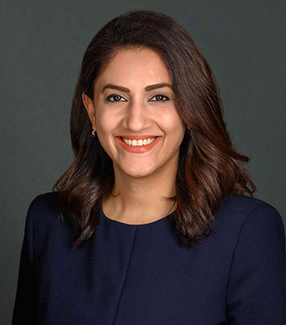
Anandroop Bahadur

Group Head – Human Resources

Expertise

Human Resource Expertise, HR Strategy, Oragnisational Design, Talent & Leadership Development, Policy Governance

Anandroop Bahadur is a seasoned HR leader and strategic advisor with nearly two decades of experience across the development, consulting, and social impact ecosystem. She brings a strong blend of deep technical HR expertise, organizational design acumen, and a people-centric ethos to her work.

At IPE Global, Anandroop leads the Group Human Resources function across IPE Global and its associated entities, including Triple Line Consulting and IPE Africa. Her focus is on strengthening organizational foundations, enabling leadership effectiveness, and building scalable people systems aligned with the organisation’s global growth ambitions. Her remit spans HR strategy, organizational design, talent and leadership development, compensation and performance frameworks, policy governance, safeguarding, and culture integration across geographies.

Over the course of her career, Anandroop has held senior HR leadership and consulting roles with organisations such as Clinton Health Access Initiative (CHAI), Ford Foundation, NASSCOM Foundation, Central Square Foundation, Amity Education Group, and other international institutions. She has advised leadership teams and boards through periods of scale, transition, and transformation, and has led HR operations in high-growth, high-complexity environments.

She holds an Executive Degree in Human Resources from XLRI Jamshedpur and is a SHRM–SCP (Senior Certified Professional), reflecting her grounding in global HR standards and best practices. She has also completed advanced executive and leadership programmes, including training in coaching and organisational transformation, and is an ICF-trained executive coach, currently working towards her ACC credential.


Nikos Papachristodoulou

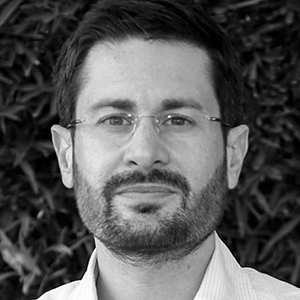
Nikos Papachristodoulou

Director

Expertise

Urban, Infrastructure, Disaster and Climate Resilience, Inclusive Growth

Nikos has expertise in urban and regional economic development, infrastructure, disaster and climate resilience, and inclusive growth. He oversees and manages projects for Triple Line’s cities and infrastructure portfolio.

Nikos is an urban specialist, with principal areas of expertise in urban and regional economic development, infrastructure, disaster and climate resilience, and inclusive growth. Over the past 12 years he has worked for a range of clients including the World Bank, FCDO, EU, USAID, Cities Alliance, Global Green Growth Institute (GGGI), Norwegian Refugee Council (NRC), and local authorities.

Nikos’s work has incorporated the full spectrum of the project cycle, from analytics and programme scoping and design, through implementation, and evaluation and learning.

He has a high level of familiarity with HMG business cases and ODA eligibility criteria having led and supported the development of FCDO’s urbanisation strategy and options for future investments in Somalia’s cities, Prosperity Fund Global Future Cities Programme (GFCP) scoping in Nigeria, and the development of the business case for an urban resilience programme in Tanzania.

Nikos also brings excellent understanding of World Bank latest trends and procedures as a result of his involvement in a number of analytics and technical assistance projects, including on informal settlements upgrading in Mogadishu, climate change adaptation planning in Latin American and Caribbean cities, assessment of the climate resilience of Dar es Salaam’s transport infrastructure, spatial development in Nigeria, and preparation of a handbook on integrated urban flood risk management.

Nikos holds a BSc in Economics from the University of Piraeus and an MSc in Social Development Practice from the Development Planning Unit at University College London (UCL).


Ricardo Pinto

Ricardo Pinto

Associate Director

Expertise

Private Sector Development, Regulatory Reform, Regional and Local Economy

Ricardo has 35 years´ experience in private sector development, regulatory reform, regional and local economic development in the European Union, Western Balkans, Easter Partnership Countries, Middle East, Africa, etc. He is tasked with developing our strategic operations in continental Europe and Ukraine.

Ricardo is a seasoned international development professional with over 30 years of experience designing and delivering Private Sector Development and economic growth initiatives across more than 50 countries spanning Central, Eastern and Southeast Europe, the CIS, Africa, MEDA, and Asia. He holds both a bachelor’s degree and PhD from the London School of Economics and Political Science (LSE) and is a Certified Management Consultant (CMC).

Ricardo brings a unique combination of strategic insight and practical implementation expertise. He has led high-impact assignments for key development institutions, including the European Commission, OECD, GIZ, FCDO/DFID, UNDP, UNCTAD, EBRD, ILO, ADB, World Bank, USAID, and Danida.

With a deep and practical understanding of institutional architecture, policy environment, and post-conflict recovery dynamics, and a career spanning over 30 years across transition economies, Ricardo brings not only technical depth but also a trusted reputation among donors, policymakers and peers.He is leading Triple Line’s strategic expansion into continental Europe, including Ukraine, while strengthening our credibility across the broader region and beyond. Proven Expertise Across Our Core Pillars. Ricardo’s work focuses on the areas central to Triple Line’s evolving service offering: Governance & Institutional Reform: advising public institutions on regulatory impact, policy reform, and donor coordination, Private Sector Development: strategy development for SME ecosystems, innovation, and competitiveness, Infrastructure Enabling Conditions: support for investment climate improvement and regional/local economic development and Cross-cutting themes, including green transition, women’s economic empowerment, and inclusive growth

 
LIFE AT IPE

Learning &
Development (L&D)

We inspire people to be better.

Our intuitive and personalised programmes provide clear path for growth, leadership development, and help people sharpen their skills.

0 %
People trained in last 3 years
0 %
Participation in L&D Initiatives in 2025

Your journey starts from Day One….

Structured Onboarding

Helps align expectations and lays the foundation for your success

New Hire Training

Makes you familiar with the organisation; helps you settle down in a new work environment

Customized L&D Platform

Helps upskill at your own pace through continuous learning and training programmes

Linkage with
Performance Management

Aligns resources and training needs based on your skill set

Learning is not always a formal process. We also align our organisation values to a culture of learning