Heavy monsoon rainfall and a glacial lake outburst flood (GLOF), the reason behind natural disaster in Sikkim

Heavy monsoon rainfall and a glacial lake outburst flood (GLOF) that caused severe flooding downstream – that’s the cause of the human-aided natural disaster in Sikkim that washed away part of the Teesta 3 dam – damaged parts of Teesta 5, wrecked bridges and drowned roads.

It was not immediately clear as to what may have triggered the GLOF on Lhonak lake in northwest Sikkim, although this is a risk that has loomed large for at least a decade. “As the GLOF occurred at around 1am (on October 4) on Lhonak lake, a lot of boulders, debris and water came downstream, flooding Teesta. There is no rainfall data available for this remote region from the India Meteorological Department (IMD). Some Swiss scientists have also suggested that an earthquake yesterday may have triggered the GLOF. We are trying to assess possible triggers,” said a senior official of the Central Water Commission (CWC).

A GLOF is caused when the moraine (the debris accumulated over the years by a glacier) that usually functions as a dam, creating a lake, is breached.

“The moraine dam of the lake may have been breached. That’s the understanding,” the official added. Parts of northeastern India  were jolted by an earthquake on Monday, and parts of northern India, by another on Tuesday.

The IMD  said vigorous monsoon conditions are impacting eastern India. “There is exceptional rainfall over West Bengal and Sikkim mainly due to a low-pressure area, which is lying over the region. The winds move up to the top of the hills. This is called orographic uplifting of air, which can cause a sudden and very heavy downpour. Extremely heavy rainfall will continue for at least one more day over north Bengal and parts of Sikkim,” explained IMD director general M Mohapatra.

“The region where GLOF occurred is extremely remote and we do not have automatic weather stations there, so it’s very difficult to tell how much it rained there,” he added.

According to CWC, Singtam, Rangpo, Lachen and surrounding towns may have been inundated by the flood.

Miriam Jackson, glaciologist and programme coordinator, cryosphere at Kathmandu-based International Centre for Integrated Mountain Development, said Indian scientists have not yet confirmed that it is a GLOF event. All recent satellite images are cloud covered.

Due to a rise in average temperatures globally, the Himalayan region has become more vulnerable to GLOF events. “As the climate warms, glaciers shrink in size and a lake may be formed, often at the side of the glacier (glacier-dammed lake) or at the front of the glacier, between the glacier and a moraine ridge (moraine-dammed glacier) or another type. As the climate continues to warm, these lakes may grow in size. There is a lot of evidence that there are more lakes than previously. This implies strongly there will be more GLOFs and GLOFs will be bigger (and more damaging),” she added. “We haven’t yet verified this as a GLOF. It could be a flash flood triggered by intense rain, or may be intense rain has triggered a GLOF.”

Jakob Steiner, High Mountain Asia hazards and hydrology expert and fellow of ICIMOD’s Himalaya University Consortium, said: “This is, incredibly sadly, another classic case of a cascading hazard chain that amplifies as you go downstream. It is possible that strong permafrost degradation in the vicinity of the lake may have destabilised the dam, which may have then failed upon an exceptionally strong rainfall event. Downstream, a hydropower structure was ripped away, further contributing to the massive impact that has resulted in yet more loss of life and damage to homes and infrastructure in what has been just a devastating monsoon season in the mountains of the Hindu Kush Himalaya. Tragically, what we’ve seen this summer, in terms of flash floods, is likely to pale in comparison with what’s to come, unless we limit temperature rise.”

“The catastrophic Glacial Lake Outburst originating from Lhonal Lake in Sikkim is a stark reminder that glacier hazards are going to breach thresholds and all thanks to the warming climate. While the frequency and intensity of these events are ravaging lives and livelihoods, there is a dire need to revisit the current state of disaster preparedness and climate readiness. As per studies, there has been a 25% increase in GLOF events in the last two decades; it becomes imperative to conduct hyper-granular risk assessments that map the identified hot spot lakes and its probable extent of damage into current disaster management plans,” said Abinash Mohanty, Sector Head Climate Change and Sustainability, IPE-Global- an international development organization and an expert reviewer of the IPCC’s sixth assessment report.

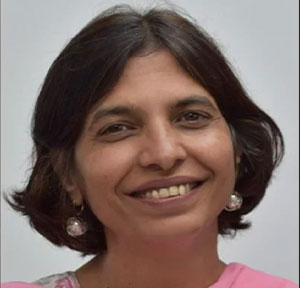
Anand Roop

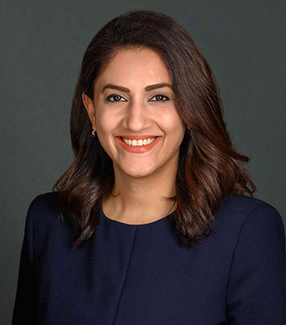
Anandroop Bahadur

Group Head – Human Resources

Expertise

Human Resource Expertise, HR Strategy, Oragnisational Design, Talent & Leadership Development, Policy Governance

Anandroop Bahadur is a seasoned HR leader and strategic advisor with nearly two decades of experience across the development, consulting, and social impact ecosystem. She brings a strong blend of deep technical HR expertise, organizational design acumen, and a people-centric ethos to her work.

At IPE Global, Anandroop leads the Group Human Resources function across IPE Global and its associated entities, including Triple Line Consulting and IPE Africa. Her focus is on strengthening organizational foundations, enabling leadership effectiveness, and building scalable people systems aligned with the organisation’s global growth ambitions. Her remit spans HR strategy, organizational design, talent and leadership development, compensation and performance frameworks, policy governance, safeguarding, and culture integration across geographies.

Over the course of her career, Anandroop has held senior HR leadership and consulting roles with organisations such as Clinton Health Access Initiative (CHAI), Ford Foundation, NASSCOM Foundation, Central Square Foundation, Amity Education Group, and other international institutions. She has advised leadership teams and boards through periods of scale, transition, and transformation, and has led HR operations in high-growth, high-complexity environments.

She holds an Executive Degree in Human Resources from XLRI Jamshedpur and is a SHRM–SCP (Senior Certified Professional), reflecting her grounding in global HR standards and best practices. She has also completed advanced executive and leadership programmes, including training in coaching and organisational transformation, and is an ICF-trained executive coach, currently working towards her ACC credential.


Nikos Papachristodoulou

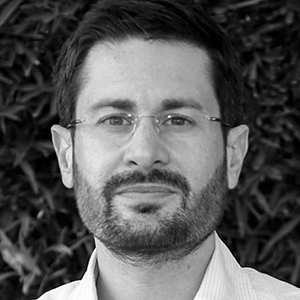
Nikos Papachristodoulou

Director

Expertise

Urban, Infrastructure, Disaster and Climate Resilience, Inclusive Growth

Nikos has expertise in urban and regional economic development, infrastructure, disaster and climate resilience, and inclusive growth. He oversees and manages projects for Triple Line’s cities and infrastructure portfolio.

Nikos is an urban specialist, with principal areas of expertise in urban and regional economic development, infrastructure, disaster and climate resilience, and inclusive growth. Over the past 12 years he has worked for a range of clients including the World Bank, FCDO, EU, USAID, Cities Alliance, Global Green Growth Institute (GGGI), Norwegian Refugee Council (NRC), and local authorities.

Nikos’s work has incorporated the full spectrum of the project cycle, from analytics and programme scoping and design, through implementation, and evaluation and learning.

He has a high level of familiarity with HMG business cases and ODA eligibility criteria having led and supported the development of FCDO’s urbanisation strategy and options for future investments in Somalia’s cities, Prosperity Fund Global Future Cities Programme (GFCP) scoping in Nigeria, and the development of the business case for an urban resilience programme in Tanzania.

Nikos also brings excellent understanding of World Bank latest trends and procedures as a result of his involvement in a number of analytics and technical assistance projects, including on informal settlements upgrading in Mogadishu, climate change adaptation planning in Latin American and Caribbean cities, assessment of the climate resilience of Dar es Salaam’s transport infrastructure, spatial development in Nigeria, and preparation of a handbook on integrated urban flood risk management.

Nikos holds a BSc in Economics from the University of Piraeus and an MSc in Social Development Practice from the Development Planning Unit at University College London (UCL).


Ricardo Pinto

Ricardo Pinto

Associate Director

Expertise

Private Sector Development, Regulatory Reform, Regional and Local Economy

Ricardo has 35 years´ experience in private sector development, regulatory reform, regional and local economic development in the European Union, Western Balkans, Easter Partnership Countries, Middle East, Africa, etc. He is tasked with developing our strategic operations in continental Europe and Ukraine.

Ricardo is a seasoned international development professional with over 30 years of experience designing and delivering Private Sector Development and economic growth initiatives across more than 50 countries spanning Central, Eastern and Southeast Europe, the CIS, Africa, MEDA, and Asia. He holds both a bachelor’s degree and PhD from the London School of Economics and Political Science (LSE) and is a Certified Management Consultant (CMC).

Ricardo brings a unique combination of strategic insight and practical implementation expertise. He has led high-impact assignments for key development institutions, including the European Commission, OECD, GIZ, FCDO/DFID, UNDP, UNCTAD, EBRD, ILO, ADB, World Bank, USAID, and Danida.

With a deep and practical understanding of institutional architecture, policy environment, and post-conflict recovery dynamics, and a career spanning over 30 years across transition economies, Ricardo brings not only technical depth but also a trusted reputation among donors, policymakers and peers.He is leading Triple Line’s strategic expansion into continental Europe, including Ukraine, while strengthening our credibility across the broader region and beyond. Proven Expertise Across Our Core Pillars. Ricardo’s work focuses on the areas central to Triple Line’s evolving service offering: Governance & Institutional Reform: advising public institutions on regulatory impact, policy reform, and donor coordination, Private Sector Development: strategy development for SME ecosystems, innovation, and competitiveness, Infrastructure Enabling Conditions: support for investment climate improvement and regional/local economic development and Cross-cutting themes, including green transition, women’s economic empowerment, and inclusive growth

 
LIFE AT IPE

Learning &
Development (L&D)

We inspire people to be better.

Our intuitive and personalised programmes provide clear path for growth, leadership development, and help people sharpen their skills.

0 %
People trained in last 3 years
0 %
Participation in L&D Initiatives in 2025

Your journey starts from Day One….

Structured Onboarding

Helps align expectations and lays the foundation for your success

New Hire Training

Makes you familiar with the organisation; helps you settle down in a new work environment

Customized L&D Platform

Helps upskill at your own pace through continuous learning and training programmes

Linkage with
Performance Management

Aligns resources and training needs based on your skill set

Learning is not always a formal process. We also align our organisation values to a culture of learning