Green Maha Kumbh, a departure from the past

No plastic, only biodegradable products, solar power, eco-friendly transport, sewage monitoring… this year’s Maha Kumbh will be big on sustainability, in tune with the Union government’s announcement of a ‘green’ mela.

Vivek Chaturvedi, additional district magistrate of Maha Kumbh, told FE, “We are planting three lakh saplings to make Prayagraj a green city. We are refraining from using plastic in the mela area. Instead, we are relying on kulhad, dona, and pattals, which are biodegradable materials, to replace thermocol and plastic.”

The mela management has also deployed over 10,000 cleaning staff, divided into 850 teams, while close to 150,000 toilets and urinals have been set up, along with 25,000 dustbins (with liner bags), and 40 compactor trucks for waste management.

To also cut down on vehicular pollution, the Prayagraj Mela Authority has come up with an online e-rickshaw and e-auto booking system to encourage the use of shared and eco-friendly public transportation.

Other than this, three temporary sewage treatment plants (STP) are being set up, along with use of solar power and promoting use of reusable materials.

The mela will also have a ‘one bag, one thali’ drive, a volunteer-led initiative to make the gathering a low waste generator, wherein 1.5 million steel plates and 2 million cloth bags will be distributed among devotees.

This hasn’t been the case always though. In 2013, when the last edition of the Maha Kumbh was held, news headlines highlighted how one of the largest human gatherings in the world left behind heaps of garbage, and an even more polluted river in its aftermath. 

Post the fair, a report by the Comptroller and Auditor General had found there was inadequate handling of waste and pollution management—no additional infrastructure was built and no effective monitoring mechanisms were put in place that led to the city and river being severely polluted.

The Kumbh Mela in 2019 was hardly better in terms of waste management. The religious gathering generated 18,000 metric tonne of solid waste, which was transported to the Baswar Sewage Management Plant, a few kilometres away from the city. However, the plant had been non-functional since 2018 and was unable to process any of the waste. The National Green Tribunal (NGT), at the time, chided the state government saying this was “the grossest violation of the orders of NGT and Solid Waste Management rules, 2016. The solid waste is lying in open, untreated and uncovered.”

This time, though, things are looking different. Chaturvedi said, “We have done lots of community participation work, including workshops with schoolchildren to sensitise them regarding the non-use of plastic. We’ve also deployed safai karamcharis and people for hand picking garbage. Dustbins with liner bags are also kept in ample quantities.”

Masood Mallick, managing director and CEO of Re Sustainability, a sustainability solutions provider headquartered in Hyderabad, while applauding the initiatives, suggests that “making the Maha Kumbh a zero-carbon event by way of sponsored carbon offset projects could help significantly”.

Challenges, of course, persist. The NGT’s principal bench has ordered the state government and the Central Pollution Control Board (CPCB) to ensure that untreated sewage or grey water is not allowed to enter the Ganga or Yamuna rivers. Especially since sewage generation is expected to increase phenomenally during the event. On important bath days, over 16 million litres of faecal sludge, 240 million litres of greywater will be generated.

With an event of this scale, the average demand of potable water during peak days will be over 450 megalitres per day (MLD), while Prayagraj’s water supply capacity is close to 350 MLD. To meet the excessive demand, the authority has dug 85 tubewells, which would be powered by 30 generators.

Komal Agarwal, associate director of urban infrastructure and tourism at IPE Global, an international development consulting firm, commented: “Ensuring hygienic conditions while managing 200-500 tonne of daily waste generated by crores of people will be a humongous task. During Maha Kumbh, with an expected influx of people to be almost twice as high as the 2019 Mela, bio-chemical oxygen demand values will only increase, degrading the quality of river water immensely.”

Agarwal added: “Estimates suggest that transportation-related carbon emissions during the Kumbh can exceed 2.5 million metric tonne, contributing heavily to air pollution.”

Anand Roop

Anandroop Bahadur

Group Head – Human Resources

Expertise

Human Resource Expertise, HR Strategy, Oragnisational Design, Talent & Leadership Development, Policy Governance

Anandroop Bahadur is a seasoned HR leader and strategic advisor with nearly two decades of experience across the development, consulting, and social impact ecosystem. She brings a strong blend of deep technical HR expertise, organizational design acumen, and a people-centric ethos to her work.

At IPE Global, Anandroop leads the Group Human Resources function across IPE Global and its associated entities, including Triple Line Consulting and IPE Africa. Her focus is on strengthening organizational foundations, enabling leadership effectiveness, and building scalable people systems aligned with the organisation’s global growth ambitions. Her remit spans HR strategy, organizational design, talent and leadership development, compensation and performance frameworks, policy governance, safeguarding, and culture integration across geographies.

Over the course of her career, Anandroop has held senior HR leadership and consulting roles with organisations such as Clinton Health Access Initiative (CHAI), Ford Foundation, NASSCOM Foundation, Central Square Foundation, Amity Education Group, and other international institutions. She has advised leadership teams and boards through periods of scale, transition, and transformation, and has led HR operations in high-growth, high-complexity environments.

She holds an Executive Degree in Human Resources from XLRI Jamshedpur and is a SHRM–SCP (Senior Certified Professional), reflecting her grounding in global HR standards and best practices. She has also completed advanced executive and leadership programmes, including training in coaching and organisational transformation, and is an ICF-trained executive coach, currently working towards her ACC credential.


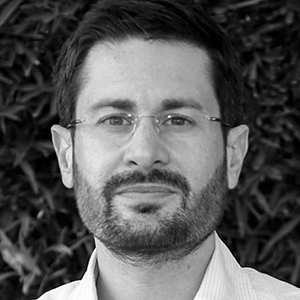
Nikos Papachristodoulou

Nikos Papachristodoulou

Director

Expertise

Urban, Infrastructure, Disaster and Climate Resilience, Inclusive Growth

Nikos has expertise in urban and regional economic development, infrastructure, disaster and climate resilience, and inclusive growth. He oversees and manages projects for Triple Line’s cities and infrastructure portfolio.

Nikos is an urban specialist, with principal areas of expertise in urban and regional economic development, infrastructure, disaster and climate resilience, and inclusive growth. Over the past 12 years he has worked for a range of clients including the World Bank, FCDO, EU, USAID, Cities Alliance, Global Green Growth Institute (GGGI), Norwegian Refugee Council (NRC), and local authorities.

Nikos’s work has incorporated the full spectrum of the project cycle, from analytics and programme scoping and design, through implementation, and evaluation and learning.

He has a high level of familiarity with HMG business cases and ODA eligibility criteria having led and supported the development of FCDO’s urbanisation strategy and options for future investments in Somalia’s cities, Prosperity Fund Global Future Cities Programme (GFCP) scoping in Nigeria, and the development of the business case for an urban resilience programme in Tanzania.

Nikos also brings excellent understanding of World Bank latest trends and procedures as a result of his involvement in a number of analytics and technical assistance projects, including on informal settlements upgrading in Mogadishu, climate change adaptation planning in Latin American and Caribbean cities, assessment of the climate resilience of Dar es Salaam’s transport infrastructure, spatial development in Nigeria, and preparation of a handbook on integrated urban flood risk management.

Nikos holds a BSc in Economics from the University of Piraeus and an MSc in Social Development Practice from the Development Planning Unit at University College London (UCL).


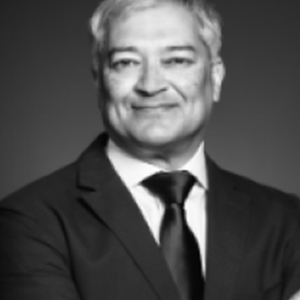
Ricardo Pinto

Ricardo Pinto

Associate Director

Expertise

Private Sector Development, Regulatory Reform, Regional and Local Economy

Ricardo has 35 years´ experience in private sector development, regulatory reform, regional and local economic development in the European Union, Western Balkans, Easter Partnership Countries, Middle East, Africa, etc. He is tasked with developing our strategic operations in continental Europe and Ukraine.

Ricardo is a seasoned international development professional with over 30 years of experience designing and delivering Private Sector Development and economic growth initiatives across more than 50 countries spanning Central, Eastern and Southeast Europe, the CIS, Africa, MEDA, and Asia. He holds both a bachelor’s degree and PhD from the London School of Economics and Political Science (LSE) and is a Certified Management Consultant (CMC).

Ricardo brings a unique combination of strategic insight and practical implementation expertise. He has led high-impact assignments for key development institutions, including the European Commission, OECD, GIZ, FCDO/DFID, UNDP, UNCTAD, EBRD, ILO, ADB, World Bank, USAID, and Danida.

With a deep and practical understanding of institutional architecture, policy environment, and post-conflict recovery dynamics, and a career spanning over 30 years across transition economies, Ricardo brings not only technical depth but also a trusted reputation among donors, policymakers and peers.He is leading Triple Line’s strategic expansion into continental Europe, including Ukraine, while strengthening our credibility across the broader region and beyond. Proven Expertise Across Our Core Pillars. Ricardo’s work focuses on the areas central to Triple Line’s evolving service offering: Governance & Institutional Reform: advising public institutions on regulatory impact, policy reform, and donor coordination, Private Sector Development: strategy development for SME ecosystems, innovation, and competitiveness, Infrastructure Enabling Conditions: support for investment climate improvement and regional/local economic development and Cross-cutting themes, including green transition, women’s economic empowerment, and inclusive growth

 
LIFE AT IPE

Learning &
Development (L&D)

We inspire people to be better.

Our intuitive and personalised programmes provide clear path for growth, leadership development, and help people sharpen their skills.

0 %
People trained in last 3 years
0 %
Participation in L&D Initiatives in 2025

Your journey starts from Day One….

Structured Onboarding

Helps align expectations and lays the foundation for your success

New Hire Training

Makes you familiar with the organisation; helps you settle down in a new work environment

Customized L&D Platform

Helps upskill at your own pace through continuous learning and training programmes

Linkage with
Performance Management

Aligns resources and training needs based on your skill set

Learning is not always a formal process. We also align our organisation values to a culture of learning