Edtech Game Changers Leapfrogging Indian Education’ featured in Education World Magazine

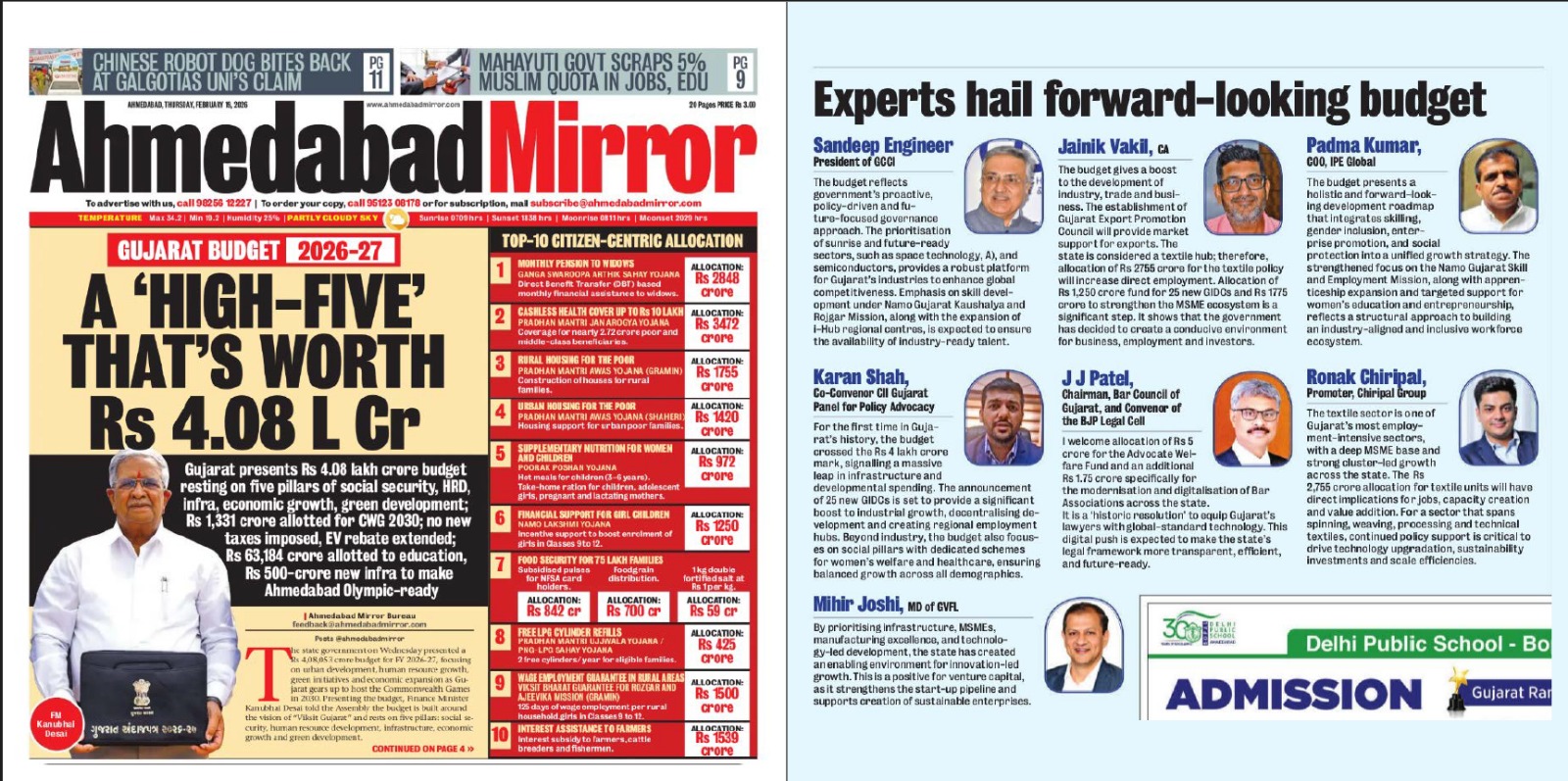
The cover story titled “Edtech Game Changers – Leapfrogging Indian Education” authored by Mr. Dilip Thakore  has been featured in the Education World Magazine, spread across 9 pages (Pages 46-59). It features Shailendar Sharma’s (Vice President, Education and Skills Development, IPE Global) quote prominently and the corporate profile of IPE Global.

A silent revolution is underway in India’s classrooms. Although the Central and state governments pay lip service to the infusion of real learning and knowledge creation in school and higher education, reports of reputable, whistle-blowing organisations such as the Mumbai-based Pratham, Delhi-based Aspiring Minds and even the Union human resource development (HRD) ministry’s National Achievement Survey (see EW June 2016), testify that learning outcomes are plunging in K-12 and tertiary education. But the silver lining is that a substantial number of India’s private schools and colleges, which host over 50 percent of the 260 million children and youth in education institutions countrywide, are embracing new digital and Internet-enabled technologies which are reviving children’s joy of learning and making measurable impact on learning outcomes.

While the country’s 1.34 million anganwadis — nutrition centres for newly-born children and lactating mothers established nationwide under the Central government’s Integrated Child Development Services (ICDS) programme promoted in 1975 — are also mandated to provide early childhood education to 164 million children under five years age, they accommodate only 84 million, because the pathetic annual budget of the ICDS programme (Rs.14,863 crore in 2016-17) barely covers the low salaries paid to staff. On the other hand, a large and growing number of the country’s estimated 300,000 pre-primaries which host 10 million youngest children of middle and upper class households, are rapidly transforming them into digital natives through smartboards, videos, tablets and gamification of early childhood care and education.

Likewise, the majority of the nation’s 320,000 private and aided primary-secondary schools are leveraging modern digital technologies and pedagogies, prompting an overdue break away from conventional rote learning and encouraging children to become self-motivated and joyfully develop conceptual learning, analytical and problem-solving skills. And in India’s colleges and universities suffering excessive government interference and chronic funds and faculty shortages, a small minority of serious students and faculty is increasingly using new ICT (information communication technologies) and Moocs (massive open online courses) offered by the world’s most respected universities including Harvard, MIT and Stanford among others, to learn from globally respected professors.

Unfortunately, politicians at the Centre and in the states continue to believe that it can remain education as usual in the country’s 1.20 million government schools, 37,000 colleges and 800 universities. Although from time to time they pay lip service to new technologies and announce alphabet soup acronyms for wiring up government schools and colleges, they exhibit scant interest in modernising the infrastructure and funding teacher training programmes which are prerequisites of effective use of the revolutionary digital technologies which can leapfrog India’s 19th century education system into the new millennium.


In the 21st century, technology is becoming crucial in school and higher education. But for it to effectively improve learning outcomes, enabling learning environments are critical. Over the past decade, a large number of private sector companies have dumped hardware and content into education institutions without adequately training teachers to use them and/or properly assessing the supportive infrastructure requirements such as electricity, Internet connectivity and equipment maintenance support. Creation of supportive environments for new digital technologies necessitates larger Central and state government education budgets. The HRD ministry’s National Repository for Education Resources has made a lot of high-quality content developed by NCERT available free of charge to government schools. But because of insufficiently trained teachers and inadequate supportive infrastructure, online education is a non-starter in the great majority of government schools. These are the broken links of public education which need to be mended,” says Shailender Sharma, a computer science postgrad of IGNOU and former chief consultant of the education management infosystem of the Union HRD ministry.

Currently Sharma is Vice President, Education and Skills Develoment, IPE Global Limited (estb. 1998), a Delhi-based international development consultancy providing expert technical assistance to developing countries for equitable development and sustainable growth in partnership with multilateral and bilateral aid agencies, governments, corporates and not-for-profit entities.

Anand Roop

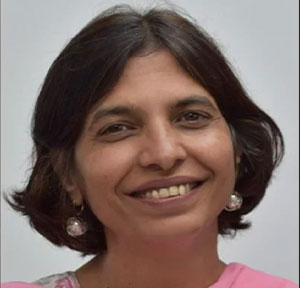
Anandroop Bahadur

Group Head – Human Resources

Expertise

Human Resource Expertise, HR Strategy, Oragnisational Design, Talent & Leadership Development, Policy Governance

Anandroop Bahadur is a seasoned HR leader and strategic advisor with nearly two decades of experience across the development, consulting, and social impact ecosystem. She brings a strong blend of deep technical HR expertise, organizational design acumen, and a people-centric ethos to her work.

At IPE Global, Anandroop leads the Group Human Resources function across IPE Global and its associated entities, including Triple Line Consulting and IPE Africa. Her focus is on strengthening organizational foundations, enabling leadership effectiveness, and building scalable people systems aligned with the organisation’s global growth ambitions. Her remit spans HR strategy, organizational design, talent and leadership development, compensation and performance frameworks, policy governance, safeguarding, and culture integration across geographies.

Over the course of her career, Anandroop has held senior HR leadership and consulting roles with organisations such as Clinton Health Access Initiative (CHAI), Ford Foundation, NASSCOM Foundation, Central Square Foundation, Amity Education Group, and other international institutions. She has advised leadership teams and boards through periods of scale, transition, and transformation, and has led HR operations in high-growth, high-complexity environments.

She holds an Executive Degree in Human Resources from XLRI Jamshedpur and is a SHRM–SCP (Senior Certified Professional), reflecting her grounding in global HR standards and best practices. She has also completed advanced executive and leadership programmes, including training in coaching and organisational transformation, and is an ICF-trained executive coach, currently working towards her ACC credential.


Nikos Papachristodoulou

Nikos Papachristodoulou

Director

Expertise

Urban, Infrastructure, Disaster and Climate Resilience, Inclusive Growth

Nikos has expertise in urban and regional economic development, infrastructure, disaster and climate resilience, and inclusive growth. He oversees and manages projects for Triple Line’s cities and infrastructure portfolio.

Nikos is an urban specialist, with principal areas of expertise in urban and regional economic development, infrastructure, disaster and climate resilience, and inclusive growth. Over the past 12 years he has worked for a range of clients including the World Bank, FCDO, EU, USAID, Cities Alliance, Global Green Growth Institute (GGGI), Norwegian Refugee Council (NRC), and local authorities.

Nikos’s work has incorporated the full spectrum of the project cycle, from analytics and programme scoping and design, through implementation, and evaluation and learning.

He has a high level of familiarity with HMG business cases and ODA eligibility criteria having led and supported the development of FCDO’s urbanisation strategy and options for future investments in Somalia’s cities, Prosperity Fund Global Future Cities Programme (GFCP) scoping in Nigeria, and the development of the business case for an urban resilience programme in Tanzania.

Nikos also brings excellent understanding of World Bank latest trends and procedures as a result of his involvement in a number of analytics and technical assistance projects, including on informal settlements upgrading in Mogadishu, climate change adaptation planning in Latin American and Caribbean cities, assessment of the climate resilience of Dar es Salaam’s transport infrastructure, spatial development in Nigeria, and preparation of a handbook on integrated urban flood risk management.

Nikos holds a BSc in Economics from the University of Piraeus and an MSc in Social Development Practice from the Development Planning Unit at University College London (UCL).


Ricardo Pinto

Ricardo Pinto

Associate Director

Expertise

Private Sector Development, Regulatory Reform, Regional and Local Economy

Ricardo has 35 years´ experience in private sector development, regulatory reform, regional and local economic development in the European Union, Western Balkans, Easter Partnership Countries, Middle East, Africa, etc. He is tasked with developing our strategic operations in continental Europe and Ukraine.

Ricardo is a seasoned international development professional with over 30 years of experience designing and delivering Private Sector Development and economic growth initiatives across more than 50 countries spanning Central, Eastern and Southeast Europe, the CIS, Africa, MEDA, and Asia. He holds both a bachelor’s degree and PhD from the London School of Economics and Political Science (LSE) and is a Certified Management Consultant (CMC).

Ricardo brings a unique combination of strategic insight and practical implementation expertise. He has led high-impact assignments for key development institutions, including the European Commission, OECD, GIZ, FCDO/DFID, UNDP, UNCTAD, EBRD, ILO, ADB, World Bank, USAID, and Danida.

With a deep and practical understanding of institutional architecture, policy environment, and post-conflict recovery dynamics, and a career spanning over 30 years across transition economies, Ricardo brings not only technical depth but also a trusted reputation among donors, policymakers and peers.He is leading Triple Line’s strategic expansion into continental Europe, including Ukraine, while strengthening our credibility across the broader region and beyond. Proven Expertise Across Our Core Pillars. Ricardo’s work focuses on the areas central to Triple Line’s evolving service offering: Governance & Institutional Reform: advising public institutions on regulatory impact, policy reform, and donor coordination, Private Sector Development: strategy development for SME ecosystems, innovation, and competitiveness, Infrastructure Enabling Conditions: support for investment climate improvement and regional/local economic development and Cross-cutting themes, including green transition, women’s economic empowerment, and inclusive growth

 
LIFE AT IPE

Learning &
Development (L&D)

We inspire people to be better.

Our intuitive and personalised programmes provide clear path for growth, leadership development, and help people sharpen their skills.

0 %
People trained in last 3 years
0 %
Participation in L&D Initiatives in 2025

Your journey starts from Day One….

Structured Onboarding

Helps align expectations and lays the foundation for your success

New Hire Training

Makes you familiar with the organisation; helps you settle down in a new work environment

Customized L&D Platform

Helps upskill at your own pace through continuous learning and training programmes

Linkage with
Performance Management

Aligns resources and training needs based on your skill set

Learning is not always a formal process. We also align our organisation values to a culture of learning