Coverage in The Hindu Business Line on the Boomerang Effect

Shailja Dutt, the founder and chairperson of executive search firm Stellar Search is a staunch proponent of rehiring. But not before she asked a head honcho of a top-notch global company why he took old employees back. His perspective had a radical effect on her opinion. “They want to come back home with greater experience, more varied and diverse learning and a greater appreciation for what is available back home, so why not?” he’d said. Rehiring is very necessary in this day and age where there’s a war for talent, she says. In India, though, companies have a more negative bias towards rehiring than positive, says Dutt. To find out their views on boomerang employees as returning staff are known in HR jargon, we reached out to a few companies that have welcomed old employees back. While rehiring at present seems to work mostly through personal connections, some companies have more formal efforts to channel it.

Keeping the doors open

Infosys rehires employees on a need basis, a win-win as both firm and individual are usually assured of a match in work culture and values. Richard Lobo, EVP & Head – HR, Infosys, says Green Channel Hiring, their earlier initiative for rehiring, yielded positive results and encouraged them to maintain an open channel. A regular source of people to tap is the Infosys Global Alumni Network. “We recently launched a campaign featuring re-hires, to showcase the reasons why they chose to return to Infosys,” says Lobo.

Mutual benefit

Rehiring has emotional and financial benefits. Old employees usually acclimatise faster, and the firm won’t have to spend much money training them. Sofia Joseph, General Manager – HR, Cloudnine group of hospitals, says her firm aggressively looks at rehiring. “This makes the organisation look more open, warm and futuristic,” she says.

Some employers recognise employees may not get all the experience they desire to accumulate from a single firm. Says MK Padmakumar, COO of global development consultancy IPE Global, “On many occasions, they depart on a positive note. Probably there are no career prospects in their department, so they go out, work 2-3 years and return. It’s also not good to stay in one organisation for very long. Productivity goes up when they are exposed to a different work culture.” A word of caution: Be mindful you are not incentivising such departures too much.

Pay matters

Then, of course, there’s the big issue of pay, which can lead to much heartburn if the rehired person is paid more compared to his peers who have not switched jobs. Pallavi Das, a Principal Consultant with communications and business advisory agency Integral has been hired and rehired thrice by the firm over a period of ten years. Elevation and higher pay don’t seem to have caused any resentment. “My colleagues know I took a course to enhance my skills when I lived abroad. I also worked on a couple of projects.” It helped that in her later stints, she got designations similar to her colleagues’. Her pay was on the higher side of the same pay bracket.

Gopinath Govindan, Director, HR, of CLP India, a foreign firm that invests in India’s power sector, says firms have to be fair to the stayers and the rehires. “We have to recognise the extra value the rehires bring in. The employees are taking a risk when they go to the market and come back,” he says, adding that “these decisions have to be balanced with internal equity”. Invariably, the people who come back have added value unless they come into a role similar to their previous one, he observes.

Das kept going back to Integral as they were used to each other. “I liked the work culture, it was friendly and there was no politics. Productivity is hampered if you have to deal with such issues,” she notes. At Integral, Das now handles several affairs independently and has been charged with business development. The HR managers say they take an employee back only after a cooling-off period. They are open to paying more if the role is considerably different. Further, one needs to be mindful about putting the rehires back in the same team; it’s easier to put them in a different one. All of them believe extreme caution is necessary – the employees should not see it as a way to extract unfair advantage.

IPE Global’s Padmakumar says salaries across firms would have grown in 2-3 years, so the stayers won’t have that big a gap to compare.

The rehired employee values the company more in his second stint and his contribution is enhanced, says Tata Capital’s Bhattacharya. It’s a feel-good thought when employees call us back, says Cloudnine’s Joseph. Her firm has a “robust” rehiring policy on the drawing board.

What will returning employees have to be aware of when they’re going back to their old firm? Stellar Search’s Dutt says they need to ensure they are re-joining for the right reasons. Think of why you left in the first place – bad boss, company culture, peers? Sometimes, one could also be in the wrong job at the right place, so don’t come back to the same thing, is her other suggestion. Ultimately, it’s not all about skills and roles, it’s also about returning as a more mature person, for mutual benefit.


Anand Roop

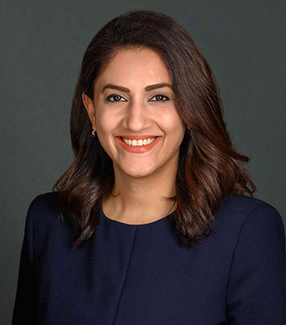
Anandroop Bahadur

Group Head – Human Resources

Expertise

Human Resource Expertise, HR Strategy, Oragnisational Design, Talent & Leadership Development, Policy Governance

Anandroop Bahadur is a seasoned HR leader and strategic advisor with nearly two decades of experience across the development, consulting, and social impact ecosystem. She brings a strong blend of deep technical HR expertise, organizational design acumen, and a people-centric ethos to her work.

At IPE Global, Anandroop leads the Group Human Resources function across IPE Global and its associated entities, including Triple Line Consulting and IPE Africa. Her focus is on strengthening organizational foundations, enabling leadership effectiveness, and building scalable people systems aligned with the organisation’s global growth ambitions. Her remit spans HR strategy, organizational design, talent and leadership development, compensation and performance frameworks, policy governance, safeguarding, and culture integration across geographies.

Over the course of her career, Anandroop has held senior HR leadership and consulting roles with organisations such as Clinton Health Access Initiative (CHAI), Ford Foundation, NASSCOM Foundation, Central Square Foundation, Amity Education Group, and other international institutions. She has advised leadership teams and boards through periods of scale, transition, and transformation, and has led HR operations in high-growth, high-complexity environments.

She holds an Executive Degree in Human Resources from XLRI Jamshedpur and is a SHRM–SCP (Senior Certified Professional), reflecting her grounding in global HR standards and best practices. She has also completed advanced executive and leadership programmes, including training in coaching and organisational transformation, and is an ICF-trained executive coach, currently working towards her ACC credential.


Nikos Papachristodoulou

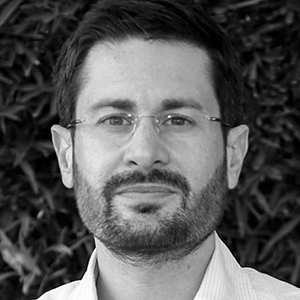
Nikos Papachristodoulou

Director

Expertise

Urban, Infrastructure, Disaster and Climate Resilience, Inclusive Growth

Nikos has expertise in urban and regional economic development, infrastructure, disaster and climate resilience, and inclusive growth. He oversees and manages projects for Triple Line’s cities and infrastructure portfolio.

Nikos is an urban specialist, with principal areas of expertise in urban and regional economic development, infrastructure, disaster and climate resilience, and inclusive growth. Over the past 12 years he has worked for a range of clients including the World Bank, FCDO, EU, USAID, Cities Alliance, Global Green Growth Institute (GGGI), Norwegian Refugee Council (NRC), and local authorities.

Nikos’s work has incorporated the full spectrum of the project cycle, from analytics and programme scoping and design, through implementation, and evaluation and learning.

He has a high level of familiarity with HMG business cases and ODA eligibility criteria having led and supported the development of FCDO’s urbanisation strategy and options for future investments in Somalia’s cities, Prosperity Fund Global Future Cities Programme (GFCP) scoping in Nigeria, and the development of the business case for an urban resilience programme in Tanzania.

Nikos also brings excellent understanding of World Bank latest trends and procedures as a result of his involvement in a number of analytics and technical assistance projects, including on informal settlements upgrading in Mogadishu, climate change adaptation planning in Latin American and Caribbean cities, assessment of the climate resilience of Dar es Salaam’s transport infrastructure, spatial development in Nigeria, and preparation of a handbook on integrated urban flood risk management.

Nikos holds a BSc in Economics from the University of Piraeus and an MSc in Social Development Practice from the Development Planning Unit at University College London (UCL).


Ricardo Pinto

Ricardo Pinto

Associate Director

Expertise

Private Sector Development, Regulatory Reform, Regional and Local Economy

Ricardo has 35 years´ experience in private sector development, regulatory reform, regional and local economic development in the European Union, Western Balkans, Easter Partnership Countries, Middle East, Africa, etc. He is tasked with developing our strategic operations in continental Europe and Ukraine.

Ricardo is a seasoned international development professional with over 30 years of experience designing and delivering Private Sector Development and economic growth initiatives across more than 50 countries spanning Central, Eastern and Southeast Europe, the CIS, Africa, MEDA, and Asia. He holds both a bachelor’s degree and PhD from the London School of Economics and Political Science (LSE) and is a Certified Management Consultant (CMC).

Ricardo brings a unique combination of strategic insight and practical implementation expertise. He has led high-impact assignments for key development institutions, including the European Commission, OECD, GIZ, FCDO/DFID, UNDP, UNCTAD, EBRD, ILO, ADB, World Bank, USAID, and Danida.

With a deep and practical understanding of institutional architecture, policy environment, and post-conflict recovery dynamics, and a career spanning over 30 years across transition economies, Ricardo brings not only technical depth but also a trusted reputation among donors, policymakers and peers.He is leading Triple Line’s strategic expansion into continental Europe, including Ukraine, while strengthening our credibility across the broader region and beyond. Proven Expertise Across Our Core Pillars. Ricardo’s work focuses on the areas central to Triple Line’s evolving service offering: Governance & Institutional Reform: advising public institutions on regulatory impact, policy reform, and donor coordination, Private Sector Development: strategy development for SME ecosystems, innovation, and competitiveness, Infrastructure Enabling Conditions: support for investment climate improvement and regional/local economic development and Cross-cutting themes, including green transition, women’s economic empowerment, and inclusive growth

 
LIFE AT IPE

Learning &
Development (L&D)

We inspire people to be better.

Our intuitive and personalised programmes provide clear path for growth, leadership development, and help people sharpen their skills.

0 %
People trained in last 3 years
0 %
Participation in L&D Initiatives in 2025

Your journey starts from Day One….

Structured Onboarding

Helps align expectations and lays the foundation for your success

New Hire Training

Makes you familiar with the organisation; helps you settle down in a new work environment

Customized L&D Platform

Helps upskill at your own pace through continuous learning and training programmes

Linkage with
Performance Management

Aligns resources and training needs based on your skill set

Learning is not always a formal process. We also align our organisation values to a culture of learning