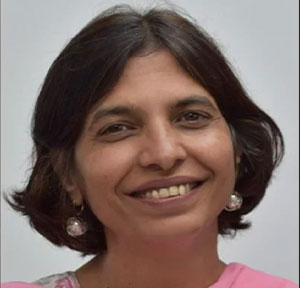
IPE Global has been partnering governments at central, state and city level across India to help design, operationalize and implement a wide range of urban investment programmes, including AMRUT, SBM and the Smart City Mission. Manish Arora of BW Smartcities in conversation with Richard Slater, Director Research, Development & Learning, IPE Global
What are your views on the urban scenario of India at present?
India is in the midst of an urbanisation process that will transform the country over the next two decades as its economy and society will become increasingly rooted in cities and towns. This has already begun to accelerate across many parts of the world. For example, if we take the case of urbanisation in African countries like Ghana, more than 50 per cent of the population is already residing in urban areas. However this process has been more gradual in India, By 2030, 40 per cent of India’s population will be living in urban areas. This process is being reinforced by economic processes that increasingly rely on market access, physical concentration and product specialisation. As a result the urban sector accounts for over 60 per cent of total GDP and this will increase further as cities become the engines of India’s future growth. In this context, it is clear that whilst the urban sector is crucial for India’s future prosperity, there has been little or no effective urban planning and there are major deficits in core urban infrastructure that has suffered from years of past underinvestment. The HPEC, for example, has estimated the urban investment requirement at Rs.39 lakh crores over 20 years. There has, however, been a growing realisation in recent years that this deficit needs to be addressed if India is to begin the process of forward planning for an efficient and resilient urban economy. Evidences from the world demonstrate the importance of public transportation as a critical factor in this process which requires a significant scaling up of urban investment.
What are the challenges faced by government departments towards execution of the Smart Cities Mission on a proactive scale?
In response to this challenge the Government has launched a series of national urban investment programmes designed to address infrastructure deficits in water, sewerage and solid waste as well as transport, housing and area development. These programmes require cities to engage in a renewed process of urban development and regeneration and cities will face many challenges in realising this process. Almost all cities suffer from severe capacity constraints in terms of having the relevant work force which are right in number and are equipped with relevant skills. Cities also suffer from a range of entrenched practices that undermine staff efficiency, effectiveness and morale. This requires new incentive structures that reward performance. Procurement processes are often complex, layered and non transparent and the concentration on lower cost often results in poor quality of project, delays in execution and stuck projects. Another challenge relates to the growing requirement to the leveraging of market finance through the creation of bankable projects that will attract private capital. At the same time cities need to assume a more proactive role on formulating and structuring improved PPP arrangements with greater emphasis on shared risk and risk mitigation to attract additional investment. These challenges have to be complemented by maintaining a balance between corporate decision making and citizen engagement.
How can we overcome these challenges?
To address this complex range of challenges, state governments need to work with cities to introduce new cadre reforms that will provide cities with appropriately skilled and adequate human resources. Cities require a new generation of staff with skills in urban architecture and planning, transportation, environmental management, finance and commercial services. Cities may need to create dedicated in-house teams with a mix of public sector and private sector professionals to help identify and implement specific investment projects. These teams need to assist in identifying critical revenue streams for each project or package and in developing project structures accordingly. Market engagement is also a critical process that is often overlooked. Projects cannot be developed in isolation without consulting private partners. Strategies and plans need wide consultation and citizen feedback, complemented by an environment for cross-learning and networking with other cities.
What is the role of IPE Global in implementation of Smart Cities initiatives?
IPE Global is proud to have been partnering with governments at central, state and city level across India to help design, operation and implementation of a wide range of urban investment programmes including AMRUT, Swachh Bharat Abhiyan and the Smart Cities Mission. In addition, IPE Global been part of UK DFID funded urban investment programmes in Bihar and Madhya Pradesh and is currently implementing a number of centrally sponsored urban programmes in Karnataka, Chhattisgarh, J&K as well as city level projects in Madhya Pradesh, Rajsathan and Kerala. IPE has also provided training to more than 60 cities participating in Round 2 of the Smart City Challenge fund. IPE Global aims to consolidate its work urban advisory work with development partners including UK, DFID, ADB and World Bank as well as supporting new partners in the urban space. In its endeavor to provide high quality technical advisory services, IPE Global has formed strong partnerships with select urban R&D centres including IIT Bombay, Future Cities Catapult UK and University College London. With a unique combination of expertise and skills in urban development IPE Global is in the process of expanding its advisory footprint elsewhere in Asia and Africa through offices in Delhi, London, Nairobi, Addis Ababa, Yangon and Manila.
How has been your engagement in the project in Madhya Pradesh?
IPE Global was involved in supporting the preparation of seven smart city proposals in Madhya Pradesh for Bhopal, Indore, Jabalpur, Gwalior, Ujjain, Sagar and Satna. IPE Global has been providing Madhya Pradesh with project development and transaction advisory support for PPP in solid waste management project across the state worth Rs 1,200 crores, covering around 80 cities and towns on a cluster model. These PPP arrangements include smart waste solutions for collection, transport and treatment (including W2E). In Jan 2015, IPE partnered with UK DFID to support pilot work on a smart city development plan for Indore as part of its strategic advisory and knowledge management services to the government of Madhya Pradesh. Apart from that IPE Global has extended support to Madhya Pradesh for the operationalization of the institutional structure for smart city plans across 7 cities including the establishment of SPVs and other arrangements for plan implementation. With its strong commitment and expertise in urban development, IPE is keen to extend its work to cities and states across India.
What are your views on the progress of Smart Cities Mission so far and where do you see this mission after 2 years?
The Smart City mission devised by MoUD represents an important new initiative in urban planning and development in India and, for the first time, give significant attention on crucial issues of urbanisation like planning, lower carbon environments and inclusive growth by combining urban regeneration with the introduction of new technologies in urban management. This represents an innovative approach to urban investment and recognises the importance of convergence with other schemes and value capture through the leveraging of private capital for real estate development. The initiative recognises the importance of an incremental approach beginning with pilot regeneration schemes that are mostly focused on retrofitting the inner city core based on the principle that well planned and managed public investment will attract private investment. It is anticipated that the learnings from these initiatives will guide future urban development and bring about a new generation of cities in India that combine modern technology and development with traditional urban forms in an innovative and unique manner.