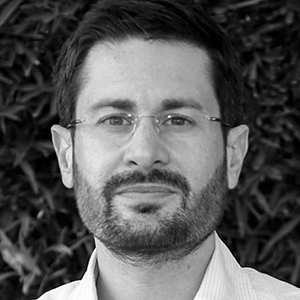
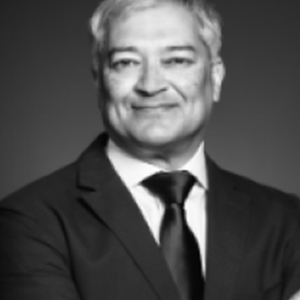
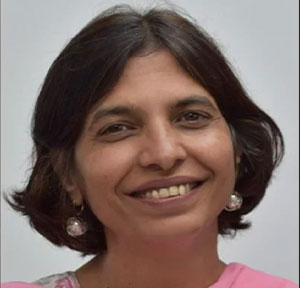
Ashwajit Singh, MD- IPE Global featured in Business World Magazine

Pollution: Bearing The Brunt

Delhi’s air pollution has huge economic repercussions with several industries especially tourism suffering

It might sound callous to calculate the costs of business disruption due to smog when people’s lives are in danger. However, the economic impact of the situation cannot be ignored. While waking up in a gas chamber every day, takes a huge toll on the health of the citizens, it also robs the economy of significant growth potential, including welfare loss. In 2013, welfare costs and costs of lost labour due to air pollution resulted in an 8.5 per cent loss to India’s GDP. That was three years back. The levels of air pollution have swollen since then.


Though companies are yet to calculate the actual costs of disruption due to air pollution, an Assocham study estimates losses of Rs 100 crore a day to the National Capital Region (NCR) due to the smog. Several billions of dollars of new investments are also under threat. Another very important aspect is that while most of the companies have TPA alliances with prominent health care companies, health insurance covers might get dearer by 10-15 per cent in the future in context of the city’s rising pollution.


A recent study surveyed 150 companies which faced workforce crunch with 5-10 per cent of the staff calling in sick with complaints owing to the smog. The rate of sick leaves jumped to 100 per cent last month at Aspiring Minds, an employability evaluation and certification company, with companies like JLL and ATC encouraging people to work from home. Santhosh Kumar, CEO, Operations and International Director, JLL, says the post-Diwali smog affected the mobility of the officials as well as the logistics.


“Operational losses such as reduced input days, time, inability to recruit good talent from outside Delhi and productivity has impacted delivery of output leading to an overall economic loss for several corporates working out of Delhi”, says Ashwajit Singh, MD, IPE Global, an international development consultancy group. In certain cases companies might have to incur discretionary spending if there are any pre-health check-ups or other facilities to be provided to the employees, says Kumar. “Apart from this there is an increase in the overall energy expenditure experienced by offices across Delhi using much stronger air conditioning units with air purifiers, exhausts, etc,” adds Singh.


While it may be difficult to hazard a figure of economic loss, since the exact period of dangerous levels of pollutants would depend on the weather conditions along with administrative measures, there is no doubt that several billions of dollars of fresh investment and GDP loss would occur, according to Assocham Secretary General D. S. Rawat. With Delhi and NCR getting descriptive titles like ‘gas chamber’ and ‘the world’s most polluted city’, the entire area of NCR encompassing not only Noida, Gurgaon and Faridabad but also right up to Meerut, Panipat, Bhiwadi and Rohtak is likely to face a crippling economic impact in sectors such as tourism, transport, automobile and real estate.


Pointing towards the evidence, Kolluru Krishan, Co-Chairman of FICCI Climate Change Task Force and Chairman, CVC Biorefineries Ltd says, “The direct costs in context of lost man hours and constricted business activities would run into hundreds of crore per day. Indirect, long-term costs linked to health and impact on brand equity would be much larger.” Analysts say automobile, construction and real estate sectors could be the most at risk if the various levels of government are unable to overcome a lack of political coordination and act on air pollution. With people gasping for breath, the dark blanket of smog has hit ‘Brand India’. “Overseas visitors to India have been expressing concerns about the air quality ever since a series of press articles appeared in BBC and other international media,” says Deepa Krishnan of Delhi Magic, a guided tour company, expressing concerns over the rising air pollution and tourism industry. Both transportation and tourism are highly employment-oriented sectors and jobs may be a casualty of the pollution.


Even Delhi tourism minister Kapil Mishra termed poor air quality as the “worst-ever setback” for tourism and claimed that a major image makeover campaign will be started only after finding a solution. There is a bigger question to address amongst the series of losses that the economy incurs owing to air pollution in the city. While reports have concluded annual labour income losses, welfare losses, premature deaths resulting in losses of labour, growth potential etc, it is the violation of human rights and the right to breathe which is the ‘bigger cost’ of smog/pollution. Read more at https://goo.gl/eCk37f

Anand Roop

Anandroop Bahadur

Group Head – Human Resources

Expertise

Human Resource Expertise, HR Strategy, Oragnisational Design, Talent & Leadership Development, Policy Governance

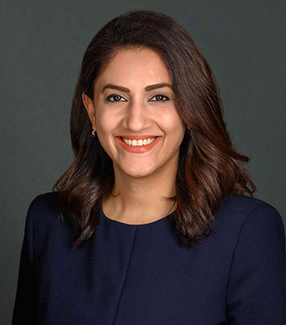
Anandroop Bahadur is a seasoned HR leader and strategic advisor with nearly two decades of experience across the development, consulting, and social impact ecosystem. She brings a strong blend of deep technical HR expertise, organizational design acumen, and a people-centric ethos to her work.

At IPE Global, Anandroop leads the Group Human Resources function across IPE Global and its associated entities, including Triple Line Consulting and IPE Africa. Her focus is on strengthening organizational foundations, enabling leadership effectiveness, and building scalable people systems aligned with the organisation’s global growth ambitions. Her remit spans HR strategy, organizational design, talent and leadership development, compensation and performance frameworks, policy governance, safeguarding, and culture integration across geographies.

Over the course of her career, Anandroop has held senior HR leadership and consulting roles with organisations such as Clinton Health Access Initiative (CHAI), Ford Foundation, NASSCOM Foundation, Central Square Foundation, Amity Education Group, and other international institutions. She has advised leadership teams and boards through periods of scale, transition, and transformation, and has led HR operations in high-growth, high-complexity environments.

She holds an Executive Degree in Human Resources from XLRI Jamshedpur and is a SHRM–SCP (Senior Certified Professional), reflecting her grounding in global HR standards and best practices. She has also completed advanced executive and leadership programmes, including training in coaching and organisational transformation, and is an ICF-trained executive coach, currently working towards her ACC credential.


Nikos Papachristodoulou

Nikos Papachristodoulou

Director

Expertise

Urban, Infrastructure, Disaster and Climate Resilience, Inclusive Growth

Nikos has expertise in urban and regional economic development, infrastructure, disaster and climate resilience, and inclusive growth. He oversees and manages projects for Triple Line’s cities and infrastructure portfolio.

Nikos is an urban specialist, with principal areas of expertise in urban and regional economic development, infrastructure, disaster and climate resilience, and inclusive growth. Over the past 12 years he has worked for a range of clients including the World Bank, FCDO, EU, USAID, Cities Alliance, Global Green Growth Institute (GGGI), Norwegian Refugee Council (NRC), and local authorities.

Nikos’s work has incorporated the full spectrum of the project cycle, from analytics and programme scoping and design, through implementation, and evaluation and learning.

He has a high level of familiarity with HMG business cases and ODA eligibility criteria having led and supported the development of FCDO’s urbanisation strategy and options for future investments in Somalia’s cities, Prosperity Fund Global Future Cities Programme (GFCP) scoping in Nigeria, and the development of the business case for an urban resilience programme in Tanzania.

Nikos also brings excellent understanding of World Bank latest trends and procedures as a result of his involvement in a number of analytics and technical assistance projects, including on informal settlements upgrading in Mogadishu, climate change adaptation planning in Latin American and Caribbean cities, assessment of the climate resilience of Dar es Salaam’s transport infrastructure, spatial development in Nigeria, and preparation of a handbook on integrated urban flood risk management.

Nikos holds a BSc in Economics from the University of Piraeus and an MSc in Social Development Practice from the Development Planning Unit at University College London (UCL).


Ricardo Pinto

Ricardo Pinto

Associate Director

Expertise

Private Sector Development, Regulatory Reform, Regional and Local Economy

Ricardo has 35 years´ experience in private sector development, regulatory reform, regional and local economic development in the European Union, Western Balkans, Easter Partnership Countries, Middle East, Africa, etc. He is tasked with developing our strategic operations in continental Europe and Ukraine.

Ricardo is a seasoned international development professional with over 30 years of experience designing and delivering Private Sector Development and economic growth initiatives across more than 50 countries spanning Central, Eastern and Southeast Europe, the CIS, Africa, MEDA, and Asia. He holds both a bachelor’s degree and PhD from the London School of Economics and Political Science (LSE) and is a Certified Management Consultant (CMC).

Ricardo brings a unique combination of strategic insight and practical implementation expertise. He has led high-impact assignments for key development institutions, including the European Commission, OECD, GIZ, FCDO/DFID, UNDP, UNCTAD, EBRD, ILO, ADB, World Bank, USAID, and Danida.

With a deep and practical understanding of institutional architecture, policy environment, and post-conflict recovery dynamics, and a career spanning over 30 years across transition economies, Ricardo brings not only technical depth but also a trusted reputation among donors, policymakers and peers.He is leading Triple Line’s strategic expansion into continental Europe, including Ukraine, while strengthening our credibility across the broader region and beyond. Proven Expertise Across Our Core Pillars. Ricardo’s work focuses on the areas central to Triple Line’s evolving service offering: Governance & Institutional Reform: advising public institutions on regulatory impact, policy reform, and donor coordination, Private Sector Development: strategy development for SME ecosystems, innovation, and competitiveness, Infrastructure Enabling Conditions: support for investment climate improvement and regional/local economic development and Cross-cutting themes, including green transition, women’s economic empowerment, and inclusive growth

 
LIFE AT IPE

Learning &
Development (L&D)

We inspire people to be better.

Our intuitive and personalised programmes provide clear path for growth, leadership development, and help people sharpen their skills.

0 %
People trained in last 3 years
0 %
Participation in L&D Initiatives in 2025

Your journey starts from Day One….

Structured Onboarding

Helps align expectations and lays the foundation for your success

New Hire Training

Makes you familiar with the organisation; helps you settle down in a new work environment

Customized L&D Platform

Helps upskill at your own pace through continuous learning and training programmes

Linkage with
Performance Management

Aligns resources and training needs based on your skill set

Learning is not always a formal process. We also align our organisation values to a culture of learning