A desert storm is engulfing India

Media Coverage in The Hindu Business Line

A desert storm is engulfing India

With a third of the country facing the threat of desertification, remedial policies and programmes just cannot wait

“Oddly enough, the overriding sensation I got looking at the earth was, my god, that little thing is so fragile out there,” observed Michael Collins, Apollo 11 (1969) astronaut, from space. Collins could not have been more right, as drying lands and vanishing fields suggest.

June 17 was earmarked as the World Day to Combat Desertification. This year, the day advocated for ‘the importance of inclusive cooperation to restore and rehabilitate degraded land and contribute towards achieving the overall Sustainable Development Goals’ (SDGs).

Goal 15 of the SDGs is to ‘Protect, restore and promote sustainable terrestrial ecosystems, sustainably manage forests, combat desertification and halt and reverse land degradation and halt biodiversity loss.’ This goal is linked with practically all the other goals, be it on poverty alleviation, ending hunger, reducing inequality, gender or employment.

The purpose of the 1994-adopted United Nations Convention to Combat Desertification (UNCCD) is to combat desertification and mitigate effects of drought through national action programmes that incorporate long-term strategies supported by international cooperation and partnership arrangements.

Drying up

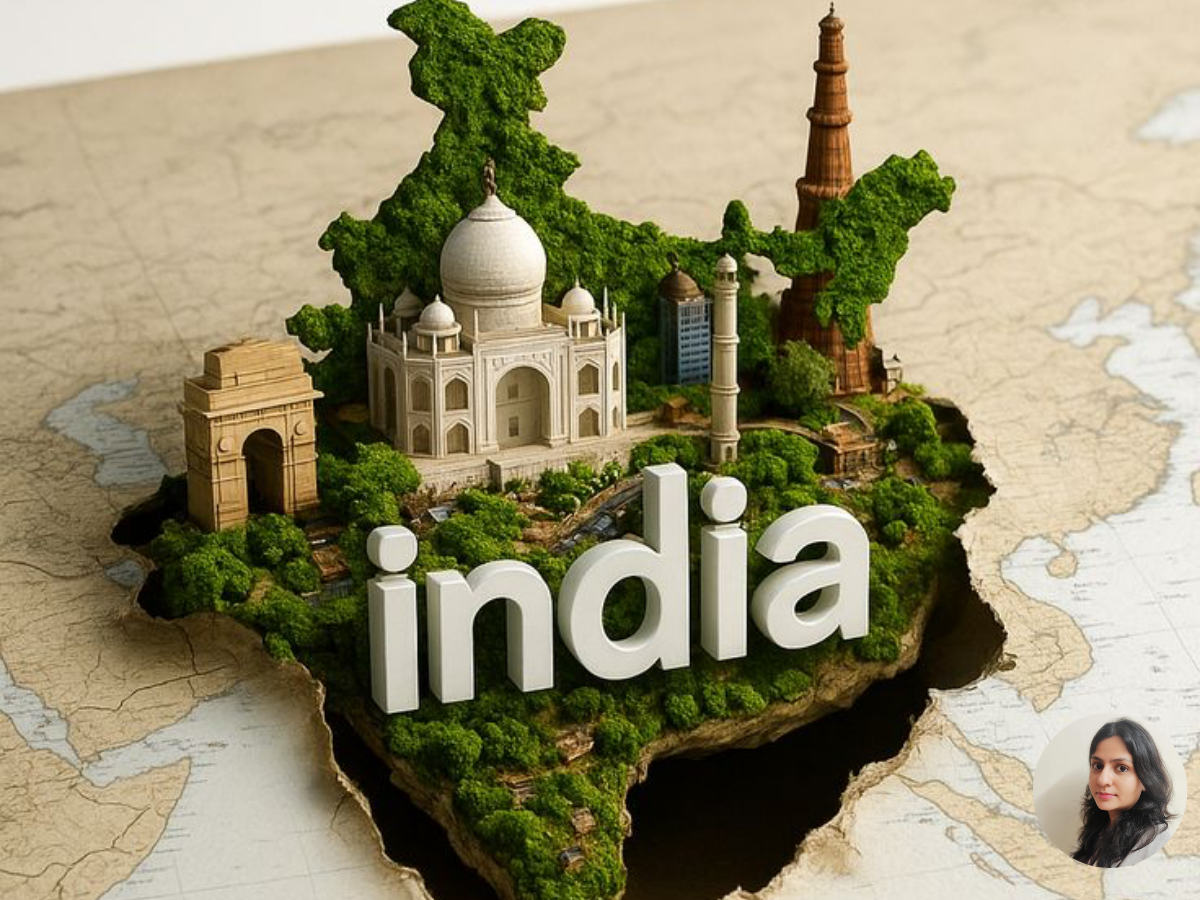
Now India needs to take stock: A whopping 25 per cent (82 million hectares) of India’s total land (329 mn ha) is undergoing desertification while 32 per cent (105 mn ha) is facing degradation that has reduced productivity, critically affecting the livelihood and food security of millions across the country.

Combating desertification brings together three natural resources: Land, water and biodiversity. These three are interdependent: Disruption in one naturally affects the other two. The hydrological cycle sustains life. Vegetation and soil drive the movement of water. These three can simply not do without each other.

Biodiversity of India has always been integral to its culture. Globally, nearly 70 per cent of the world’s biodiversity is contained in just 17 countries, and India is one of them.

Unfortunately, these assets are under threat due to decline in habitat area and its deterioration; drying up and pollution of surface and groundwater sources; conversion of forests and grasslands to agriculture and monoculture plantations; and, invasion by exotic species. Land has been rampantly abused and mined by humans, rendering it dry, nutrition deficient and unproductive.

Water scarcity can result in low productivity and crop failure, leading to food shortage, price rise and subsequent hunger. Loss of indigenous stress tolerant crop varieties weakens the battle against adequate food production.

According to the UN, food output must grow by 60 per cent to feed a population of nine billion or more by 2050. In a world already grappling with addressing the hunger challenge, this will pose a serious threat to food security, since ‘more’ will have to be produced with ‘less’.

Water woes

Water plays a dual role in desertification. Its scarcity leads to desertification: Worsening droughts in India are having an impact on the desertification trend. Vegetation dries up and is rarely replaced. In the absence of a good vegetative cover, torrential rains cause substantial loss of soil which is flushed away.

Then the land dries a hard crust is formed on the surface leading reducing water infiltration and leading to subsequent water scarcity. At last count, the 2016 drought in India has affected 330 crore people across 10 States.

With water playing such a critical role in overall natural resource management, grass root practitioners suggest that “we must teach the running water to walk, the walking water to halt and then arrange for this water to find its way into subsoil and underground aquifers”.

Coupled with the plantation of local species including trees and practising agriculture suited to the ecology, results are heartening.

In Jalaun district of Uttar Pradesh, part of the Bundelkhand region, farmers are planting traditional varieties. In Andhra Pradesh, the Deccan Development Society is working with around 5,000 women farmers to cultivate food grains that are suited for the ecology and also maintain local varieties of crops.

In fact, most watershed programmes are a mix of land and water management practices with many of them proposing vegetation cover and cultivation of native species.

Market, and more

One of the main challenges in promoting ecological agriculture is to find the market. Millets and coarse grains were once scoffed at as a poor person’s diet, but they now command a premium price. Similar efforts should be made to popularise benefits of local ecology-friendly agricultural produce.

In the true spirit of cooperation and partnerships, in line with Goal 17 of the SDGs, and the theme for this year’s World Day to Combat Desertification, there is lot that countries can learn from each other.

Many organisations are involved in knowledge exchange between developing countries. While India has its share of good pilots to address desertification these need to be up scaled and spread laterally since the problems continue to be serious. The country can also learn from innovations elsewhere.

But there is a rider. No matter what the science, technology, or political will, unless the people are involved in the process, results will never commensurate with the investment.

US President Franklin D Roosevelt once said, “A nation that destroys its land, destroys itself.” Let’s take stock and move forward towards conservation and judicious use.

Anand Roop

Anandroop Bahadur

Group Head – Human Resources

Expertise

Human Resource Expertise, HR Strategy, Oragnisational Design, Talent & Leadership Development, Policy Governance

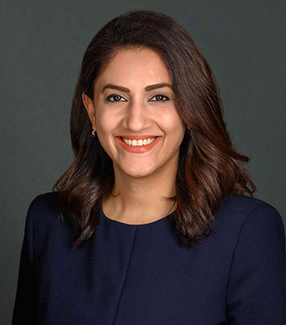
Anandroop Bahadur is a seasoned HR leader and strategic advisor with nearly two decades of experience across the development, consulting, and social impact ecosystem. She brings a strong blend of deep technical HR expertise, organizational design acumen, and a people-centric ethos to her work.

At IPE Global, Anandroop leads the Group Human Resources function across IPE Global and its associated entities, including Triple Line Consulting and IPE Africa. Her focus is on strengthening organizational foundations, enabling leadership effectiveness, and building scalable people systems aligned with the organisation’s global growth ambitions. Her remit spans HR strategy, organizational design, talent and leadership development, compensation and performance frameworks, policy governance, safeguarding, and culture integration across geographies.

Over the course of her career, Anandroop has held senior HR leadership and consulting roles with organisations such as Clinton Health Access Initiative (CHAI), Ford Foundation, NASSCOM Foundation, Central Square Foundation, Amity Education Group, and other international institutions. She has advised leadership teams and boards through periods of scale, transition, and transformation, and has led HR operations in high-growth, high-complexity environments.

She holds an Executive Degree in Human Resources from XLRI Jamshedpur and is a SHRM–SCP (Senior Certified Professional), reflecting her grounding in global HR standards and best practices. She has also completed advanced executive and leadership programmes, including training in coaching and organisational transformation, and is an ICF-trained executive coach, currently working towards her ACC credential.


Nikos Papachristodoulou

Nikos Papachristodoulou

Director

Expertise

Urban, Infrastructure, Disaster and Climate Resilience, Inclusive Growth

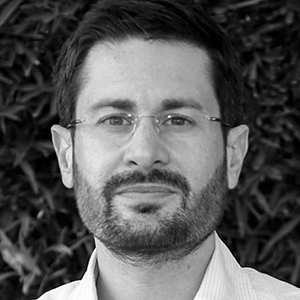
Nikos has expertise in urban and regional economic development, infrastructure, disaster and climate resilience, and inclusive growth. He oversees and manages projects for Triple Line’s cities and infrastructure portfolio.

Nikos is an urban specialist, with principal areas of expertise in urban and regional economic development, infrastructure, disaster and climate resilience, and inclusive growth. Over the past 12 years he has worked for a range of clients including the World Bank, FCDO, EU, USAID, Cities Alliance, Global Green Growth Institute (GGGI), Norwegian Refugee Council (NRC), and local authorities.

Nikos’s work has incorporated the full spectrum of the project cycle, from analytics and programme scoping and design, through implementation, and evaluation and learning.

He has a high level of familiarity with HMG business cases and ODA eligibility criteria having led and supported the development of FCDO’s urbanisation strategy and options for future investments in Somalia’s cities, Prosperity Fund Global Future Cities Programme (GFCP) scoping in Nigeria, and the development of the business case for an urban resilience programme in Tanzania.

Nikos also brings excellent understanding of World Bank latest trends and procedures as a result of his involvement in a number of analytics and technical assistance projects, including on informal settlements upgrading in Mogadishu, climate change adaptation planning in Latin American and Caribbean cities, assessment of the climate resilience of Dar es Salaam’s transport infrastructure, spatial development in Nigeria, and preparation of a handbook on integrated urban flood risk management.

Nikos holds a BSc in Economics from the University of Piraeus and an MSc in Social Development Practice from the Development Planning Unit at University College London (UCL).


Ricardo Pinto

Ricardo Pinto

Associate Director

Expertise

Private Sector Development, Regulatory Reform, Regional and Local Economy

Ricardo has 35 years´ experience in private sector development, regulatory reform, regional and local economic development in the European Union, Western Balkans, Easter Partnership Countries, Middle East, Africa, etc. He is tasked with developing our strategic operations in continental Europe and Ukraine.

Ricardo is a seasoned international development professional with over 30 years of experience designing and delivering Private Sector Development and economic growth initiatives across more than 50 countries spanning Central, Eastern and Southeast Europe, the CIS, Africa, MEDA, and Asia. He holds both a bachelor’s degree and PhD from the London School of Economics and Political Science (LSE) and is a Certified Management Consultant (CMC).

Ricardo brings a unique combination of strategic insight and practical implementation expertise. He has led high-impact assignments for key development institutions, including the European Commission, OECD, GIZ, FCDO/DFID, UNDP, UNCTAD, EBRD, ILO, ADB, World Bank, USAID, and Danida.

With a deep and practical understanding of institutional architecture, policy environment, and post-conflict recovery dynamics, and a career spanning over 30 years across transition economies, Ricardo brings not only technical depth but also a trusted reputation among donors, policymakers and peers.He is leading Triple Line’s strategic expansion into continental Europe, including Ukraine, while strengthening our credibility across the broader region and beyond. Proven Expertise Across Our Core Pillars. Ricardo’s work focuses on the areas central to Triple Line’s evolving service offering: Governance & Institutional Reform: advising public institutions on regulatory impact, policy reform, and donor coordination, Private Sector Development: strategy development for SME ecosystems, innovation, and competitiveness, Infrastructure Enabling Conditions: support for investment climate improvement and regional/local economic development and Cross-cutting themes, including green transition, women’s economic empowerment, and inclusive growth

 
LIFE AT IPE

Learning &
Development (L&D)

We inspire people to be better.

Our intuitive and personalised programmes provide clear path for growth, leadership development, and help people sharpen their skills.

0 %
People trained in last 3 years
0 %
Participation in L&D Initiatives in 2025

Your journey starts from Day One….

Structured Onboarding

Helps align expectations and lays the foundation for your success

New Hire Training

Makes you familiar with the organisation; helps you settle down in a new work environment

Customized L&D Platform

Helps upskill at your own pace through continuous learning and training programmes

Linkage with
Performance Management

Aligns resources and training needs based on your skill set

Learning is not always a formal process. We also align our organisation values to a culture of learning