The National Climate Readiness Symposium was organised by IPE Global and its partner Chintan Research Foundation.

The symposium marked a major milestone in IPE Global’s efforts to accelerate low-carbon pathways in alignment with India’s national climate ambitions. As part of this initiative, IPE Global’s “Mapping Climate Readiness at the Subnational Level,” assessed the low-carbon readiness of India’s ten highest GHG-emitting states for transitioning towards low-carbon growth through a structured framework that is backed by data and evidence generation.

The symposium featured the launch of the Climate Readiness Index (CRI) report and its corresponding AI-ML–based Decision Support System (CRI-DSS). The symposium further convened leaders from government, academia, and industry to deliberate on subnational readiness assessments, climate financing pathways, and actionable low-carbon transition planning.

As a part of this initiative, we developed the Climate Readiness Index (CRI), a first-of-its-kind AI-ML based framework designed to assess subnational preparedness of the 10 selected states for climate crisis across three key dimensions: systemic readiness, financial readiness, and technological readiness. Through indicator-based analysis, data-driven modelling, and stakeholder consultations, the assessment highlights both strengths and gaps in state-level climate preparedness. To complement this framework, the CRI Decision Support System (CRI-DSS), an interactive tool to visualize state-wise performance and simulate alternative policy or investment scenarios, has been developed. The findings reveal significant variations in climate preparedness across states, identifying best practices as well as critical areas that require targeted support and collaborative action.

Building on these insights, the next stage of work focuses on deepening engagement and application. It aims to refine the CRI and DSS framework by introducing sector-specific readiness indicators, conducting state-level pilot studies to test applicability and usability, and producing policy briefs and financing pathways to strengthen its uptake by State Governments. A key focus is to integrate climate readiness into state planning processes and financing strategies, ensuring that the CRI-DSS serves both as an analytical tool and a practical instrument to guide decision-making. Ultimately, this initiative aimed to translate the data and evidence into actionable roadmaps for state-level low carbon transition planning, thus bridging the gap between research and implementation.

Hence, the symposium:

  1. Launched the report on India’s subnational climate readiness and present a visual demonstration of the CRI-DSS. 
  2. Introduced the forward work plan and outline its objectives and focus areas. 
  3. Facilitated dialogue among policymakers, researchers, and practitioners on strengthening subnational climate readiness.

Insights from the Event 

  • Understand sub – national climate readiness: Learnings about India’s progress and preparedness in transitioning to low-carbon growth through data-driven insights.
  • An experience of innovation in climate analytics: The launch of the Climate Readiness Index (CRI) and the AI-ML–based Decision Support System (CRI-DSS).
  • Engagement with climate leaders: Discussions with government, academia, and industry experts on advancing low-carbon pathways across India’s states.
  • Gain actionable insights: Exploring state-level findings, best practices, and gaps to inform future climate finance and planning.
  • Being part of future directions: Understanding the roadmap for integrating CRI into state systems and financing mechanisms.
  • Networking with peers: Connecting with experts, policymakers, and sustainability leaders driving India’s climate action agenda.
Agenda
CLIMATE ACTION

Integrating Climate Mitigation
& Adaptation

Mainstreaming Climate Mitigation and Adaptation Actions

Sustainable Food Systems

Sustainable Tourism

People- Centric Climate Risk Communication

Climate Finance

Climate Resilient Cities

CLIMATE ACTION

Mainstreaming Climate Mitigation and Adaptation Actions

The advent of technology has presented new options for energy transitions, even as climate change continues to gain attention as a global issue. Recent digital phenomena such as artificial intelligence (AI) and big data, can aid in the decarbonisation of economies by lowering emissions, creating sustainable infrastructure, and providing new options. Without addressing the needs of the community as a whole and compartmentalising climate mitigation and adaptation measures, the vision for successful and sustainable climate action cannot be accomplished.


Climate change is taking the largest toll on poor and vulnerable groups, and these impacts are largely caused by socioeconomic inequalities. Effective risk-transfer mechanisms will be needed to distribute rewards and liabilities among all stakeholders to achieve long-term climate action. We firmly believe that participatory, community-driven projects, focused on adaptation and mitigation, can reduce inequities and advance interconnected environmental goals.


Our cross-cutting interventions in remote and rural areas offer holistic solutions to climate change that focus on strengthening global cooperation to facilitate hyper-local climate action. Through our state-of-the-art services in risk assessment, policy analysis, and expert recommendations, we support key government and private decision-makers in designing climate-risk-informed policies and actions across targeted sectors to promote livelihoods, infrastructure, and economies.

CLIMATE ACTION

Sustainable Food Systems

Climate disasters have put additional strain on resources, destroying crops, killing vital livestock, and compromising food security. Climate change has negatively impacted global access to nutrition and halted progress on sustainable agriculture. The scale of the current global hunger and malnutrition crisis is enormous, placing the most vulnerable communities at the mercy of global humanitarian aid. It will be crucial to scale up innovative, climate-friendly agriculture methods and financial and logistical support to build resilience. We are dedicated to SDG 2, which aims to end world hunger, through our inventive and modern solutions. To improve nutrition and address climate-related obstacles to food security, we have mastered the bottom-up strategy by bringing governments and communities to the same table. We have addressed data and evidence gaps and developed strategies that ensure inclusive supply chains.

CLIMATE ACTION

Sustainable Tourism

The tourism and hospitality industries make a significant contribution to the national economy, aid in bringing in external expertise, and support local livelihoods. Recent reports, however, indicate that carbon emissions from the industry will increase, endangering earlier gains in sustainable travel. Decarbonisation must be prioritised in all facets of the industry, including travel, transportation, and hospitality, in order to restore global ecologies. We recognise the importance and support initiatives for the effective management of natural and cultural environments through the development of local capacity, technical advancements, conservation practices by endorsing nature-based solutions, ongoing observation, and raising awareness.

CLIMATE ACTION

People- Centric Climate Risk Communication

Communicating on climate change is about educating and mobilising audiences to take action to confront the climate crisis.  To reduce the effects of and prepare for climate disasters, people in vulnerable regions need specialised training and communications. We are committed to leading behavioural change among key stakeholders and communities. Our tailor-made services include highly detailed risk assessment, analysis, impact evaluation, and development communication that strengthens communities and provides an agency to tackle climate change’s immediate, short-term, and long-term effects.

CLIMATE ACTION

Financing Climate Actions

The UNFCCC’s “common but differentiated responsibilities” principle captures both the spirit of international collaboration to combat climate change and the disparity in global resource availability. We understand that financing gaps often expose underdeveloped nations and disadvantaged communities to more severe effects of climate change, distorting the paths for development.

International financial cooperation is most needed for climate action in the least developed countries and other developing countries. Threat mitigation and capacity building among vulnerable groups are only possible through public-private partnerships and transnational financing. To provide financial solutions and interventions that help mainstream climate efforts and support just transitions, we are directing efforts to establish financial collaboration with regional, sub-national, and local governments as well as financing institutions.

CLIMATE ACTION

Climate Resilient Cities

With cities accounting for over 70% of global CO2 emissions, most of which come from industrial and motorised transport systems, they continue to be the leading contributors to climate change. Given the current scenario, it will be necessary to strike a balance between the economy and the environment, reduce key sources of pollution, and make joint investments to build urban resilience to climate change. In a world that is rapidly changing, urban planning and management are essential for sustainability. Our comprehensive approach to changes, from planning to execution, advances this goal of creating sustainable and climate-resilient cities.

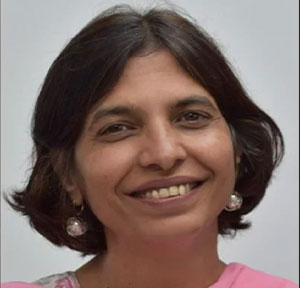
Anand Roop

Anandroop Bahadur

Group Head – Human Resources

Expertise

Human Resource Expertise, HR Strategy, Oragnisational Design, Talent & Leadership Development, Policy Governance

Anandroop Bahadur is a seasoned HR leader and strategic advisor with nearly two decades of experience across the development, consulting, and social impact ecosystem. She brings a strong blend of deep technical HR expertise, organizational design acumen, and a people-centric ethos to her work.

At IPE Global, Anandroop leads the Group Human Resources function across IPE Global and its associated entities, including Triple Line Consulting and IPE Africa. Her focus is on strengthening organizational foundations, enabling leadership effectiveness, and building scalable people systems aligned with the organisation’s global growth ambitions. Her remit spans HR strategy, organizational design, talent and leadership development, compensation and performance frameworks, policy governance, safeguarding, and culture integration across geographies.

Over the course of her career, Anandroop has held senior HR leadership and consulting roles with organisations such as Clinton Health Access Initiative (CHAI), Ford Foundation, NASSCOM Foundation, Central Square Foundation, Amity Education Group, and other international institutions. She has advised leadership teams and boards through periods of scale, transition, and transformation, and has led HR operations in high-growth, high-complexity environments.

She holds an Executive Degree in Human Resources from XLRI Jamshedpur and is a SHRM–SCP (Senior Certified Professional), reflecting her grounding in global HR standards and best practices. She has also completed advanced executive and leadership programmes, including training in coaching and organisational transformation, and is an ICF-trained executive coach, currently working towards her ACC credential.


Nikos Papachristodoulou

Nikos Papachristodoulou

Director

Expertise

Urban, Infrastructure, Disaster and Climate Resilience, Inclusive Growth

Nikos has expertise in urban and regional economic development, infrastructure, disaster and climate resilience, and inclusive growth. He oversees and manages projects for Triple Line’s cities and infrastructure portfolio.

Nikos is an urban specialist, with principal areas of expertise in urban and regional economic development, infrastructure, disaster and climate resilience, and inclusive growth. Over the past 12 years he has worked for a range of clients including the World Bank, FCDO, EU, USAID, Cities Alliance, Global Green Growth Institute (GGGI), Norwegian Refugee Council (NRC), and local authorities.

Nikos’s work has incorporated the full spectrum of the project cycle, from analytics and programme scoping and design, through implementation, and evaluation and learning.

He has a high level of familiarity with HMG business cases and ODA eligibility criteria having led and supported the development of FCDO’s urbanisation strategy and options for future investments in Somalia’s cities, Prosperity Fund Global Future Cities Programme (GFCP) scoping in Nigeria, and the development of the business case for an urban resilience programme in Tanzania.

Nikos also brings excellent understanding of World Bank latest trends and procedures as a result of his involvement in a number of analytics and technical assistance projects, including on informal settlements upgrading in Mogadishu, climate change adaptation planning in Latin American and Caribbean cities, assessment of the climate resilience of Dar es Salaam’s transport infrastructure, spatial development in Nigeria, and preparation of a handbook on integrated urban flood risk management.

Nikos holds a BSc in Economics from the University of Piraeus and an MSc in Social Development Practice from the Development Planning Unit at University College London (UCL).


Ricardo Pinto

Ricardo Pinto

Associate Director

Expertise

Private Sector Development, Regulatory Reform, Regional and Local Economy

Ricardo has 35 years´ experience in private sector development, regulatory reform, regional and local economic development in the European Union, Western Balkans, Easter Partnership Countries, Middle East, Africa, etc. He is tasked with developing our strategic operations in continental Europe and Ukraine.

Ricardo is a seasoned international development professional with over 30 years of experience designing and delivering Private Sector Development and economic growth initiatives across more than 50 countries spanning Central, Eastern and Southeast Europe, the CIS, Africa, MEDA, and Asia. He holds both a bachelor’s degree and PhD from the London School of Economics and Political Science (LSE) and is a Certified Management Consultant (CMC).

Ricardo brings a unique combination of strategic insight and practical implementation expertise. He has led high-impact assignments for key development institutions, including the European Commission, OECD, GIZ, FCDO/DFID, UNDP, UNCTAD, EBRD, ILO, ADB, World Bank, USAID, and Danida.

With a deep and practical understanding of institutional architecture, policy environment, and post-conflict recovery dynamics, and a career spanning over 30 years across transition economies, Ricardo brings not only technical depth but also a trusted reputation among donors, policymakers and peers.He is leading Triple Line’s strategic expansion into continental Europe, including Ukraine, while strengthening our credibility across the broader region and beyond. Proven Expertise Across Our Core Pillars. Ricardo’s work focuses on the areas central to Triple Line’s evolving service offering: Governance & Institutional Reform: advising public institutions on regulatory impact, policy reform, and donor coordination, Private Sector Development: strategy development for SME ecosystems, innovation, and competitiveness, Infrastructure Enabling Conditions: support for investment climate improvement and regional/local economic development and Cross-cutting themes, including green transition, women’s economic empowerment, and inclusive growth

 
LIFE AT IPE

Learning &
Development (L&D)

We inspire people to be better.

Our intuitive and personalised programmes provide clear path for growth, leadership development, and help people sharpen their skills.

0 %
People trained in last 3 years
0 %
Participation in L&D Initiatives in 2025

Your journey starts from Day One….

Structured Onboarding

Helps align expectations and lays the foundation for your success

New Hire Training

Makes you familiar with the organisation; helps you settle down in a new work environment

Customized L&D Platform

Helps upskill at your own pace through continuous learning and training programmes

Linkage with
Performance Management

Aligns resources and training needs based on your skill set

Learning is not always a formal process. We also align our organisation values to a culture of learning