You’re the Change, be the Change

Something remarkable is happening in villages across India–and it’s showing us the future of development.

A shy nine-year-old from Jharkhand becomes the first in her family to graduate with a university scholarship. A young bride reclaims her life and pursues a law degree. A girl with a bicycle delays marriage to become a teacher. A stone layer’s daughter boards her first flight to learn coding and returns earning more than anyone in her village.

These aren’t anomalies. They’re proof that when we invest in girls’ aspirations with conviction and creativity, transformation isn’t just possible–it’s inevitable.

A fact corroborated by the World Development Report 2012 on Gender Equality and Development recognised that expanding women’s agency is critical to improving the lives of women, their households, and their communities. What makes this year’s International Day of the Girl Child which has just been observed particularly significant is that India is now demonstrating how this transformation happens in practice–and the lessons are profound.

Rising from rural Jharkhand, Nisha, a shy nine-year-old who barely spoke Hindi or English, became the first in her family to graduate, earning a full scholarship to Azim Premji University. She credits her success to the Yuwa Football Programme, which helped her break free from the vicious cycle of child marriage and excel as a competitive football player. Football gained momentum in Jharkhand in 2013 when a group of 18 village girls made the nation proud by securing third place at the Donosti Cup in Spain. Inspired by their journey, Nisha joined Yuwa, which uses football to empower girls and tackle child marriage- an issue deeply entrenched in rural Jharkhand. Through Yuwa, she gained unprecedented exposure, travelling across India and collaborating with students from around the world. A standout achievement of the programme is that none of its participants have been married before the age of 18–a remarkable feat in a state where nearly one in three girls still marry early, according to NFHS-5 data.

Rewriting destiny to reach her Manzil was Mamta. From becoming a child bride at the tender age of five to pursuing a law degree, her story is one of courage and reclaiming destiny. Growing up in the small village of Bhojpura in Jaipur, Rajasthan, Mamta’s childhood was replaced by household responsibilities that came with early marriage. Despite her in-laws dismissing her dreams, Mamta refused to give up. She dissolved the marriage, returned to her mother, and – with the support of Project Manzil–enrolled in a tailoring course and secured a job. With her earnings, she funded her own education, supported her mother, and continues to pursue higher studies today. In Rajasthan’s rural and tribal districts, countless girls face similar fates, trapped in child marriage with limited opportunities for education or work. them to decent work opportunities to shape their lives towards better futures.

Then there was Nibha, a 27-year-old from Bihar’s Begusarai district. Riding a bicycle brought emancipation for her. She credits completing her secondary education to the Mukhyamantri Balika Cycle Yojana, launched in 2006, which provided bicycles to girls for commuting to school and coaching centres. Nibha is among 1.6 lakh girls whose lives were positively impacted by the scheme, designed to make education more accessible by reducing the cost and barriers of travel. A study by Professors Nishith Prakash and Karthik Muralidharan found that the program led to a 32% increase in girls’ enrolment and a 40% reduction in the gender gap, with long-term gains in higher education, employment beyond agriculture, and delayed marriage and childbearing. Using her bicycle for two years during secondary school, Nibha was able to delay marriage until she reached the legal age and is now training to become a teacher.Monika’s story was yet another powerful inspiration. The residents of Mordha village in Rajasthan had never boarded a flight-until 20-year-old Monika did, becoming the youngest and most inspiring role model in her community. The daughter of a stone layer, Monika had always dreamed of studying science, but financial constraints made attending a private school outside her village impossible. Although her father supported the education of his five children, limited means forced Monika to pursue humanities after Grade 10, despite her growing interest in science and technology. She later married, but her journey took a new turn when Babita, a community motivator with Project Manzil, introduced her to various skilling courses and counselled her family and in-laws to support her ambitions. Monika enrolled in a software diploma course and flew to Pune, where she spent nine months learning coding and computer languages. Today, she works full-time, earning ₹21,000 a month–the highest income among girls in her village.

The stories of Nisha, Mamta, Nibha, and Monika aren’t exceptional because they possessed some rare quality. They’re exceptional because they received what should be universal: Recognition of their potential, removal of barriers, and sustained support to pursue their dreams.

India has no shortage of government schemes and development programs. What we desperately need are responsive models that:

Listen before designing. Programmes must start with girls’ aspirations, not assume they need or should want.

Address systemic barriers, not just individual constraints. A bicycle program works because it tackles transportation. A football program prevents child marriage because it creates community pride and alternative narratives. Effective interventions understand that individual empowerment requires shifting entire ecosystems.

Invest in sustained engagement, not one-off interventions. Mamta needed more than a tailoring course – she needed someone to negotiate with her in-laws. Monika needed more than a coding programme–she needed nine months of immersive learning far from home. Real change requires sustained investment.

Measure success by transformed trajectories. We should commit to systems where no girl faces child -marriage. The metric isn’t enrolment numbers; it’s life paths fundamentally altered.

These models–Yuwa’s football programme, Project Manzil’s skill-building ecosystem, offer blueprints that can be adapted across the Global South. The specifics may differ, but the principles remain: identify aspirations, remove barriers, invest sustainably, and build community support.

This requires coordinated effort from governments, development partners, donors, multilateral organisations, NGOs, and most critically, communities themselves. It requires us to move beyond celebrating exceptional girls who succeed despite the system, toward building systems that not just enable Nisha, Mamta, Nibha, and Monika but every girl to succeed.

This article is authored by Prachi Yadav, analyst and Raghwesh Ranjan, senior director, IPE Global.
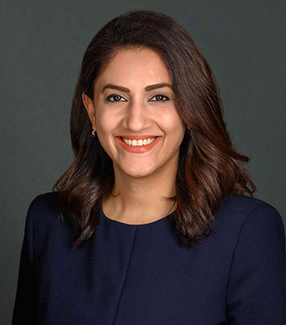
Anand Roop

Anandroop Bahadur

Group Head – Human Resources

Expertise

Human Resource Expertise, HR Strategy, Oragnisational Design, Talent & Leadership Development, Policy Governance

Anandroop Bahadur is a seasoned HR leader and strategic advisor with nearly two decades of experience across the development, consulting, and social impact ecosystem. She brings a strong blend of deep technical HR expertise, organizational design acumen, and a people-centric ethos to her work.

At IPE Global, Anandroop leads the Group Human Resources function across IPE Global and its associated entities, including Triple Line Consulting and IPE Africa. Her focus is on strengthening organizational foundations, enabling leadership effectiveness, and building scalable people systems aligned with the organisation’s global growth ambitions. Her remit spans HR strategy, organizational design, talent and leadership development, compensation and performance frameworks, policy governance, safeguarding, and culture integration across geographies.

Over the course of her career, Anandroop has held senior HR leadership and consulting roles with organisations such as Clinton Health Access Initiative (CHAI), Ford Foundation, NASSCOM Foundation, Central Square Foundation, Amity Education Group, and other international institutions. She has advised leadership teams and boards through periods of scale, transition, and transformation, and has led HR operations in high-growth, high-complexity environments.

She holds an Executive Degree in Human Resources from XLRI Jamshedpur and is a SHRM–SCP (Senior Certified Professional), reflecting her grounding in global HR standards and best practices. She has also completed advanced executive and leadership programmes, including training in coaching and organisational transformation, and is an ICF-trained executive coach, currently working towards her ACC credential.


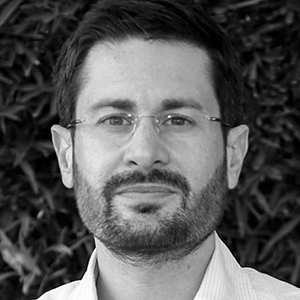
Nikos Papachristodoulou

Nikos Papachristodoulou

Director

Expertise

Urban, Infrastructure, Disaster and Climate Resilience, Inclusive Growth

Nikos has expertise in urban and regional economic development, infrastructure, disaster and climate resilience, and inclusive growth. He oversees and manages projects for Triple Line’s cities and infrastructure portfolio.

Nikos is an urban specialist, with principal areas of expertise in urban and regional economic development, infrastructure, disaster and climate resilience, and inclusive growth. Over the past 12 years he has worked for a range of clients including the World Bank, FCDO, EU, USAID, Cities Alliance, Global Green Growth Institute (GGGI), Norwegian Refugee Council (NRC), and local authorities.

Nikos’s work has incorporated the full spectrum of the project cycle, from analytics and programme scoping and design, through implementation, and evaluation and learning.

He has a high level of familiarity with HMG business cases and ODA eligibility criteria having led and supported the development of FCDO’s urbanisation strategy and options for future investments in Somalia’s cities, Prosperity Fund Global Future Cities Programme (GFCP) scoping in Nigeria, and the development of the business case for an urban resilience programme in Tanzania.

Nikos also brings excellent understanding of World Bank latest trends and procedures as a result of his involvement in a number of analytics and technical assistance projects, including on informal settlements upgrading in Mogadishu, climate change adaptation planning in Latin American and Caribbean cities, assessment of the climate resilience of Dar es Salaam’s transport infrastructure, spatial development in Nigeria, and preparation of a handbook on integrated urban flood risk management.

Nikos holds a BSc in Economics from the University of Piraeus and an MSc in Social Development Practice from the Development Planning Unit at University College London (UCL).


Ricardo Pinto

Ricardo Pinto

Associate Director

Expertise

Private Sector Development, Regulatory Reform, Regional and Local Economy

Ricardo has 35 years´ experience in private sector development, regulatory reform, regional and local economic development in the European Union, Western Balkans, Easter Partnership Countries, Middle East, Africa, etc. He is tasked with developing our strategic operations in continental Europe and Ukraine.

Ricardo is a seasoned international development professional with over 30 years of experience designing and delivering Private Sector Development and economic growth initiatives across more than 50 countries spanning Central, Eastern and Southeast Europe, the CIS, Africa, MEDA, and Asia. He holds both a bachelor’s degree and PhD from the London School of Economics and Political Science (LSE) and is a Certified Management Consultant (CMC).

Ricardo brings a unique combination of strategic insight and practical implementation expertise. He has led high-impact assignments for key development institutions, including the European Commission, OECD, GIZ, FCDO/DFID, UNDP, UNCTAD, EBRD, ILO, ADB, World Bank, USAID, and Danida.

With a deep and practical understanding of institutional architecture, policy environment, and post-conflict recovery dynamics, and a career spanning over 30 years across transition economies, Ricardo brings not only technical depth but also a trusted reputation among donors, policymakers and peers.He is leading Triple Line’s strategic expansion into continental Europe, including Ukraine, while strengthening our credibility across the broader region and beyond. Proven Expertise Across Our Core Pillars. Ricardo’s work focuses on the areas central to Triple Line’s evolving service offering: Governance & Institutional Reform: advising public institutions on regulatory impact, policy reform, and donor coordination, Private Sector Development: strategy development for SME ecosystems, innovation, and competitiveness, Infrastructure Enabling Conditions: support for investment climate improvement and regional/local economic development and Cross-cutting themes, including green transition, women’s economic empowerment, and inclusive growth

 
LIFE AT IPE

Learning &
Development (L&D)

We inspire people to be better.

Our intuitive and personalised programmes provide clear path for growth, leadership development, and help people sharpen their skills.

0 %
People trained in last 3 years
0 %
Participation in L&D Initiatives in 2025

Your journey starts from Day One….

Structured Onboarding

Helps align expectations and lays the foundation for your success

New Hire Training

Makes you familiar with the organisation; helps you settle down in a new work environment

Customized L&D Platform

Helps upskill at your own pace through continuous learning and training programmes

Linkage with
Performance Management

Aligns resources and training needs based on your skill set

Learning is not always a formal process. We also align our organisation values to a culture of learning