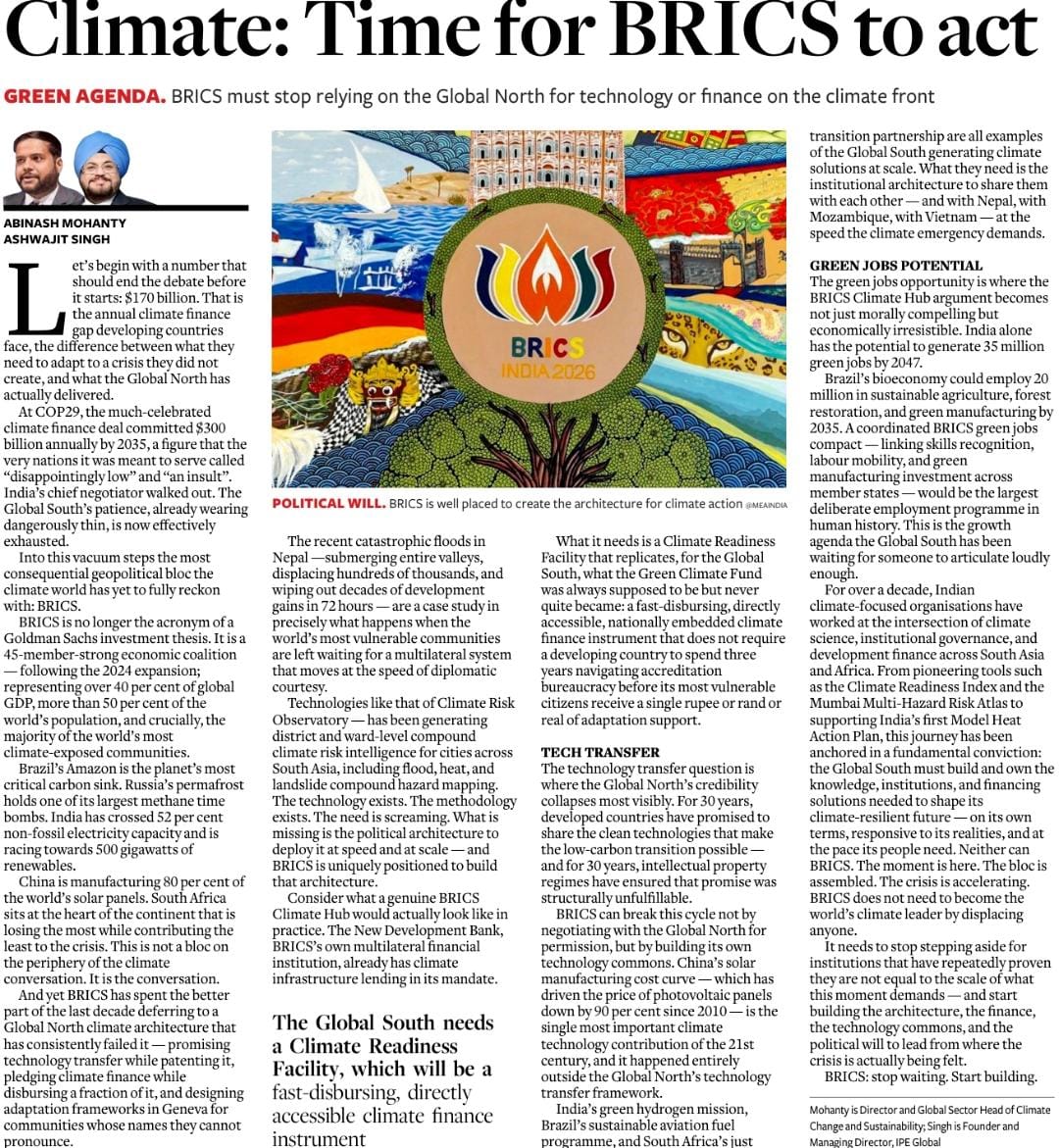
Can COP29 deliver the big bucks needed to fight climate change?

On the shores of the Caspian Sea, Baku is welcoming leaders, climate activists, civil society members, and negotiators from over 200 countries with heightened anticipation around setting more ambitious climate finance targets through the proposed New Collective Quantified Goal (NCQG).

The agenda aims to revitalise global climate finance commitments, yet concerns loom over the pace and scale of progress. The stakes are especially high for the world’s most vulnerable nations, which continue to bear the brunt of climate impacts.

Historically, high-emitting developed countries have taken nearly half a century to approach net-zero targets. Meanwhile, highly vulnerable and emerging economies, like India, are racing to meet these same targets in just over 25 years, underscoring a stark disparity in global climate commitments.

As COP 29 (29th Conference of the Parties) deliberates, two critical issues dominate: the establishment of the NCQG, which is seen as essential for the future of the Paris Agreement, and the operationalization of the Loss and Damage Fund. While hopes are high, frustrations simmer over the perceived delay in delivering the long-promised funds, which many believe are decades overdue.

The success of COP 29 rests on the buzzword “climate finance,” but will it be mainstreamed?

COULD COP29 DELIVER?

Across the agenda, countries are united on some issues and divided on others, but the only unanimous realization is “loss and damage.” Though COP 27’s adoption of the Santiago network was a long-awaited move, developed countries remain hesitant with implementing the loss and damage facility, as it could expose them to liability claims.

While negotiations on loss and damage remain challenging, there is progress on mitigation, particularly around carbon markets. Article 6 of the Paris Agreement has greenlit a global carbon market. Despite essential frameworks in place since 2022, the UN-supervised carbon market faces challenges. The key issue with carbon markets is accounting. As COP 29 progresses, optimism grows that a global carbon trading mechanism could be a reality, with the first UN-sanctioned carbon credits available in 2025.

Article 6 negotiations, particularly Article 6.4, represent a major step forward, potentially reducing the cost of implementing national climate plans by $250 billion annually through cross-border cooperation. But much more remains to be delivered. Can COP 29 stand up to this test? Only the coming days will tell.

As climate-vulnerable countries approach adaptation thresholds, COP 29’s outcome must deliver true solidarity and equity.

For countries like India, consolidating private sector investments to leverage recent developments and mainstream home-grown frugal and clean innovations is crucial. Experts and policymakers emphasise the need for greater involvement from international public finance institutions and a larger role for the private sector.

Mainstreaming a public-private-philanthropic blended model needs more momentum. Blended finance facilities can be especially effective for climate action by de-risking investments and catalysing private capital into climate-resilient projects. For example, the USAID-supported SAMRIDH Blended Finance Facility, implemented by IPE Global, demonstrates how this model can address financing gaps. Primarily focused on healthcare resilience, SAMRIDH’s approach of combining grant funding with commercial capital has mobilised over $350 million in private sector investments. Similar mechanisms could be designed for climate projects, bridging the climate finance gap in developing countries.

For developing nations, such financing mechanisms could be transformative, but they require clear commitments and frameworks from COP29.

As COP 29 marches on with a hope-filled but nebulous agenda, ignoring urgent warning signs will leave climate-vulnerable countries frustrated and anxious.

While it may be over-ambitious to expect a resolution to the multi-decadal facets of the climate crisis at Baku, COP 29 should deliver on climate finance through the NCQG by repurposing developmental assistance. Carbon markets, if consensus is reached, could be one of many ways to achieve the NCQG.

Amid urgent climate needs and geopolitical tensions, COP29’s success depends on tangible progress in financing climate action and supporting those most affected by the climate crisis. Whether the summit can truly deliver remains to be seen, but the world is watching closely.

(Abinash Mohanty is Head of Climate Change and Sustainability practice, and an expert reviewer of the IPCC-AR(6), and Himanshu Sikka is the Chief Strategy and Diversification Officer – at IPE Global, an international development organization. The views expressed are their own.)
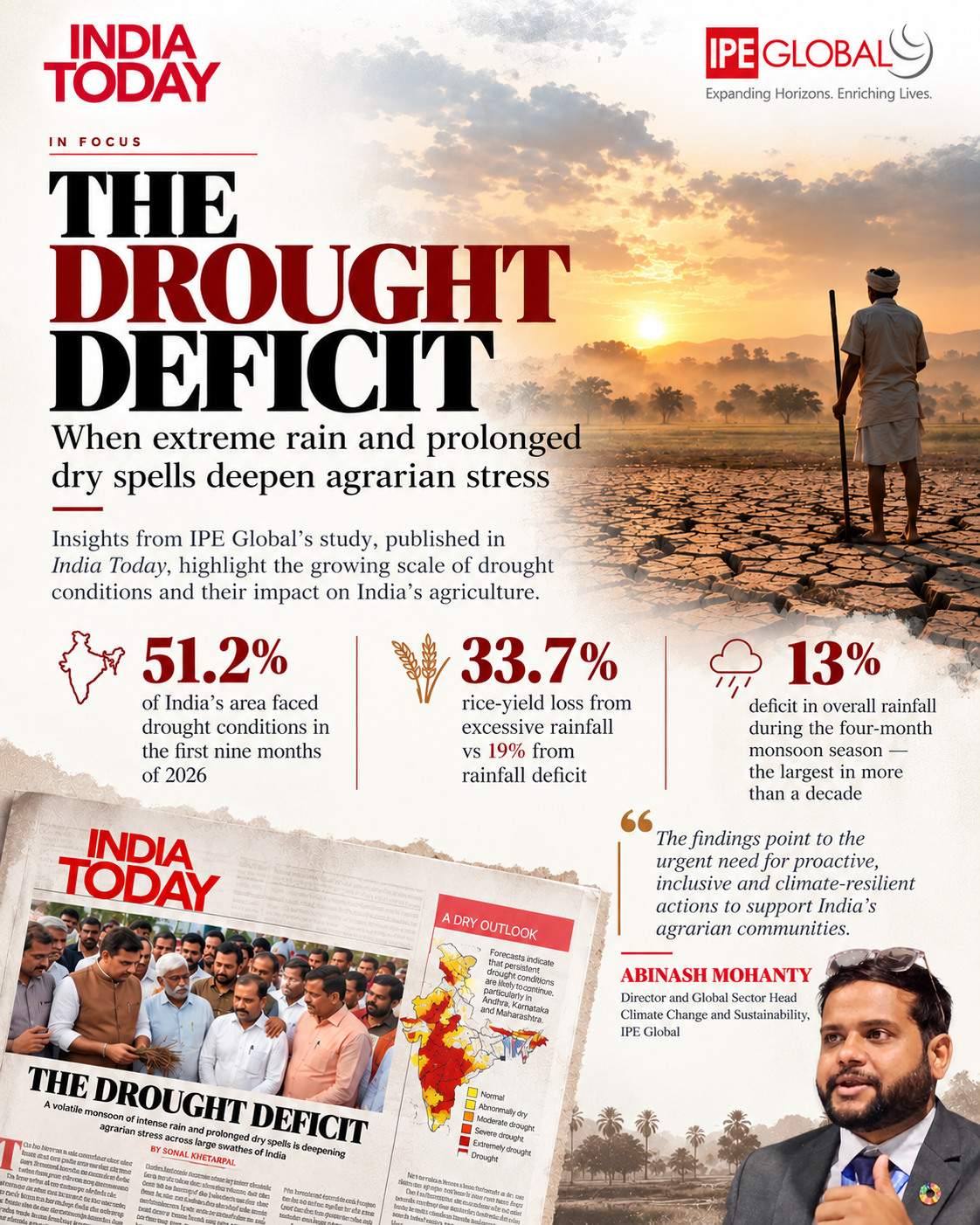
Anand Roop

Anandroop Bahadur

Group Head – Human Resources

Expertise

Human Resource Expertise, HR Strategy, Oragnisational Design, Talent & Leadership Development, Policy Governance

Anandroop Bahadur is a seasoned HR leader and strategic advisor with nearly two decades of experience across the development, consulting, and social impact ecosystem. She brings a strong blend of deep technical HR expertise, organizational design acumen, and a people-centric ethos to her work.

At IPE Global, Anandroop leads the Group Human Resources function across IPE Global and its associated entities, including Triple Line Consulting and IPE Africa. Her focus is on strengthening organizational foundations, enabling leadership effectiveness, and building scalable people systems aligned with the organisation’s global growth ambitions. Her remit spans HR strategy, organizational design, talent and leadership development, compensation and performance frameworks, policy governance, safeguarding, and culture integration across geographies.

Over the course of her career, Anandroop has held senior HR leadership and consulting roles with organisations such as Clinton Health Access Initiative (CHAI), Ford Foundation, NASSCOM Foundation, Central Square Foundation, Amity Education Group, and other international institutions. She has advised leadership teams and boards through periods of scale, transition, and transformation, and has led HR operations in high-growth, high-complexity environments.

She holds an Executive Degree in Human Resources from XLRI Jamshedpur and is a SHRM–SCP (Senior Certified Professional), reflecting her grounding in global HR standards and best practices. She has also completed advanced executive and leadership programmes, including training in coaching and organisational transformation, and is an ICF-trained executive coach, currently working towards her ACC credential.


Nikos Papachristodoulou

Nikos Papachristodoulou

Director

Expertise

Urban, Infrastructure, Disaster and Climate Resilience, Inclusive Growth

Nikos has expertise in urban and regional economic development, infrastructure, disaster and climate resilience, and inclusive growth. He oversees and manages projects for Triple Line’s cities and infrastructure portfolio.

Nikos is an urban specialist, with principal areas of expertise in urban and regional economic development, infrastructure, disaster and climate resilience, and inclusive growth. Over the past 12 years he has worked for a range of clients including the World Bank, FCDO, EU, USAID, Cities Alliance, Global Green Growth Institute (GGGI), Norwegian Refugee Council (NRC), and local authorities.

Nikos’s work has incorporated the full spectrum of the project cycle, from analytics and programme scoping and design, through implementation, and evaluation and learning.

He has a high level of familiarity with HMG business cases and ODA eligibility criteria having led and supported the development of FCDO’s urbanisation strategy and options for future investments in Somalia’s cities, Prosperity Fund Global Future Cities Programme (GFCP) scoping in Nigeria, and the development of the business case for an urban resilience programme in Tanzania.

Nikos also brings excellent understanding of World Bank latest trends and procedures as a result of his involvement in a number of analytics and technical assistance projects, including on informal settlements upgrading in Mogadishu, climate change adaptation planning in Latin American and Caribbean cities, assessment of the climate resilience of Dar es Salaam’s transport infrastructure, spatial development in Nigeria, and preparation of a handbook on integrated urban flood risk management.

Nikos holds a BSc in Economics from the University of Piraeus and an MSc in Social Development Practice from the Development Planning Unit at University College London (UCL).


Ricardo Pinto

Ricardo Pinto

Associate Director

Expertise

Private Sector Development, Regulatory Reform, Regional and Local Economy

Ricardo has 35 years´ experience in private sector development, regulatory reform, regional and local economic development in the European Union, Western Balkans, Easter Partnership Countries, Middle East, Africa, etc. He is tasked with developing our strategic operations in continental Europe and Ukraine.

Ricardo is a seasoned international development professional with over 30 years of experience designing and delivering Private Sector Development and economic growth initiatives across more than 50 countries spanning Central, Eastern and Southeast Europe, the CIS, Africa, MEDA, and Asia. He holds both a bachelor’s degree and PhD from the London School of Economics and Political Science (LSE) and is a Certified Management Consultant (CMC).

Ricardo brings a unique combination of strategic insight and practical implementation expertise. He has led high-impact assignments for key development institutions, including the European Commission, OECD, GIZ, FCDO/DFID, UNDP, UNCTAD, EBRD, ILO, ADB, World Bank, USAID, and Danida.

With a deep and practical understanding of institutional architecture, policy environment, and post-conflict recovery dynamics, and a career spanning over 30 years across transition economies, Ricardo brings not only technical depth but also a trusted reputation among donors, policymakers and peers.He is leading Triple Line’s strategic expansion into continental Europe, including Ukraine, while strengthening our credibility across the broader region and beyond. Proven Expertise Across Our Core Pillars. Ricardo’s work focuses on the areas central to Triple Line’s evolving service offering: Governance & Institutional Reform: advising public institutions on regulatory impact, policy reform, and donor coordination, Private Sector Development: strategy development for SME ecosystems, innovation, and competitiveness, Infrastructure Enabling Conditions: support for investment climate improvement and regional/local economic development and Cross-cutting themes, including green transition, women’s economic empowerment, and inclusive growth

 
LIFE AT IPE

Learning &
Development (L&D)

We inspire people to be better.

Our intuitive and personalised programmes provide clear path for growth, leadership development, and help people sharpen their skills.

0 %
People trained in last 3 years
0 %
Participation in L&D Initiatives in 2025

Your journey starts from Day One….

Structured Onboarding

Helps align expectations and lays the foundation for your success

New Hire Training

Makes you familiar with the organisation; helps you settle down in a new work environment

Customized L&D Platform

Helps upskill at your own pace through continuous learning and training programmes

Linkage with
Performance Management

Aligns resources and training needs based on your skill set

Learning is not always a formal process. We also align our organisation values to a culture of learning