Can artificial rain fix toxic air in India’s capital?

Last week, as the Indian capital battled days of toxic air, the city’s environment minister said that his government was considering cloud seeding – a rain-making technique – to bring down pollution levels.

The plan’s fruition will depend on getting approval from India’s Supreme Court, and possibly a number of federal ministries. If that happens, the scheme may be implemented later this month, depending on weather conditions.

This isn’t the first time that cloud seeding has been suggested as a possible solution for air pollution in Delhi. But some experts say it is a complicated, expensive exercise whose efficacy in battling pollution is not completely proven, and that more research is needed to understand its long-term environmental impact.

But as Delhi’s pollution keeps choking its people and making global headlines, political leaders seem desperate for a solution.

Over the past two weeks, the city’s Air Quality Index (AQI) – which measures the level of PM 2.5 or fine particulate matter in the air – has consistently crossed the 450 mark, nearly 10 times the acceptable limit. And after a brief bout of (natural) rain brought down pollution over the weekend, air quality turned hazardous again on Monday as people burst firecrackers to celebrate the Diwali festival.

Pollution is a year-round problem in Delhi due to factors including high vehicular and industrial emissions and dust. But the city’s air turns especially toxic in winter as farmers in neighbouring states burn crop remnants and low wind speeds lead to higher concentration of pollutants.

The Delhi government has announced school winter breaks early and banned construction activity. And it hopes that the Supreme Court, which is hearing petitions related to Delhi’s toxic air, will give it the go-ahead for cloud seeding.

What is cloud seeding?

Cloud seeding is a technique that speeds up the condensation of moisture in clouds to create rain.

It is done by spraying particles of salt – like silver iodide or chloride – on clouds using planes or dispersion devices on the ground.

The salt granules act as ice-nucleating particles, which enable ice crystals to form in the clouds. The moisture in the clouds then latches on to these ice crystals and condenses into rain.

But the process doesn’t always work.

Atmospheric conditions have to be exactly right, says Polash Mukerjee, an independent researcher on air quality and health.

“There should be the right amount of moisture and humidity in the clouds to allow for ice nuclei to form,” he says, adding that secondary factors like wind speeds are also important – and they can be quite dynamic in Delhi at this time of the year.

The salt particles also have to be sprayed into a specific type of cloud that grows vertically as opposed to horizontally, JR Kulkarni, a weather scientist, told Down to Earth magazine in 2018.

This rain-making process has been around for decades. In fact, climatologist SK Banerji, the first Indian director general of the country’s meteorological department, experimented with it in 1952.

In the 1960s, the US military controversially used the technique to extend the monsoon over certain areas in Vietnam to disrupt Vietnamese military supplies during the war.

Countries such as China and the UAE, and some Indian states have also experimented with the process to boost rainfall or deal with drought-like situations.

What does the Delhi government want to do?

The plan for the project has been submitted by researchers at the Indian Institute of Technology (IIT) Kanpur, a top engineering college.

As per the plan, the project will be carried out in two phases, with the first phase covering about 300sq km (116sq miles). Experts have suggested that the project be implemented on 20 and 21 November as meteorological conditions will be ideal at the time.

Manindra Agrawal, the scientist leading the project, told Reuters that while they didn’t expect enough clouds to cover Delhi fully on those days, “a few hundred kilometres would be good”.

And can it really help with pollution?

The rationale is that rainfall may help wash away particulate matter in the atmosphere, making the air cleaner and more breathable.

Delhi experienced this first-hand last week after brief spells of rain on Friday and Saturday brought down pollution levels.

But experts say it’s not clear how helpful artificial rain will be.

Mr Mukerjee says that cloud seeding has been used for air quality management and dust suppression in other countries, but these have been “episodic at best”.

“If you look at the impact of rainfall on air quality, it immediately brings down pollution levels, but the levels stabilise and bounce back within 48-72 hours. Cloud seeding is expensive and diverting scarce resources towards an activity that does not have definite or lasting effects is a band-aid solution,” he says.

He adds that it must be a matter of deliberated and discussed policy. “It cannot be an ad-hoc decision. You must have a series of protocols in place and a multi-disciplinary team making them, including meteorologists, air quality policy experts, epidemiologists, etc.”

Some experts are also concerned about what we don’t know yet about the process.

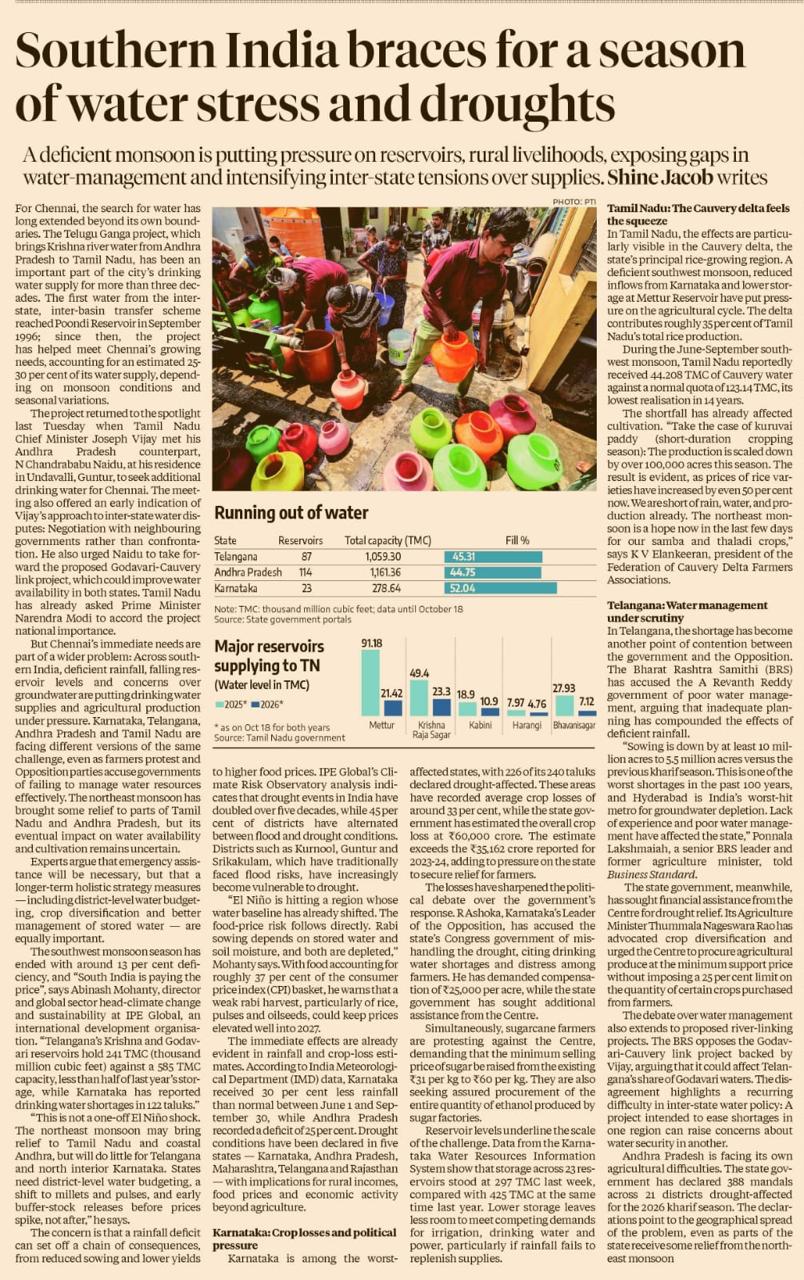
“Right now, there is no substantial empirical evidence on how much the AQI is going to come down by cloud seeding,” says Abinash Mohanty, a climate change and sustainability expert.

“We also don’t know what its [cloud seeding] effects are because in the end you’re trying to alter natural processes and that’s bound to have limitations,” he adds.

According to him, pollution can’t be solved just by using “meteorological variables like rainfall and windspeed”.

“We need to make more concerted efforts to curb air pollution than scattered trial-and-error experiments.”
Anand Roop

Anandroop Bahadur

Group Head – Human Resources

Expertise

Human Resource Expertise, HR Strategy, Oragnisational Design, Talent & Leadership Development, Policy Governance

Anandroop Bahadur is a seasoned HR leader and strategic advisor with nearly two decades of experience across the development, consulting, and social impact ecosystem. She brings a strong blend of deep technical HR expertise, organizational design acumen, and a people-centric ethos to her work.

At IPE Global, Anandroop leads the Group Human Resources function across IPE Global and its associated entities, including Triple Line Consulting and IPE Africa. Her focus is on strengthening organizational foundations, enabling leadership effectiveness, and building scalable people systems aligned with the organisation’s global growth ambitions. Her remit spans HR strategy, organizational design, talent and leadership development, compensation and performance frameworks, policy governance, safeguarding, and culture integration across geographies.

Over the course of her career, Anandroop has held senior HR leadership and consulting roles with organisations such as Clinton Health Access Initiative (CHAI), Ford Foundation, NASSCOM Foundation, Central Square Foundation, Amity Education Group, and other international institutions. She has advised leadership teams and boards through periods of scale, transition, and transformation, and has led HR operations in high-growth, high-complexity environments.

She holds an Executive Degree in Human Resources from XLRI Jamshedpur and is a SHRM–SCP (Senior Certified Professional), reflecting her grounding in global HR standards and best practices. She has also completed advanced executive and leadership programmes, including training in coaching and organisational transformation, and is an ICF-trained executive coach, currently working towards her ACC credential.


Nikos Papachristodoulou

Nikos Papachristodoulou

Director

Expertise

Urban, Infrastructure, Disaster and Climate Resilience, Inclusive Growth

Nikos has expertise in urban and regional economic development, infrastructure, disaster and climate resilience, and inclusive growth. He oversees and manages projects for Triple Line’s cities and infrastructure portfolio.

Nikos is an urban specialist, with principal areas of expertise in urban and regional economic development, infrastructure, disaster and climate resilience, and inclusive growth. Over the past 12 years he has worked for a range of clients including the World Bank, FCDO, EU, USAID, Cities Alliance, Global Green Growth Institute (GGGI), Norwegian Refugee Council (NRC), and local authorities.

Nikos’s work has incorporated the full spectrum of the project cycle, from analytics and programme scoping and design, through implementation, and evaluation and learning.

He has a high level of familiarity with HMG business cases and ODA eligibility criteria having led and supported the development of FCDO’s urbanisation strategy and options for future investments in Somalia’s cities, Prosperity Fund Global Future Cities Programme (GFCP) scoping in Nigeria, and the development of the business case for an urban resilience programme in Tanzania.

Nikos also brings excellent understanding of World Bank latest trends and procedures as a result of his involvement in a number of analytics and technical assistance projects, including on informal settlements upgrading in Mogadishu, climate change adaptation planning in Latin American and Caribbean cities, assessment of the climate resilience of Dar es Salaam’s transport infrastructure, spatial development in Nigeria, and preparation of a handbook on integrated urban flood risk management.

Nikos holds a BSc in Economics from the University of Piraeus and an MSc in Social Development Practice from the Development Planning Unit at University College London (UCL).


Ricardo Pinto

Ricardo Pinto

Associate Director

Expertise

Private Sector Development, Regulatory Reform, Regional and Local Economy

Ricardo has 35 years´ experience in private sector development, regulatory reform, regional and local economic development in the European Union, Western Balkans, Easter Partnership Countries, Middle East, Africa, etc. He is tasked with developing our strategic operations in continental Europe and Ukraine.

Ricardo is a seasoned international development professional with over 30 years of experience designing and delivering Private Sector Development and economic growth initiatives across more than 50 countries spanning Central, Eastern and Southeast Europe, the CIS, Africa, MEDA, and Asia. He holds both a bachelor’s degree and PhD from the London School of Economics and Political Science (LSE) and is a Certified Management Consultant (CMC).

Ricardo brings a unique combination of strategic insight and practical implementation expertise. He has led high-impact assignments for key development institutions, including the European Commission, OECD, GIZ, FCDO/DFID, UNDP, UNCTAD, EBRD, ILO, ADB, World Bank, USAID, and Danida.

With a deep and practical understanding of institutional architecture, policy environment, and post-conflict recovery dynamics, and a career spanning over 30 years across transition economies, Ricardo brings not only technical depth but also a trusted reputation among donors, policymakers and peers.He is leading Triple Line’s strategic expansion into continental Europe, including Ukraine, while strengthening our credibility across the broader region and beyond. Proven Expertise Across Our Core Pillars. Ricardo’s work focuses on the areas central to Triple Line’s evolving service offering: Governance & Institutional Reform: advising public institutions on regulatory impact, policy reform, and donor coordination, Private Sector Development: strategy development for SME ecosystems, innovation, and competitiveness, Infrastructure Enabling Conditions: support for investment climate improvement and regional/local economic development and Cross-cutting themes, including green transition, women’s economic empowerment, and inclusive growth

 
LIFE AT IPE

Learning &
Development (L&D)

We inspire people to be better.

Our intuitive and personalised programmes provide clear path for growth, leadership development, and help people sharpen their skills.

0 %
People trained in last 3 years
0 %
Participation in L&D Initiatives in 2025

Your journey starts from Day One….

Structured Onboarding

Helps align expectations and lays the foundation for your success

New Hire Training

Makes you familiar with the organisation; helps you settle down in a new work environment

Customized L&D Platform

Helps upskill at your own pace through continuous learning and training programmes

Linkage with
Performance Management

Aligns resources and training needs based on your skill set

Learning is not always a formal process. We also align our organisation values to a culture of learning