Getting close to an integrated South Asia

Despite being one of the fastest growing regions, South Asia continues to remain the most disconnected region in the world. Membership of SAARC has not made a significant difference to the intraregional trade and connectivity in this region. Besides differences on the bilateral front, there are various structural, geographical, ethnic, political and historical factors which have resulted in lack of cooperation among SAARC countries. As a result, the subregional cooperation as envisaged in the SAARC Charter (Article VII) is on the rise. The idea of subregional cooperation goes as far back as 1996 when the idea of the South Asia Growth Quadrangle (SAGQ) was initiated. Since then, there have been several attempts to integrate transport and improve connectivity at the subregional level.

In recent years, one such sub-grouping which has gained importance is the Bangladesh-Bhutan-Nepal-India (BBIN). To start with, the four countries have sealed a Motor Vehicle Agreement (MVA) for the “regulation of passenger, personal and cargo vehicular traffic” on June 15, 2015, in Bhutan with the aim to provide impetus to trade and other economic activities. The agreement has been endorsed by the Cabinets of the four countries. The ministry of road transport and highways notes that the “BBIN countries will be benefit through mutual cross-border movement of passengers and goods for overall economic development of the region. The people of the four countries will benefit through seamless movement of goods and passengers across borders.”

According to the joint statement, the BBIN MVA aims at regulation of passengers, personal and cargo vehicular movement between Bangladesh, Bhutan, India and Nepal, which was drafted on the lines of SAARC MVA. On the finalisation of BBIN MVA, land transport arrangements between and among the four countries will be initiated. The agreement seeks to facilitate easy cargo, vehicle and people movement across the borders and ensure traffic rights.

However, the draft stated that all the countries will require permits for the movement across the border based on the specific terms and conditions which will be fixed bilaterally, trilaterally or among the four countries. The agreement also stated that the admission of the non-regular vehicles will be granted temporary admission on a case-to-case basis for a period of up to 30 days and the permit for regular passenger transportation and cargo for multiple entries will be valid for one year and is renewable every year subject to a maximum of five years. This complementary instrument is expected to significantly reduce trade and transaction costs in this subregion and hence give a boost to the region’s trade.

The pact will promote safe, economical, efficient and technologically-sound road transportation in the region through the creation of an institutional mechanism. The agreement will also permit passengers and cargo movement in the four countries without the need to change vehicle at the border based on each country’s terms and conditions.

For instance, three routes for bus service have been identified between India and Nepal which can make the movement without any break at the border posts and changing vehicles.
* Kathmandu-Bhairahawa-Sunauli-Gorakhpur-Lucknow-New Delhi.
* Kathmandu-Bhairahawa-Sunauli-Azamgarh-Varanasi-New Delhi.
* Pokhara-Bharahawa-Sunauli-Gorakhpur-Lucknow-New Delhi.

The agreement also ensures financial independence as each party will bear its own costs arising from the implementation of this agreement and, in case of any implementation difficulties, BBIN MVA platform provides for a mechanism to resolve the issue based on the provisions in the agreement.

The transport ministers have prepared a six-month working plan from July to December 2015 for the implementation of BBIN MVA. Before the agreement gets rolled out, it will undergo three phases of preparation. The first will include the preparation of necessary protocols and bilateral, trilateral or quadrilateral agreement for implementation of the MVA. The second includes negotiations and approval of additional agreements and protocols by September this year. This will also require upgrading and installation of IT systems, regulatory systems and necessary infrastructure to be approved in the third phase by December 2015.

However, effective implementation is hugely dependent on the finance and technical capacity of the least developed countries. Given the lack of experience of the least developed countries of the group (Bangladesh, Bhutan and Nepal), the role of aid for trade is extremely vital for the subregional MVA for staged implementation from October 2015.

BBIN MVA is a positive development for the subregional grouping and India’s willingness to lead and persuade its ambitious goal for South Asian integration is the need of the hour. Seen as a major diplomatic victory for India, it is a serious effort put in by the group which may influence Pakistan to join the initiative, though it had opposed SAARC MVA in the SAARC Ministerial in Nepal in November 2014. The implementation of this agreement will not just guarantee accessibility to the member countries and their markets but also to the larger ASEAN market, thereby generating new economic opportunities, particularly in border areas. However, the BBIN countries would need to provide impetus to each other’s infrastructure development and extend support in terms of financial and technical knowhow to reap the benefits of economic integration objectified by the MVA.

The ministers of the four countries have laid out a sound draft of the agreement. However, it remains to be seen how effectively the MVA gets translated on the ground. Efficient and speedy implementation of all the modalities of the BBIN will help the region realise the full benefits of the agreement and strengthen regional cooperation. The author is senior fellow, Observer Research Foundation, New Delhi, and policy lead, Knowledge Partnership Programme, IPE Global and DFID India.
Anand Roop

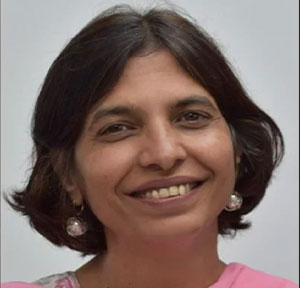
Anandroop Bahadur

Group Head – Human Resources

Expertise

Human Resource Expertise, HR Strategy, Oragnisational Design, Talent & Leadership Development, Policy Governance

Anandroop Bahadur is a seasoned HR leader and strategic advisor with nearly two decades of experience across the development, consulting, and social impact ecosystem. She brings a strong blend of deep technical HR expertise, organizational design acumen, and a people-centric ethos to her work.

At IPE Global, Anandroop leads the Group Human Resources function across IPE Global and its associated entities, including Triple Line Consulting and IPE Africa. Her focus is on strengthening organizational foundations, enabling leadership effectiveness, and building scalable people systems aligned with the organisation’s global growth ambitions. Her remit spans HR strategy, organizational design, talent and leadership development, compensation and performance frameworks, policy governance, safeguarding, and culture integration across geographies.

Over the course of her career, Anandroop has held senior HR leadership and consulting roles with organisations such as Clinton Health Access Initiative (CHAI), Ford Foundation, NASSCOM Foundation, Central Square Foundation, Amity Education Group, and other international institutions. She has advised leadership teams and boards through periods of scale, transition, and transformation, and has led HR operations in high-growth, high-complexity environments.

She holds an Executive Degree in Human Resources from XLRI Jamshedpur and is a SHRM–SCP (Senior Certified Professional), reflecting her grounding in global HR standards and best practices. She has also completed advanced executive and leadership programmes, including training in coaching and organisational transformation, and is an ICF-trained executive coach, currently working towards her ACC credential.


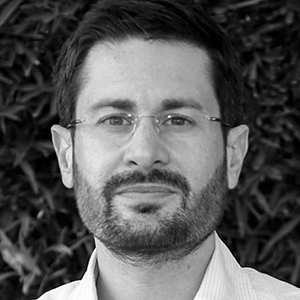
Nikos Papachristodoulou

Nikos Papachristodoulou

Director

Expertise

Urban, Infrastructure, Disaster and Climate Resilience, Inclusive Growth

Nikos has expertise in urban and regional economic development, infrastructure, disaster and climate resilience, and inclusive growth. He oversees and manages projects for Triple Line’s cities and infrastructure portfolio.

Nikos is an urban specialist, with principal areas of expertise in urban and regional economic development, infrastructure, disaster and climate resilience, and inclusive growth. Over the past 12 years he has worked for a range of clients including the World Bank, FCDO, EU, USAID, Cities Alliance, Global Green Growth Institute (GGGI), Norwegian Refugee Council (NRC), and local authorities.

Nikos’s work has incorporated the full spectrum of the project cycle, from analytics and programme scoping and design, through implementation, and evaluation and learning.

He has a high level of familiarity with HMG business cases and ODA eligibility criteria having led and supported the development of FCDO’s urbanisation strategy and options for future investments in Somalia’s cities, Prosperity Fund Global Future Cities Programme (GFCP) scoping in Nigeria, and the development of the business case for an urban resilience programme in Tanzania.

Nikos also brings excellent understanding of World Bank latest trends and procedures as a result of his involvement in a number of analytics and technical assistance projects, including on informal settlements upgrading in Mogadishu, climate change adaptation planning in Latin American and Caribbean cities, assessment of the climate resilience of Dar es Salaam’s transport infrastructure, spatial development in Nigeria, and preparation of a handbook on integrated urban flood risk management.

Nikos holds a BSc in Economics from the University of Piraeus and an MSc in Social Development Practice from the Development Planning Unit at University College London (UCL).


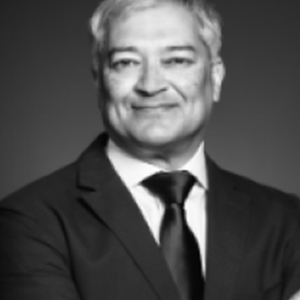
Ricardo Pinto

Ricardo Pinto

Associate Director

Expertise

Private Sector Development, Regulatory Reform, Regional and Local Economy

Ricardo has 35 years´ experience in private sector development, regulatory reform, regional and local economic development in the European Union, Western Balkans, Easter Partnership Countries, Middle East, Africa, etc. He is tasked with developing our strategic operations in continental Europe and Ukraine.

Ricardo is a seasoned international development professional with over 30 years of experience designing and delivering Private Sector Development and economic growth initiatives across more than 50 countries spanning Central, Eastern and Southeast Europe, the CIS, Africa, MEDA, and Asia. He holds both a bachelor’s degree and PhD from the London School of Economics and Political Science (LSE) and is a Certified Management Consultant (CMC).

Ricardo brings a unique combination of strategic insight and practical implementation expertise. He has led high-impact assignments for key development institutions, including the European Commission, OECD, GIZ, FCDO/DFID, UNDP, UNCTAD, EBRD, ILO, ADB, World Bank, USAID, and Danida.

With a deep and practical understanding of institutional architecture, policy environment, and post-conflict recovery dynamics, and a career spanning over 30 years across transition economies, Ricardo brings not only technical depth but also a trusted reputation among donors, policymakers and peers.He is leading Triple Line’s strategic expansion into continental Europe, including Ukraine, while strengthening our credibility across the broader region and beyond. Proven Expertise Across Our Core Pillars. Ricardo’s work focuses on the areas central to Triple Line’s evolving service offering: Governance & Institutional Reform: advising public institutions on regulatory impact, policy reform, and donor coordination, Private Sector Development: strategy development for SME ecosystems, innovation, and competitiveness, Infrastructure Enabling Conditions: support for investment climate improvement and regional/local economic development and Cross-cutting themes, including green transition, women’s economic empowerment, and inclusive growth

 
LIFE AT IPE

Learning &
Development (L&D)

We inspire people to be better.

Our intuitive and personalised programmes provide clear path for growth, leadership development, and help people sharpen their skills.

0 %
People trained in last 3 years
0 %
Participation in L&D Initiatives in 2025

Your journey starts from Day One….

Structured Onboarding

Helps align expectations and lays the foundation for your success

New Hire Training

Makes you familiar with the organisation; helps you settle down in a new work environment

Customized L&D Platform

Helps upskill at your own pace through continuous learning and training programmes

Linkage with
Performance Management

Aligns resources and training needs based on your skill set

Learning is not always a formal process. We also align our organisation values to a culture of learning