Geethanjali Nataraj: Just another ‘zone’?

The Foreign Trade Policy 2015-2020 aims to increase India’s merchandise exports from $450 billion in 2013-14 to $750 billion in 2020. But the ground realities are different. Negative export growth for more than a year has raised concerns among policy makers, clearly reflected in recent initiatives announced by the ministry of commerce and industry (MoC&I). These include the building of megaCoastal Economic Zones (CEZs), taking up issues relating to Special Economic Zones (SEZs) like Minimum Alternative and Dividend Distribution taxes (MAT & DDT), extending the sunset clause till 2023 and allowing domestic tariff areas.


Though the concerns and initiatives of the MoC&I may be justified as export promotion, there is a question mark on whether there is proper planning, monitoring and evaluation. In the absence of proper systems, SEZs will continue to under-perform as they have so far in terms of exports, employment and land acquisition – leading to huge revenues forgone. The planned CEZs will not be any different, becoming just another term like Export Oriented Units (EOUs) and SEZs unless steps are taken to make them more effective and performance-oriented.


Export Oriented Units
India became the first country in Asia to set up an Export Processing Zone in Kandla in 1965. In 1980, a new scheme, called EOU, was introduced to boost manufacturing and thereby exports of value-added products. The scheme was not successful, for a number of reasons – complexity of size, lack of entrepreneurial talent, lack of interest among local stakeholders and lack of promotion of the scheme with limited manufacturing sector presence. An audit report by the CAG in 2007 found that a large number of EOUs are not fulfilling their obligations; deferred payments of Central Sales Tax (CST); and excess domestic tariff area (DTA) sales. Another report by CAG in 2015 also found similar observations, after auditing nearly 370 EOUs covering the period 2009-10 to 2013-14.


The share of EOU exports in overall exports steadily declined and turned negative in 2011-12 due to withdrawal of tax benefits under the Income Tax Act from April 1, 2011. Over the years, there was no provision in the Foreign Trade Policy (FTP) to properly utilise the unique advantages of the 100 per cent EOU Scheme, whereas SEZs are performing at par, because of similar export benefits available to them along with permission for domestic sales. Moreover, deemed exports by the EOUs, duty foregone and domestic procurement were not reflected in the annual performance reports (APRs). Further, clearance of products into the DTA exceeds the prescribed limits of FoB value of exports, leading to duty loss to the exchequer.


There is a plethora of systemic reasons why EOUs are not performing well – APRs were not submitted on time, there was lack of relevant data related to DTA sales, duty foregone, and an irregular internal audit system. The provisions for EOUs ought to be clear to avoid ambiguity between policies and their understanding by government departments, which result in non-compliance and misrepresentation.


The scheme flourished from 1980 till the mid-2000s, but as the SEZ Act came into force, the performance of EOUs declined. The scheme should be revised according to the requirements of the changing global environment and special provisions should be made for its proper functioning and monitoring.


Special Economic Zones
Following the success of China, Exim Policy-2000 laid down a regulatory framework which eventually got formalised as the SEZ Act in 2006 to promote exports, attract investment, create jobs and impart momentum to the manufacturing sector. The Act has provisions such as income tax holidays, indirect taxes exemptions and other benefits to incentivise economic activities in SEZs.


However, a CAG report in 2014 sampled 152 SEZs and found under-performance on targets in exports (ranging from 46 per cent to 93 per cent), employment (ranging from 65 per cent to 96 per cent) and investment (ranging from 24 per cent to 75 per cent). In case of exports, the CAG reported that there is a shortfall of almost 75 per cent in actual exports (Rs 100,579 crore) vis-a-vis projected figures (Rs 395,547 crore) in 84 developers/units in nine states between 2006-07 and 2012-13.


Land appeared to be the most crucial and attractive component of the SEZ Act. Of 45,635.63 hectares notified for SEZ purposes, operations commenced in only 28,488 ha (62 per cent). Around half of the land allotted remained idle despite approval in 2006.


The CAG observed that SEZs in India took tax concessions worth Rs 83,104 crore between 2006-07 and 2012-13. Further, a ministry of finance study estimated the loss from tax holidays granted to SEZs between 2004 and 2010 at Rs 175,487 crore. Though the income tax department also accepted that the MAT affected the cash flow of SEZ units/developers, it did not find any signs of tax planning to encourage productivity and innovation. So, there is a loss to the exchequer in terms of tax forgone without commensurate outcomes.


What is required are steps for a effective SEZ policy, such as: measurable performance indicators; integration of SEZ policy with sectoral and state policies; benchmarking of SEZ life cycles; monitoring non-operational units; demand and use of land in SEZs; review of tax benefits along with achievements; and proper monitoring for internal audit and database management.


The way ahead
Therefore, the government’s recent initiative to set up CEZs – better suited for international trade – and other steps to make SEZs more effective is welcome. Reducing MAT to 7.5 per cent or removing it altogether, extending the sunset clause and allowing DTA sales may attract investment and land use in SEZs, thereby contributing to exports.


But the bottomline is that the lack of a robust policy, efficient implementation, and effective monitoring has seriously jeopardised India’s efforts to industrialise through SEZs and boost exports. Therefore, taking a cue from the performance of EOUs and SEZs, CEZs should be properly thought through with a performance-appraisal system (including evaluation and monitoring) to achieve the desired objectives. Otherwise it will be just an addition to the nomenclature.

The writer is Senior Fellow, ORF, New Delhi and Policy Lead, Knowledge Partnership Programme, IPE Global.
Anand Roop

Anandroop Bahadur

Group Head – Human Resources

Expertise

Human Resource Expertise, HR Strategy, Oragnisational Design, Talent & Leadership Development, Policy Governance

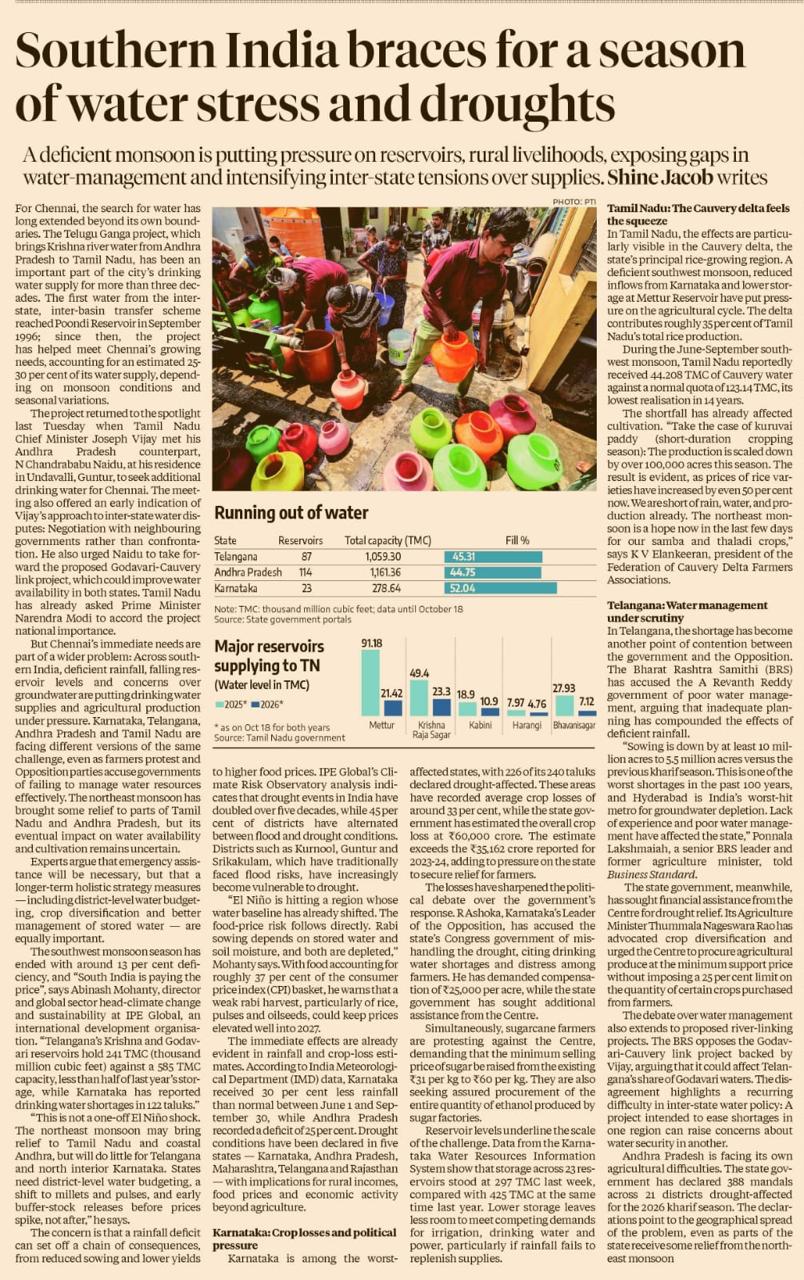
Anandroop Bahadur is a seasoned HR leader and strategic advisor with nearly two decades of experience across the development, consulting, and social impact ecosystem. She brings a strong blend of deep technical HR expertise, organizational design acumen, and a people-centric ethos to her work.

At IPE Global, Anandroop leads the Group Human Resources function across IPE Global and its associated entities, including Triple Line Consulting and IPE Africa. Her focus is on strengthening organizational foundations, enabling leadership effectiveness, and building scalable people systems aligned with the organisation’s global growth ambitions. Her remit spans HR strategy, organizational design, talent and leadership development, compensation and performance frameworks, policy governance, safeguarding, and culture integration across geographies.

Over the course of her career, Anandroop has held senior HR leadership and consulting roles with organisations such as Clinton Health Access Initiative (CHAI), Ford Foundation, NASSCOM Foundation, Central Square Foundation, Amity Education Group, and other international institutions. She has advised leadership teams and boards through periods of scale, transition, and transformation, and has led HR operations in high-growth, high-complexity environments.

She holds an Executive Degree in Human Resources from XLRI Jamshedpur and is a SHRM–SCP (Senior Certified Professional), reflecting her grounding in global HR standards and best practices. She has also completed advanced executive and leadership programmes, including training in coaching and organisational transformation, and is an ICF-trained executive coach, currently working towards her ACC credential.


Nikos Papachristodoulou

Nikos Papachristodoulou

Director

Expertise

Urban, Infrastructure, Disaster and Climate Resilience, Inclusive Growth

Nikos has expertise in urban and regional economic development, infrastructure, disaster and climate resilience, and inclusive growth. He oversees and manages projects for Triple Line’s cities and infrastructure portfolio.

Nikos is an urban specialist, with principal areas of expertise in urban and regional economic development, infrastructure, disaster and climate resilience, and inclusive growth. Over the past 12 years he has worked for a range of clients including the World Bank, FCDO, EU, USAID, Cities Alliance, Global Green Growth Institute (GGGI), Norwegian Refugee Council (NRC), and local authorities.

Nikos’s work has incorporated the full spectrum of the project cycle, from analytics and programme scoping and design, through implementation, and evaluation and learning.

He has a high level of familiarity with HMG business cases and ODA eligibility criteria having led and supported the development of FCDO’s urbanisation strategy and options for future investments in Somalia’s cities, Prosperity Fund Global Future Cities Programme (GFCP) scoping in Nigeria, and the development of the business case for an urban resilience programme in Tanzania.

Nikos also brings excellent understanding of World Bank latest trends and procedures as a result of his involvement in a number of analytics and technical assistance projects, including on informal settlements upgrading in Mogadishu, climate change adaptation planning in Latin American and Caribbean cities, assessment of the climate resilience of Dar es Salaam’s transport infrastructure, spatial development in Nigeria, and preparation of a handbook on integrated urban flood risk management.

Nikos holds a BSc in Economics from the University of Piraeus and an MSc in Social Development Practice from the Development Planning Unit at University College London (UCL).


Ricardo Pinto

Ricardo Pinto

Associate Director

Expertise

Private Sector Development, Regulatory Reform, Regional and Local Economy

Ricardo has 35 years´ experience in private sector development, regulatory reform, regional and local economic development in the European Union, Western Balkans, Easter Partnership Countries, Middle East, Africa, etc. He is tasked with developing our strategic operations in continental Europe and Ukraine.

Ricardo is a seasoned international development professional with over 30 years of experience designing and delivering Private Sector Development and economic growth initiatives across more than 50 countries spanning Central, Eastern and Southeast Europe, the CIS, Africa, MEDA, and Asia. He holds both a bachelor’s degree and PhD from the London School of Economics and Political Science (LSE) and is a Certified Management Consultant (CMC).

Ricardo brings a unique combination of strategic insight and practical implementation expertise. He has led high-impact assignments for key development institutions, including the European Commission, OECD, GIZ, FCDO/DFID, UNDP, UNCTAD, EBRD, ILO, ADB, World Bank, USAID, and Danida.

With a deep and practical understanding of institutional architecture, policy environment, and post-conflict recovery dynamics, and a career spanning over 30 years across transition economies, Ricardo brings not only technical depth but also a trusted reputation among donors, policymakers and peers.He is leading Triple Line’s strategic expansion into continental Europe, including Ukraine, while strengthening our credibility across the broader region and beyond. Proven Expertise Across Our Core Pillars. Ricardo’s work focuses on the areas central to Triple Line’s evolving service offering: Governance & Institutional Reform: advising public institutions on regulatory impact, policy reform, and donor coordination, Private Sector Development: strategy development for SME ecosystems, innovation, and competitiveness, Infrastructure Enabling Conditions: support for investment climate improvement and regional/local economic development and Cross-cutting themes, including green transition, women’s economic empowerment, and inclusive growth

 
LIFE AT IPE

Learning &
Development (L&D)

We inspire people to be better.

Our intuitive and personalised programmes provide clear path for growth, leadership development, and help people sharpen their skills.

0 %
People trained in last 3 years
0 %
Participation in L&D Initiatives in 2025

Your journey starts from Day One….

Structured Onboarding

Helps align expectations and lays the foundation for your success

New Hire Training

Makes you familiar with the organisation; helps you settle down in a new work environment

Customized L&D Platform

Helps upskill at your own pace through continuous learning and training programmes

Linkage with
Performance Management

Aligns resources and training needs based on your skill set

Learning is not always a formal process. We also align our organisation values to a culture of learning