Shifting IPL matches or good rains won’t end our water woes. Here’s why

On Tuesday, the India Meteorological Department (IMD) announced that crucial monsoon rains are expected to be above average in 2016, easing fears over farm and economic growth after two straight droughts hit rural incomes and agricultural output.

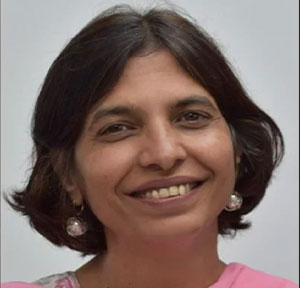
In an interview with HT, Policy Lead at IPE Global and co-author of ‘Reflections on Managing Water, Earth’s Greatest Natural Resource’ Indira Khurana says that a good monsoon will not wash away our water woes unless we must make it a point to harvest every drop and that India must first acknowledge that there is a problem in our water management policies.


The monsoon forecast is good. What needs to be done to ensure that we benefit from the bounty?
Indira Khurana: Respect, appreciate and celebrate the monsoon. Don’t let the water go waste. Before the rains, all of us need to be involved in some activity that will help capture the rains. The crisis that is facing so many of us should be unacceptable as it is avoidable. We need to invest quickly in efforts that lead to lasting returns and not lead to more rounds of investments [such as water trains] for addressing emergencies.With the number of rainy days also declining, water conservation becomes all the more imperative.
 

India has loads of traditional knowledge on water harvesting and yet we cannot manage water. Why?
IK: Every ecological region of India had its own traditional water harvesting system. Unfortunately these have declined to almost non-existent levels over the past few decades due to reasons that vary from a scant regard for water, to destruction of catchments, construction and infrastructure development activities and a disregard of common resources.

Look at Bundelkhand and its tradition of Bundela and Chandela tanks. People are migrating from the region due to lack of even drinking water. Fields are barren and kitchens are empty. Springs were used as water sources in Jharkhand and Odisha. Due to deforestation these are running dry.
Mapping of urban lakes and other surface water bodies in Bangalore, Hyderabad, Udaipur, Delhi and other cities indicate that these are shrinking and even completely drying up.

What is the problem with India’s water management?
IK: On the macro scale, we need to first acknowledge that there is a problem in our water management so that we can then go on to tackle the problem.
We cannot continue to bury our head in the sand and offer piecemeal solutions. We need to review our policies and programmes, identify the flaws and then move onto finding solutions to these flaws or new solutions.

We don’t even have consensus on the actual amount of utilisable water available. Two government estimates reveal two different figures, one almost half the other. We must arrive at a consensus as to how much water India actually has so that its allocations can be done accurately , sustainably and equitably
Water quality is a disaster waiting to happen. Almost half the groundwater reserves are polluted. This has great implication on health, well-being and GDP.

Economic activity is not always in line with water availability. In Bundelkand, for example, many of the industries proposed are water intensive. How can water bottling companies set up plants in places already water stressed? Water does not come from a bottomless pit.
Can we end this over dependence on monsoon by extending irrigation?
IK: Irrigation can only take care of the agriculture requirements. What about the other needs of domestic water and industry and power generation? Also, evidence indicates that over the years there has been a decline in the capacity of these systems. While investments on surface irrigation have gone up, dependency on groundwater for irrigation have also gone up.
The dependency on monsoon will never end completely. But yes, it is possible to cope with erratic monsoon, a requirement now with the evidence of the effect of climate change.
We must create water banks (I don’t mean dams).

Directing rainwater to aquifers takes care of excess and less water. Sustained efforts at recharge can help develop a balance between surface and groundwater, where rivers become perennial and the riverbeds serve as areas for groundwater recharge.
The industry must also play an active and responsible role by mapping their water footprint and then taking measures to reduce it. The pollution they cause must be treated.
India also needs to nurture innovation in the water sector.

What are the good community-led water initiatives that we should take note of?
IK: Fortunately there are several such efforts that are beacons of hope. Communities in Andhra Pradesh are involved in participatory groundwater management where at the village-level decisions are taken on cropping patterns.
Through the Jan Jal Jodo Abhiyan, a voluntary people’s campaign, concerned groups are mapping water bodies and engaging with the government and the people to revive traditional water harvesting structures and rivers.
In Bundelkhand, Jal sahelis are taking care of drinking water supply and management of emergency tanker water supply.
Groups in Bihar are reviving the traditional ‘ahar pyne’ system in drought-prone districts of the state.
The country is large and diverse. There would be no state where even one effort or solution does not exist. These examples need to spread laterally.
How can urban India overcome its water challenges?
IK: The urban population is largely insensitive. Consistent efforts to sensitise and rebuild the relationship with water is required. Cities and towns must become water independent through efforts directed at reducing demand, using wastewater capturing rain for groundwater recharge and revival of surface water bodies. Riverbeds offer tremendous scope as recharge zones and these need to be explored.
There is hope. We need to get working.
Anand Roop

Anandroop Bahadur

Group Head – Human Resources

Expertise

Human Resource Expertise, HR Strategy, Oragnisational Design, Talent & Leadership Development, Policy Governance

Anandroop Bahadur is a seasoned HR leader and strategic advisor with nearly two decades of experience across the development, consulting, and social impact ecosystem. She brings a strong blend of deep technical HR expertise, organizational design acumen, and a people-centric ethos to her work.

At IPE Global, Anandroop leads the Group Human Resources function across IPE Global and its associated entities, including Triple Line Consulting and IPE Africa. Her focus is on strengthening organizational foundations, enabling leadership effectiveness, and building scalable people systems aligned with the organisation’s global growth ambitions. Her remit spans HR strategy, organizational design, talent and leadership development, compensation and performance frameworks, policy governance, safeguarding, and culture integration across geographies.

Over the course of her career, Anandroop has held senior HR leadership and consulting roles with organisations such as Clinton Health Access Initiative (CHAI), Ford Foundation, NASSCOM Foundation, Central Square Foundation, Amity Education Group, and other international institutions. She has advised leadership teams and boards through periods of scale, transition, and transformation, and has led HR operations in high-growth, high-complexity environments.

She holds an Executive Degree in Human Resources from XLRI Jamshedpur and is a SHRM–SCP (Senior Certified Professional), reflecting her grounding in global HR standards and best practices. She has also completed advanced executive and leadership programmes, including training in coaching and organisational transformation, and is an ICF-trained executive coach, currently working towards her ACC credential.


Nikos Papachristodoulou

Nikos Papachristodoulou

Director

Expertise

Urban, Infrastructure, Disaster and Climate Resilience, Inclusive Growth

Nikos has expertise in urban and regional economic development, infrastructure, disaster and climate resilience, and inclusive growth. He oversees and manages projects for Triple Line’s cities and infrastructure portfolio.

Nikos is an urban specialist, with principal areas of expertise in urban and regional economic development, infrastructure, disaster and climate resilience, and inclusive growth. Over the past 12 years he has worked for a range of clients including the World Bank, FCDO, EU, USAID, Cities Alliance, Global Green Growth Institute (GGGI), Norwegian Refugee Council (NRC), and local authorities.

Nikos’s work has incorporated the full spectrum of the project cycle, from analytics and programme scoping and design, through implementation, and evaluation and learning.

He has a high level of familiarity with HMG business cases and ODA eligibility criteria having led and supported the development of FCDO’s urbanisation strategy and options for future investments in Somalia’s cities, Prosperity Fund Global Future Cities Programme (GFCP) scoping in Nigeria, and the development of the business case for an urban resilience programme in Tanzania.

Nikos also brings excellent understanding of World Bank latest trends and procedures as a result of his involvement in a number of analytics and technical assistance projects, including on informal settlements upgrading in Mogadishu, climate change adaptation planning in Latin American and Caribbean cities, assessment of the climate resilience of Dar es Salaam’s transport infrastructure, spatial development in Nigeria, and preparation of a handbook on integrated urban flood risk management.

Nikos holds a BSc in Economics from the University of Piraeus and an MSc in Social Development Practice from the Development Planning Unit at University College London (UCL).


Ricardo Pinto

Ricardo Pinto

Associate Director

Expertise

Private Sector Development, Regulatory Reform, Regional and Local Economy

Ricardo has 35 years´ experience in private sector development, regulatory reform, regional and local economic development in the European Union, Western Balkans, Easter Partnership Countries, Middle East, Africa, etc. He is tasked with developing our strategic operations in continental Europe and Ukraine.

Ricardo is a seasoned international development professional with over 30 years of experience designing and delivering Private Sector Development and economic growth initiatives across more than 50 countries spanning Central, Eastern and Southeast Europe, the CIS, Africa, MEDA, and Asia. He holds both a bachelor’s degree and PhD from the London School of Economics and Political Science (LSE) and is a Certified Management Consultant (CMC).

Ricardo brings a unique combination of strategic insight and practical implementation expertise. He has led high-impact assignments for key development institutions, including the European Commission, OECD, GIZ, FCDO/DFID, UNDP, UNCTAD, EBRD, ILO, ADB, World Bank, USAID, and Danida.

With a deep and practical understanding of institutional architecture, policy environment, and post-conflict recovery dynamics, and a career spanning over 30 years across transition economies, Ricardo brings not only technical depth but also a trusted reputation among donors, policymakers and peers.He is leading Triple Line’s strategic expansion into continental Europe, including Ukraine, while strengthening our credibility across the broader region and beyond. Proven Expertise Across Our Core Pillars. Ricardo’s work focuses on the areas central to Triple Line’s evolving service offering: Governance & Institutional Reform: advising public institutions on regulatory impact, policy reform, and donor coordination, Private Sector Development: strategy development for SME ecosystems, innovation, and competitiveness, Infrastructure Enabling Conditions: support for investment climate improvement and regional/local economic development and Cross-cutting themes, including green transition, women’s economic empowerment, and inclusive growth

 
LIFE AT IPE

Learning &
Development (L&D)

We inspire people to be better.

Our intuitive and personalised programmes provide clear path for growth, leadership development, and help people sharpen their skills.

0 %
People trained in last 3 years
0 %
Participation in L&D Initiatives in 2025

Your journey starts from Day One….

Structured Onboarding

Helps align expectations and lays the foundation for your success

New Hire Training

Makes you familiar with the organisation; helps you settle down in a new work environment

Customized L&D Platform

Helps upskill at your own pace through continuous learning and training programmes

Linkage with
Performance Management

Aligns resources and training needs based on your skill set

Learning is not always a formal process. We also align our organisation values to a culture of learning