Moving Mountains: Creating 170 Plus Open Defecation Districts

In July 2016, the Ministry of Drinking Water and Sanitation released the framework of engagement with the private sector. This framework should bring more clarity in the involvement of the private sector into mainstreaming their involvement in achieving the ambitious, imperative and achievable goal of Swachh Bharat Mission (SBM).

While we may celebrate the attention that sanitation has finally got from the ramparts of the Red Fort to all the way down, we have to accept that challenge is huge and catch the bull by the horns.  And the emphasis is on ‘we’.

Already two years down the line as we race towards achieving the target of 173 districts to be declared ODF by March 2017 and the whole of India Swachh by 2019, the country is way behind target.

According to a July 2017 report, of the total 12 crore toilets to be built a mere two crore have been constructed.  Only 17 of the 683 districts have turned ODF since the programme began in October 2014.

After a review of SBM by the PM in June this year, implementation of SBM (Grameen) has been divided into two phases. In the first phase, strong focus will be on 173 districts across 23 states. The objective is to turn these into ODF districts by next year. While these districts may be considered low hanging fruits, the challenge cannot be underestimated. For a challenge so huge, is it fair to expect only the government and its machinery, and a few development actors, to make this happen?

If we seriously reflect, we do realise that our support is required.

Sanitation is everybody’s business. It’s time for everyone to get engaged in whatever they can do best. Already several celebrities have committed their time on national campaigns.  The SBM logo can be found across all ministries and sectors. The push for sanitation and the elimination of open defection has never been stronger.

It is now time to roll up the sleeves and get down to working on the ground: Build toilets and convince people to use these, making ‘going out’ history.

So what is it that the industry can do? A lot as it happens. In several forums the private sector expresses helplessness as to not knowing what they can do. So, while the intention is there the ‘how’ is missing.

This is where partnerships come into play.  When people and institutions with a common vision and objectives work together, bringing their unique skills and strengths, the unthinkable can happen. Open defecation CAN become history.

So what can the industry do?

Be a trailblazer: Commit and contribute to the SBM as it drills down to getting districts open defecation free. This means offering financial and other support for implementation.

Visit the DC and commit: The District Collector/ CEO has the mandate to make the district ODF. Visit the Collectorate offices and offer unstinted support. Understand the status and the challenges.

Identify and support a development partner at district level: There are several development agencies who have experience on working with the government officials and communities around sanitation. But they need your support.

More often than not, this will mean delving into your pockets and providing financial support so that the partner can focus on doing what’s required for eliminating open defection. Together, and with the Collector, make a plan, identify the gaps and then fund the gap.

Engage your staff and workers: This will help motivate and develop a sense of ownership over the company’s efforts in sanitation. Get the staff to visit villages wherever and whenever possible.  Make them sanitation ambassadors.

Monitor progress and evaluate efforts: This will help keep the progress on track and also address bottlenecks.

Raise funds:  Develop and manage a crowd funding campaign and take responsibility for the fund use.

Engage others: Motivate others in your circle to adopt a district and do what you have done.

Document, share and celebrate your efforts: Sharing knowledge and experience encourages and informs others. One such effort has been the collaborative effort between FICCI and IPE Global a global social development consultancy company to document the sanitation efforts of the private sector under CSR.

Gandhiji said, “Sanitation is more important than political Independence.” The industry had a major role to play during the struggle for freedom and post-independence overall development. This sector must again rise to the occasion and help India get rid of open defecation, once and for all. Imagine the satisfaction of directly contributing towards a clean India, of preventing violence, saving lives and helping children reach their full physical and mental abilities.
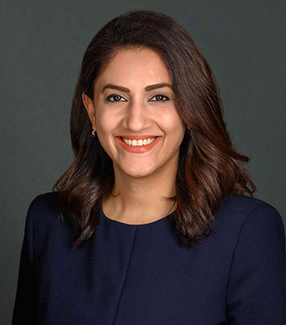
Anand Roop

Anandroop Bahadur

Group Head – Human Resources

Expertise

Human Resource Expertise, HR Strategy, Oragnisational Design, Talent & Leadership Development, Policy Governance

Anandroop Bahadur is a seasoned HR leader and strategic advisor with nearly two decades of experience across the development, consulting, and social impact ecosystem. She brings a strong blend of deep technical HR expertise, organizational design acumen, and a people-centric ethos to her work.

At IPE Global, Anandroop leads the Group Human Resources function across IPE Global and its associated entities, including Triple Line Consulting and IPE Africa. Her focus is on strengthening organizational foundations, enabling leadership effectiveness, and building scalable people systems aligned with the organisation’s global growth ambitions. Her remit spans HR strategy, organizational design, talent and leadership development, compensation and performance frameworks, policy governance, safeguarding, and culture integration across geographies.

Over the course of her career, Anandroop has held senior HR leadership and consulting roles with organisations such as Clinton Health Access Initiative (CHAI), Ford Foundation, NASSCOM Foundation, Central Square Foundation, Amity Education Group, and other international institutions. She has advised leadership teams and boards through periods of scale, transition, and transformation, and has led HR operations in high-growth, high-complexity environments.

She holds an Executive Degree in Human Resources from XLRI Jamshedpur and is a SHRM–SCP (Senior Certified Professional), reflecting her grounding in global HR standards and best practices. She has also completed advanced executive and leadership programmes, including training in coaching and organisational transformation, and is an ICF-trained executive coach, currently working towards her ACC credential.


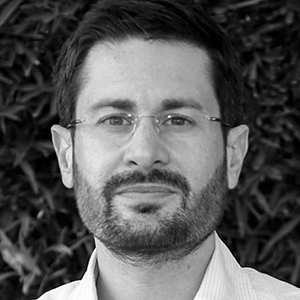
Nikos Papachristodoulou

Nikos Papachristodoulou

Director

Expertise

Urban, Infrastructure, Disaster and Climate Resilience, Inclusive Growth

Nikos has expertise in urban and regional economic development, infrastructure, disaster and climate resilience, and inclusive growth. He oversees and manages projects for Triple Line’s cities and infrastructure portfolio.

Nikos is an urban specialist, with principal areas of expertise in urban and regional economic development, infrastructure, disaster and climate resilience, and inclusive growth. Over the past 12 years he has worked for a range of clients including the World Bank, FCDO, EU, USAID, Cities Alliance, Global Green Growth Institute (GGGI), Norwegian Refugee Council (NRC), and local authorities.

Nikos’s work has incorporated the full spectrum of the project cycle, from analytics and programme scoping and design, through implementation, and evaluation and learning.

He has a high level of familiarity with HMG business cases and ODA eligibility criteria having led and supported the development of FCDO’s urbanisation strategy and options for future investments in Somalia’s cities, Prosperity Fund Global Future Cities Programme (GFCP) scoping in Nigeria, and the development of the business case for an urban resilience programme in Tanzania.

Nikos also brings excellent understanding of World Bank latest trends and procedures as a result of his involvement in a number of analytics and technical assistance projects, including on informal settlements upgrading in Mogadishu, climate change adaptation planning in Latin American and Caribbean cities, assessment of the climate resilience of Dar es Salaam’s transport infrastructure, spatial development in Nigeria, and preparation of a handbook on integrated urban flood risk management.

Nikos holds a BSc in Economics from the University of Piraeus and an MSc in Social Development Practice from the Development Planning Unit at University College London (UCL).


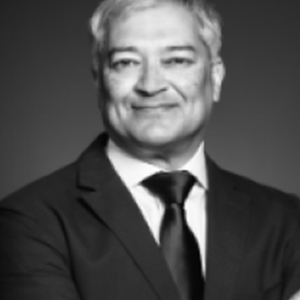
Ricardo Pinto

Ricardo Pinto

Associate Director

Expertise

Private Sector Development, Regulatory Reform, Regional and Local Economy

Ricardo has 35 years´ experience in private sector development, regulatory reform, regional and local economic development in the European Union, Western Balkans, Easter Partnership Countries, Middle East, Africa, etc. He is tasked with developing our strategic operations in continental Europe and Ukraine.

Ricardo is a seasoned international development professional with over 30 years of experience designing and delivering Private Sector Development and economic growth initiatives across more than 50 countries spanning Central, Eastern and Southeast Europe, the CIS, Africa, MEDA, and Asia. He holds both a bachelor’s degree and PhD from the London School of Economics and Political Science (LSE) and is a Certified Management Consultant (CMC).

Ricardo brings a unique combination of strategic insight and practical implementation expertise. He has led high-impact assignments for key development institutions, including the European Commission, OECD, GIZ, FCDO/DFID, UNDP, UNCTAD, EBRD, ILO, ADB, World Bank, USAID, and Danida.

With a deep and practical understanding of institutional architecture, policy environment, and post-conflict recovery dynamics, and a career spanning over 30 years across transition economies, Ricardo brings not only technical depth but also a trusted reputation among donors, policymakers and peers.He is leading Triple Line’s strategic expansion into continental Europe, including Ukraine, while strengthening our credibility across the broader region and beyond. Proven Expertise Across Our Core Pillars. Ricardo’s work focuses on the areas central to Triple Line’s evolving service offering: Governance & Institutional Reform: advising public institutions on regulatory impact, policy reform, and donor coordination, Private Sector Development: strategy development for SME ecosystems, innovation, and competitiveness, Infrastructure Enabling Conditions: support for investment climate improvement and regional/local economic development and Cross-cutting themes, including green transition, women’s economic empowerment, and inclusive growth

 
LIFE AT IPE

Learning &
Development (L&D)

We inspire people to be better.

Our intuitive and personalised programmes provide clear path for growth, leadership development, and help people sharpen their skills.

0 %
People trained in last 3 years
0 %
Participation in L&D Initiatives in 2025

Your journey starts from Day One….

Structured Onboarding

Helps align expectations and lays the foundation for your success

New Hire Training

Makes you familiar with the organisation; helps you settle down in a new work environment

Customized L&D Platform

Helps upskill at your own pace through continuous learning and training programmes

Linkage with
Performance Management

Aligns resources and training needs based on your skill set

Learning is not always a formal process. We also align our organisation values to a culture of learning