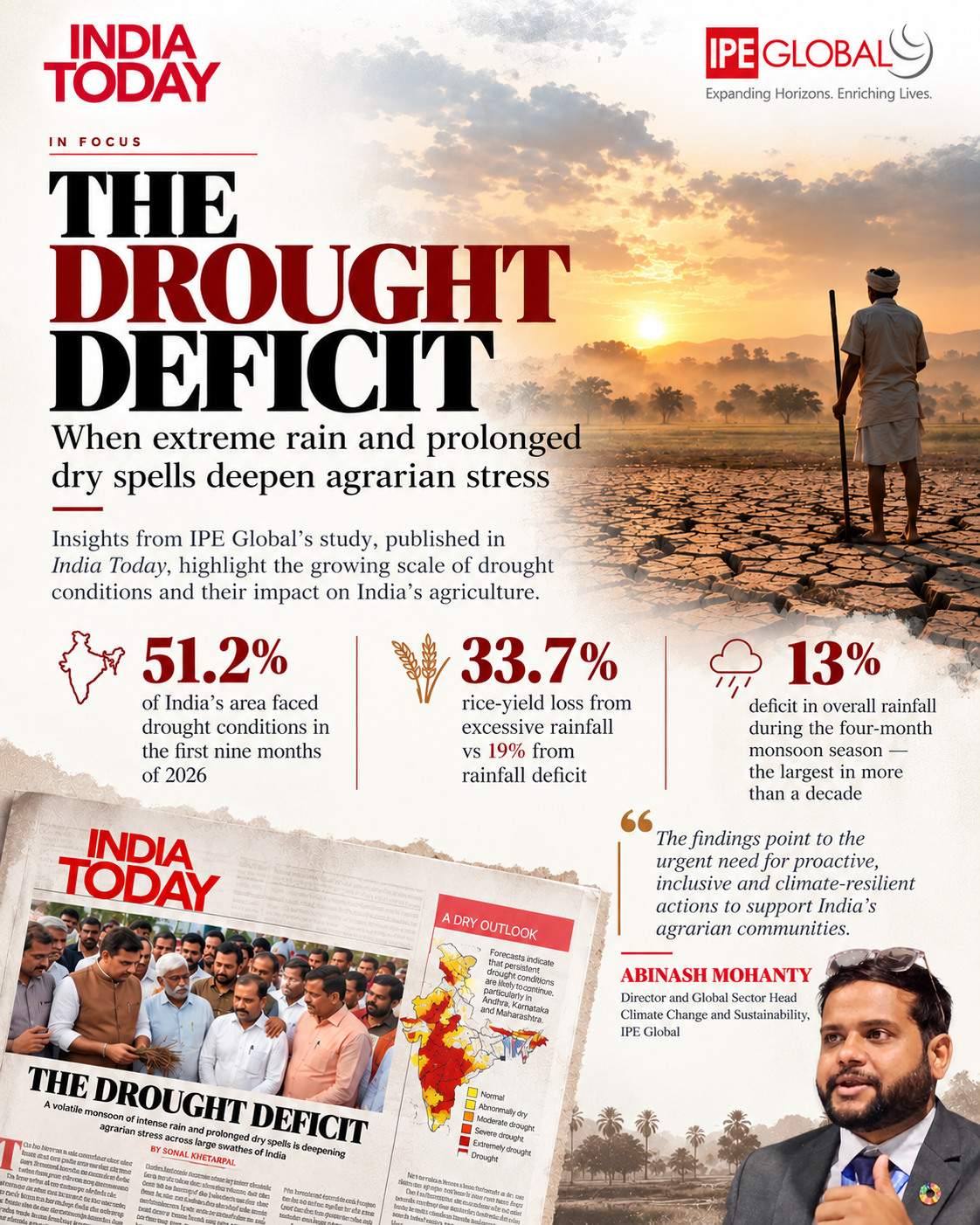
India Today.com features our pre-budget expectations

Budget 2017: ‘Achhe Din’ (Good Days) for the poor expected

Union Finance Minister Arun Jaitley is all set to present the Union Budget 2017 on Wednesday, February 1. This is his third Budget but uncertainty prevails due to the sudden death of MP E Ahamed. Also, President Pranab Mukherjee will address both Houses of Parliament on the first day of the Budget session.

Here are some of the important points you need to know about Budget 2017 and expectations from the same:

  • In a major announcement, this year, the Railway Budget will be merged with the Union Budget
  • According to reports, under the rule of current government, the focus is more on economic and social reforms
  • The Gross Budgetary Support for 2016-17 showed an increase of 15.26 per cent over the Revised Estimates of 2015-16 and 18.2 per cent over the Budget Estimate (2015-16), according to government data
  • Among the BRIC countries, India allocates the least amount of funds towards the education and health sector. However, last budget did see a substantial increase of 313 per cent to Ministry of Women and Child Development and around 13 per cent increase towards Higher Education
  • Whereas the previous budgets have emphasised on rural development, employment generation and agriculture subsidies; this year’s budget will most likely iron out development issues that will further boost the overall economic growth. The first step here should be to ensure high investments in the pre-monsoon months that would set the pace right at the start and address macro-economic issues at large
  • Furthermore, at a recent Niti Aayog event, Prime Minister Narendra Modi hinted at the possibility of consolidation of all reform initiatives taken up in the last two years in this year’s budget to improve the dipping GDP
  • The country also witnessed several bold steps by the government in the last one year, which includes the recent demonetisation drive. This will certainly reflect in this year’s budget
  • Moreover, propelling sectors such as agriculture, skill development, tourism, urban and infrastructure development and information and communications technology should also be an important focus for this year’s budget. For instance, while the JAM trinity introduced recently, linking Jan Dhan – Adhaar – Mobile will support the shift towards a cashless economy, at the same time, there is a desperate need to change the subsidy policy to direct cash transfers
  • Even though the share of subsidies in proportion to the total expenditure has gradually decreased from 18.23 per cent in 2012 to 12.66 per cent in 2016, this year’s budget should further reduce it in order to accommodate more conditional incentives
  • Programmes such as MGNREGS, Janani Suraksha Yojana (JSY), Mamta, Beti Bachao Beti Padhao, etc., promote direct benefit transfers. Learnings from these schemes now need to be scaled up to other programmes. This will also help in cutting down on corruption related to such government programmes
  • Channelising the surplus received by banks in the last quarter to infrastructure development is yet another move that will help India achieve its growth target of around 7.5 per cent. While Public-Private Partnerships (PPPs) should remain a focus for the budget, the government should try and look beyond PPPs to boost investments. For instance, the Make in India campaign has evoked interest in foreign investors over the last two years   
  • This year, however, the impetus should be on converting this interest into tangible action. The Brexit announcement also promises a massive boost to the India-UK bilateral relations. New opportunities for the UK and India to cooperate more closely and develop stronger trading links will emerge as UK re-aligns its foreign policy and trade priorities in times to come
  • In addition to these, GST is expected to be implemented later this year which will pave the way towards a futuristic tax reforms system. It is important to simultaneously build the savings capital of India and hopefully, the budget will address this by increasing the current slab for taxable income
  • To conclude, even though the country has shown progress, we still need to travel the last mile which is still a long way ahead. With basic systems in place now, attention needs to be given to other aspects like effective monitoring, proper reporting and increased supervision to enhance accountability at all levels
  • The budget should therefore also provide more power at the grass root level which will also help in achieving the SDGs by 2030
  • Thus, increased focus on inclusive growth calls for an inward-looking budget this year, which means a holistic outlook towards rural and urban development. The focus should not be only on new policy and programme announcement but also ensure effective implementation at the ground level so that the actual fruits reaches the less privileged. Achhe Din should be seen by all.
Anand Roop

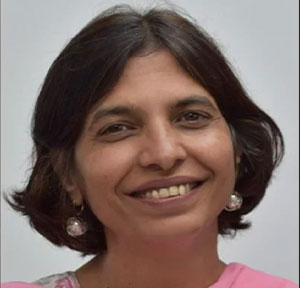
Anandroop Bahadur

Group Head – Human Resources

Expertise

Human Resource Expertise, HR Strategy, Oragnisational Design, Talent & Leadership Development, Policy Governance

Anandroop Bahadur is a seasoned HR leader and strategic advisor with nearly two decades of experience across the development, consulting, and social impact ecosystem. She brings a strong blend of deep technical HR expertise, organizational design acumen, and a people-centric ethos to her work.

At IPE Global, Anandroop leads the Group Human Resources function across IPE Global and its associated entities, including Triple Line Consulting and IPE Africa. Her focus is on strengthening organizational foundations, enabling leadership effectiveness, and building scalable people systems aligned with the organisation’s global growth ambitions. Her remit spans HR strategy, organizational design, talent and leadership development, compensation and performance frameworks, policy governance, safeguarding, and culture integration across geographies.

Over the course of her career, Anandroop has held senior HR leadership and consulting roles with organisations such as Clinton Health Access Initiative (CHAI), Ford Foundation, NASSCOM Foundation, Central Square Foundation, Amity Education Group, and other international institutions. She has advised leadership teams and boards through periods of scale, transition, and transformation, and has led HR operations in high-growth, high-complexity environments.

She holds an Executive Degree in Human Resources from XLRI Jamshedpur and is a SHRM–SCP (Senior Certified Professional), reflecting her grounding in global HR standards and best practices. She has also completed advanced executive and leadership programmes, including training in coaching and organisational transformation, and is an ICF-trained executive coach, currently working towards her ACC credential.


Nikos Papachristodoulou

Nikos Papachristodoulou

Director

Expertise

Urban, Infrastructure, Disaster and Climate Resilience, Inclusive Growth

Nikos has expertise in urban and regional economic development, infrastructure, disaster and climate resilience, and inclusive growth. He oversees and manages projects for Triple Line’s cities and infrastructure portfolio.

Nikos is an urban specialist, with principal areas of expertise in urban and regional economic development, infrastructure, disaster and climate resilience, and inclusive growth. Over the past 12 years he has worked for a range of clients including the World Bank, FCDO, EU, USAID, Cities Alliance, Global Green Growth Institute (GGGI), Norwegian Refugee Council (NRC), and local authorities.

Nikos’s work has incorporated the full spectrum of the project cycle, from analytics and programme scoping and design, through implementation, and evaluation and learning.

He has a high level of familiarity with HMG business cases and ODA eligibility criteria having led and supported the development of FCDO’s urbanisation strategy and options for future investments in Somalia’s cities, Prosperity Fund Global Future Cities Programme (GFCP) scoping in Nigeria, and the development of the business case for an urban resilience programme in Tanzania.

Nikos also brings excellent understanding of World Bank latest trends and procedures as a result of his involvement in a number of analytics and technical assistance projects, including on informal settlements upgrading in Mogadishu, climate change adaptation planning in Latin American and Caribbean cities, assessment of the climate resilience of Dar es Salaam’s transport infrastructure, spatial development in Nigeria, and preparation of a handbook on integrated urban flood risk management.

Nikos holds a BSc in Economics from the University of Piraeus and an MSc in Social Development Practice from the Development Planning Unit at University College London (UCL).


Ricardo Pinto

Ricardo Pinto

Associate Director

Expertise

Private Sector Development, Regulatory Reform, Regional and Local Economy

Ricardo has 35 years´ experience in private sector development, regulatory reform, regional and local economic development in the European Union, Western Balkans, Easter Partnership Countries, Middle East, Africa, etc. He is tasked with developing our strategic operations in continental Europe and Ukraine.

Ricardo is a seasoned international development professional with over 30 years of experience designing and delivering Private Sector Development and economic growth initiatives across more than 50 countries spanning Central, Eastern and Southeast Europe, the CIS, Africa, MEDA, and Asia. He holds both a bachelor’s degree and PhD from the London School of Economics and Political Science (LSE) and is a Certified Management Consultant (CMC).

Ricardo brings a unique combination of strategic insight and practical implementation expertise. He has led high-impact assignments for key development institutions, including the European Commission, OECD, GIZ, FCDO/DFID, UNDP, UNCTAD, EBRD, ILO, ADB, World Bank, USAID, and Danida.

With a deep and practical understanding of institutional architecture, policy environment, and post-conflict recovery dynamics, and a career spanning over 30 years across transition economies, Ricardo brings not only technical depth but also a trusted reputation among donors, policymakers and peers.He is leading Triple Line’s strategic expansion into continental Europe, including Ukraine, while strengthening our credibility across the broader region and beyond. Proven Expertise Across Our Core Pillars. Ricardo’s work focuses on the areas central to Triple Line’s evolving service offering: Governance & Institutional Reform: advising public institutions on regulatory impact, policy reform, and donor coordination, Private Sector Development: strategy development for SME ecosystems, innovation, and competitiveness, Infrastructure Enabling Conditions: support for investment climate improvement and regional/local economic development and Cross-cutting themes, including green transition, women’s economic empowerment, and inclusive growth

 
LIFE AT IPE

Learning &
Development (L&D)

We inspire people to be better.

Our intuitive and personalised programmes provide clear path for growth, leadership development, and help people sharpen their skills.

0 %
People trained in last 3 years
0 %
Participation in L&D Initiatives in 2025

Your journey starts from Day One….

Structured Onboarding

Helps align expectations and lays the foundation for your success

New Hire Training

Makes you familiar with the organisation; helps you settle down in a new work environment

Customized L&D Platform

Helps upskill at your own pace through continuous learning and training programmes

Linkage with
Performance Management

Aligns resources and training needs based on your skill set

Learning is not always a formal process. We also align our organisation values to a culture of learning